
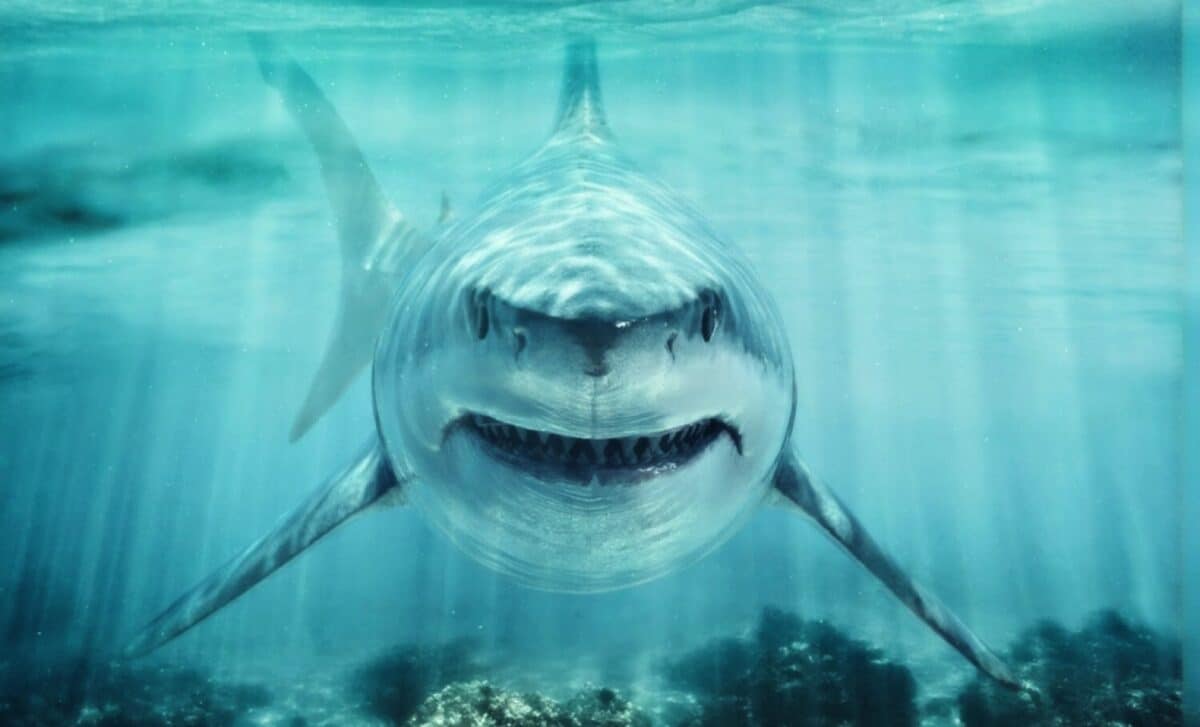
Around 115 million years ago, the waters off northern Australia were home to a giant shark that totally flips what we thought we knew about ancient ocean predators. Recent fossil discoveries show that sharks reached enormous sizes much earlier than scientists expected, competing with massive marine reptiles from the Age of Dinosaurs for the top predator spot.
The fossils were found near Darwin, Australia, a place known for its rich collection of ancient marine life. These new findings tell us that sharks were already huge back then, much earlier than scientists had thought. For years, experts believed that modern sharks only started growing to these sizes much later.
A Shark Way Bigger Than We Thought
The fossils that were uncovered, especially the vertebrae, suggest this shark was much larger than modern Great Whites. The vertebrae found were over 12 cm across, much bigger than the 8 cm vertebrae of today’s sharks. These remains belong to a group of giant apex predators called cardabiodontids, which roamed the oceans approximately 100 million years ago.
According to the work published in Communications Biology, this shark is 15 million years older than other known cardabiodontid fossils, meaning sharks were already massive way earlier than we thought. It’s pretty wild to think about a time when these giants were swimming around alongside creatures like plesiosaurs, which had long necks and were just as terrifying in their own right.
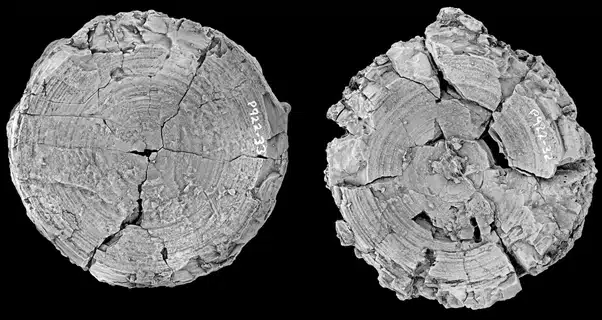 Fossilised vertebrae, some 115 million years old, from a giant lamniform predator near Darwin. Credit: Mikael Siversson
A Battle for the Top Predator Spot
But these sharks weren’t swimming around in empty waters, they were sharing their environment with some of the most amazing marine reptiles to ever exist. The fossils from Darwin show that, during this time, the oceans were ruled by creatures like ichthyosaurs, often called “fish-lizards”, and plesiosaurs. These were the giants of the seas, and now we know that sea predators were fighting for the top predator role, too.
The remarkably find present an exciting opportunity for further study and raise intriguing questions about how these large ocean hunters interacted with their marine reptile counterparts.
Did they compete for the same prey? Were they enemies, or did they simply coexist? While we don’t have all the answers, these fossils give us a glimpse into a prehistoric food chain where they were already a major force.
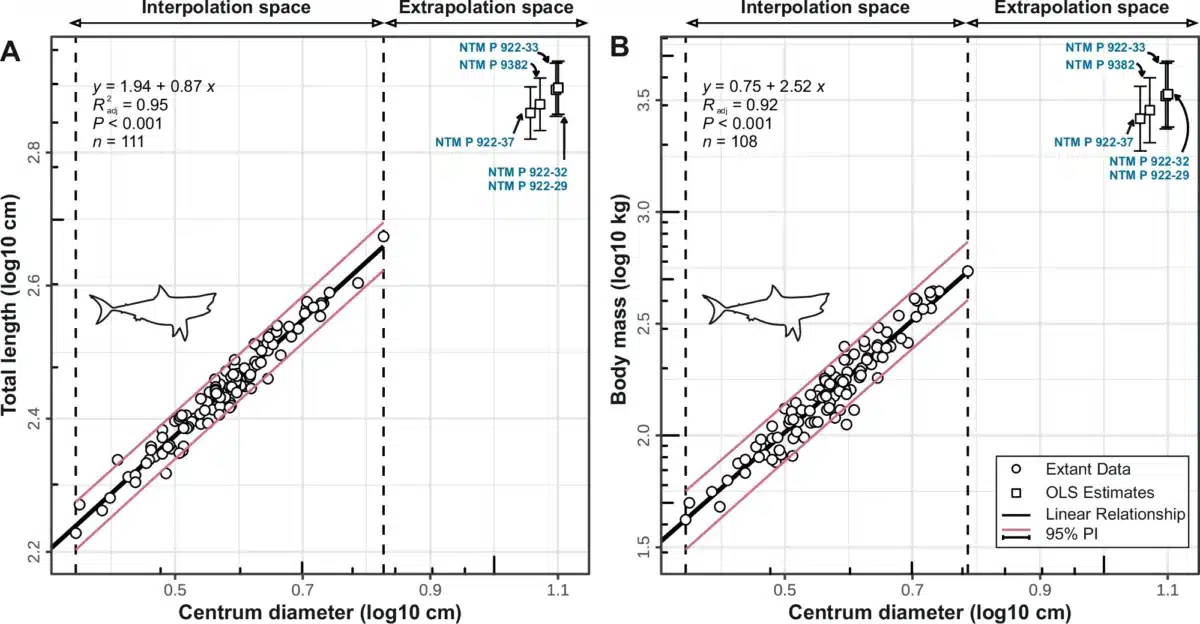 Graphs showing the total length (TL) and body mass (BM) predictions for the vertebral centra of cardabiodontids from the Darwin Formation. Credit: Communications Biology
Why Teeth Aren’t Enough?
Sharks are tricky to study because their skeletons are made of cartilage, which doesn’t fossilize as easily as bone. That’s why we mostly find their teeth, which get shed all the time. But finding vertebrae like these is incredibly rare and valuable. It gives scientists the opportunity to study the structure and evolution of these ancient apex predators in greater detail.
These predators have existed for over 400 million years, but the ancestors of modern sharks didn’t begin to resemble what we recognize today until around 135 million years ago. These new fossils from Australia show that even back then, they were already growing into the powerful predators we see today.