
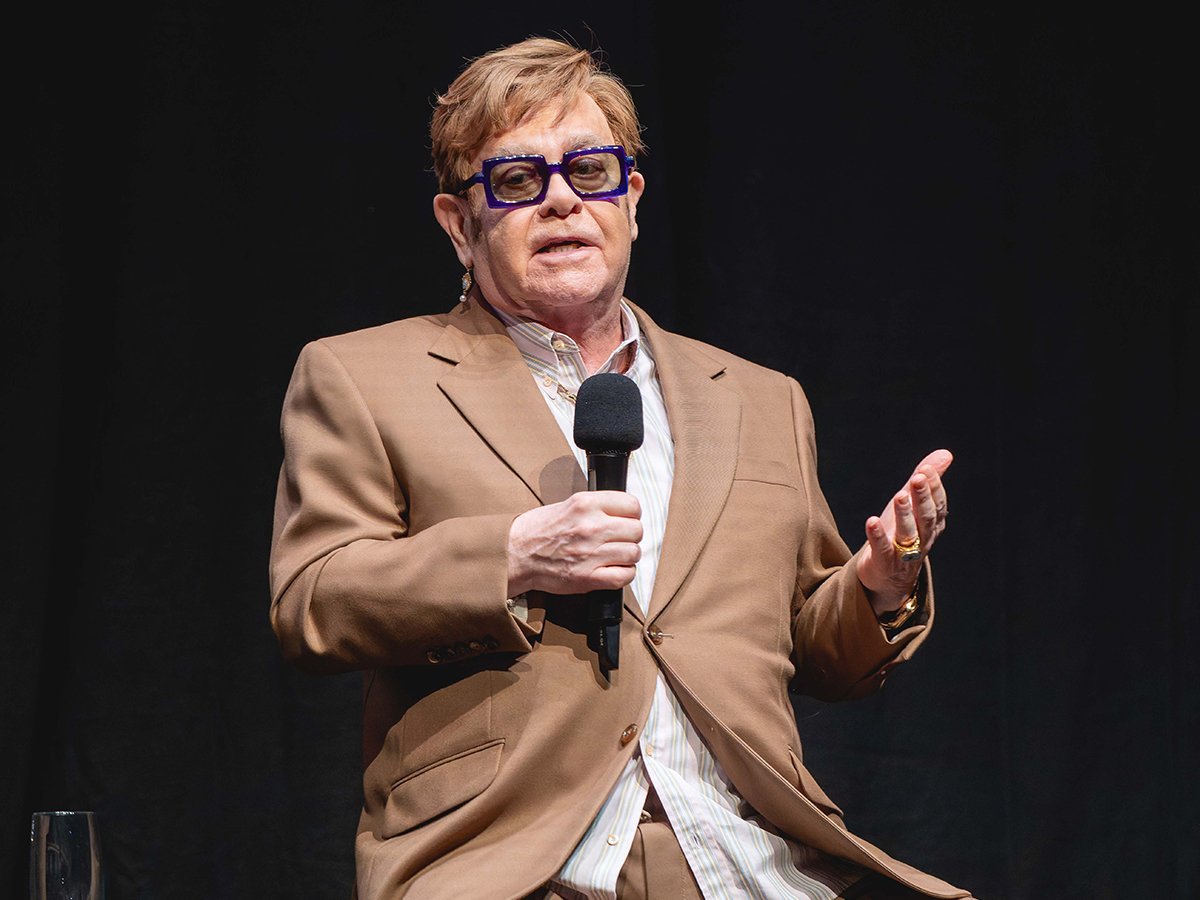
(Credits: Raph Pour-Hashemi)
Sun 30 November 2025 13:00, UK
When you’ve been in the business for as long as Elton John, you get used to the industry’s whims.
You also realise just how many of your friends are major names themselves, from Chappell Roan and Brandi Carlile to Pete Townshend and Mick Jagger. Considering the fact that John has been at it for over six decades, he’s bound to have rubbed shoulders with some of the most legendary acts in history – not to mention that he himself is one, too.
This is a major feat when you also consider the fact that, from day one, John wasn’t exactly your typical rock ‘n’ roll star. He had the talent and the passion, something he’s still very much committed to to this day. But when it came to all the aspects that people generally looked for or tended to gravitate towards in a rock star or rock frontman, John didn’t tick many boxes.
If it wasn’t his appearance or stage presence, it was the music itself, and, while many of his releases early on were successful and gained legacies in their own right, a lot of people didn’t know what to make of it. Even some reviews of Good Yellow Brick Road were scathing at the time, unaware that it would become one of the most iconic records in all of history.
Over the years, John hasn’t lost any of the connection he’s always had to music or the musical heroes he surrounds himself with. He hasn’t lost any of the fire that comes with constant writing and singing, even if there are certain factors that make it harder than it once was, like his sight. Even still, he pushes on, the concept of loss reserved for those he’s known and loved along the way, not how he feels about the art itself.
Having been in it for so long, John knows what loss looks and feels like. Many musicians in his orbit have come and gone, from Freddie Mercury and George Michael to John Lennon. Lennon, in particular, is someone whose impact goes beyond the music itself and into his own values and beliefs; something that John felt the world would have benefitted from in spades.
As he explained to Cameron Crowe in 2006 regarding his song ‘Blues Never Fade Away’, “I miss John Lennon’s laugh, and, God, could we do with a John Lennon in the world today. So you celebrate these people who were close to you in other ways, but the pain of losing them doesn’t go away.”
‘Blues Never Fade Away’ includes that line itself, “I miss John Lennon’s laugh”. The song itself was a heartfelt ode to all those John loved and lost, friends he’d known over the years and brilliant minds that the world lost too soon. There’s a bittersweetness to it that ruminates on having known them, but also the grief of losing them, and how sometimes it’s as all-consuming as missing the simple things, like someone’s laughter.
The song itself was one of John’s favourites, not just because of his connection to the subject but because he felt it was one of his best performances. This might have been because of the emotion he poured into it, but it ensured that it stayed with him, just like the people he was thinking about when he sang it.
“‘Blues Never Fade Away’ is just a reflection on [losing people],” he went on. “It’s a beautiful lyric and I think probably my best vocal on a record ever–I really believe that. I’m happy with the vocals on the whole album, but that one I sing with a special intensity.”
Related Topics