
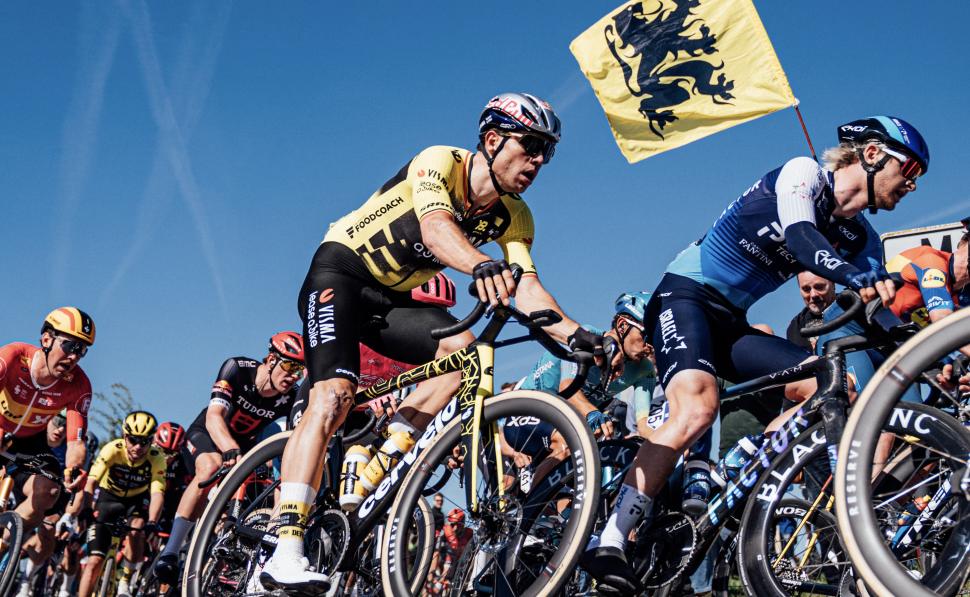
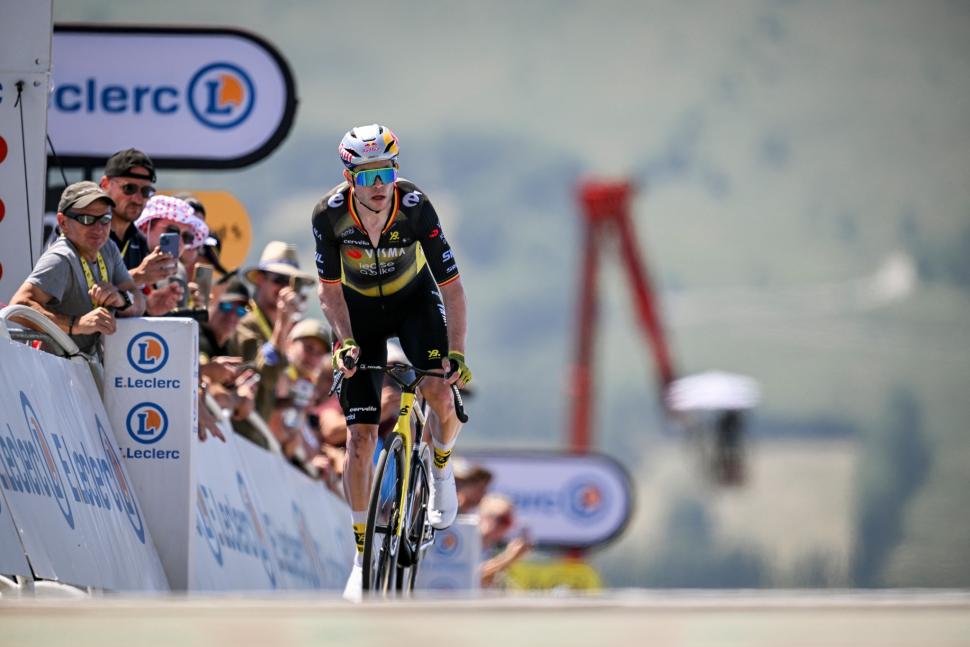
Wout van Aert has backed the idea to introduce ticketed sections at cycling’s biggest races in a bid to increase the money available to teams and riders, arguing charging €5 does not go against the spirit of the sport.
In fact, calling on his cyclocross experience, the Belgian told De Tijd: “If you charge €5 entry fee, that doesn’t mean it’s no longer for the people. The cyclocross asks for entry money, and nothing is more ‘of the people’ than that.”
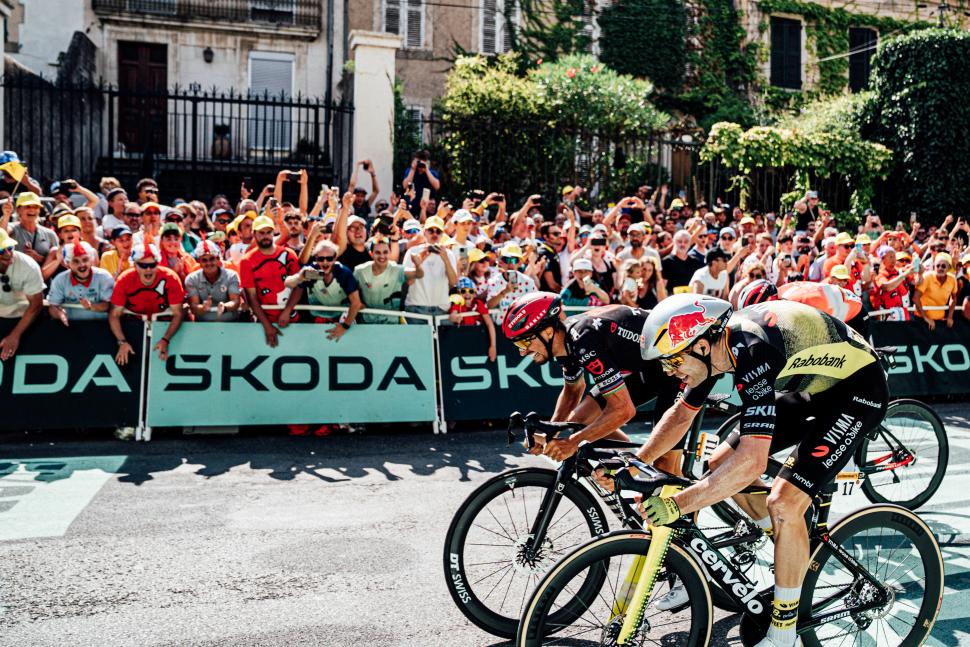
The ticket discussion has been a feature of this off-season, former Giro stage winner Jérôme Pineau proposing the idea for the final kilometres of Alpe d’Huez at next summer’s Tour de France… IF the money was guaranteed to go to the teams, not race organiser ASO.
Most proponents have suggested limiting ticketed areas to very short sections of the most popular climbs at the biggest races on the calendar (think the final section of Ventoux, Alpe d’Huez etc.), however the idea has still attracted the predictable disgust from some cycling fans who suggest it goes against the spirit of the sport.
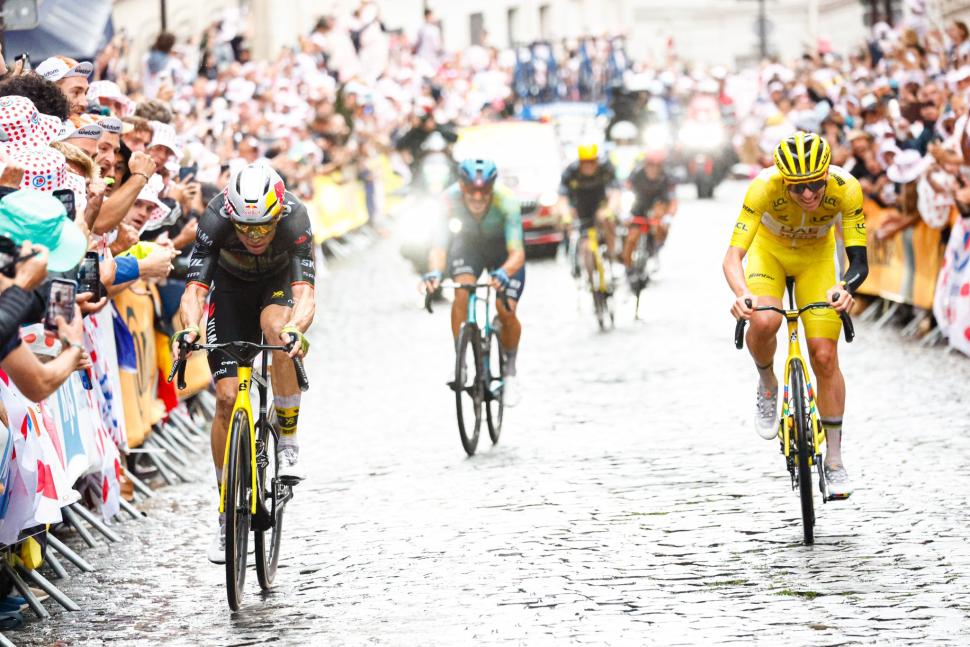
Charging a small fee would, those in favour have argued, provide teams and riders a new income source at a time when many are struggling to keep the lights on from year to year. There have also been claims that it may even improve the roadside-viewing experience, making things safer for the riders too.
For what it’s worth ASO, the organiser of the Tour, has definitively shut down any talk of tickets for Alpe d’Huez next summer.
We thought that might be the end of it, but Van Aert believes there could be some merit in charging roadside spectators a few euros for access to a prime spot. The Visma-Lease a Bike rider’s main point was that the ticket system is already in place for most cyclocross events, although critics might propose a difference between often-private events and racing on public roads.
The Belgian pointed to cycling’s financial “fragility”, few teams enjoying stability from year to year and extremely reliant on sponsors. “[It] would be much less of an issue if, alongside sponsorship income, there were also revenues coming from the sport itself,” Van Aert stated, putting TV rights forward as another proposal.
“When I see how the NBA controls its playing field, while still letting teams enjoy what comes in from TV money. Cycling can learn a lot from that.
“Correct me if I’m wrong, but a major race like the Ronde [van Vlaanderen] or the Tour stands or falls with us, the riders and teams who come to take part. But as a team we don’t even receive compensation that covers the cost of that participation. That should really be a minimum. The pie could be divided more fairly.”
Van Aert’s comments came at the end of a week when Mark Cavendish too had spoken about pro cycling’s financial model, and hinted that he’d like to create his own team in the future “that is more along the lines of other sports”, like Formula 1.
The former world champion also criticised cycling’s current business model, which he argues is failing to “properly” utilise a number of potential revenue streams, while implying that many current pros aren’t doing enough to make money in their own right.