

Listen to this article
Estimated 4 minutes
The audio version of this article is generated by text-to-speech, a technology based on artificial intelligence.
A federal-provincial agreement on energy policy is being characterized as “pragmatic” and “a game changer” by the president of a group representing oil and gas drillers in Canada, even as the industry comes off a down year.
Mark Scholz, president of the Canadian Association of Energy Contractors (CAOEC), which represents 89 Canadian land drilling, offshore drilling and service rig companies, told reporters Monday that the agreement reached between Alberta and Ottawa was “great news for the conventional side of the business.”
“This is really pragmatic policy. I think it’s competitive policy, and I think it’s a game changer for the conventional business,” Scholz said.
The agreement lays out the groundwork for a new bitumen pipeline through British Columbia. It also includes a suite of changes to Ottawa’s environmental regulatory landscape, many of which the CAOEC had long been pushing for, including the suspension of the proposed federal oil and gas emissions cap.
But the MOU won’t translate into a dramatic change to the CAOEC’s forecast, with impacts expected more in the long term, Scholz said.
“We don’t see a dramatic change in 2026,” he said, noting the proposed pipeline through B.C. is years away from being realized.
Drilling activity expected to slightly increase
Scholz said the sector will finish 2025 with less activity than it saw the year prior, with year-over-year drilling activity expected to decrease by about six per cent.
The start of the year appeared promising, with first-quarter drilling two per cent higher than in 2024, but conditions deteriorated sharply.
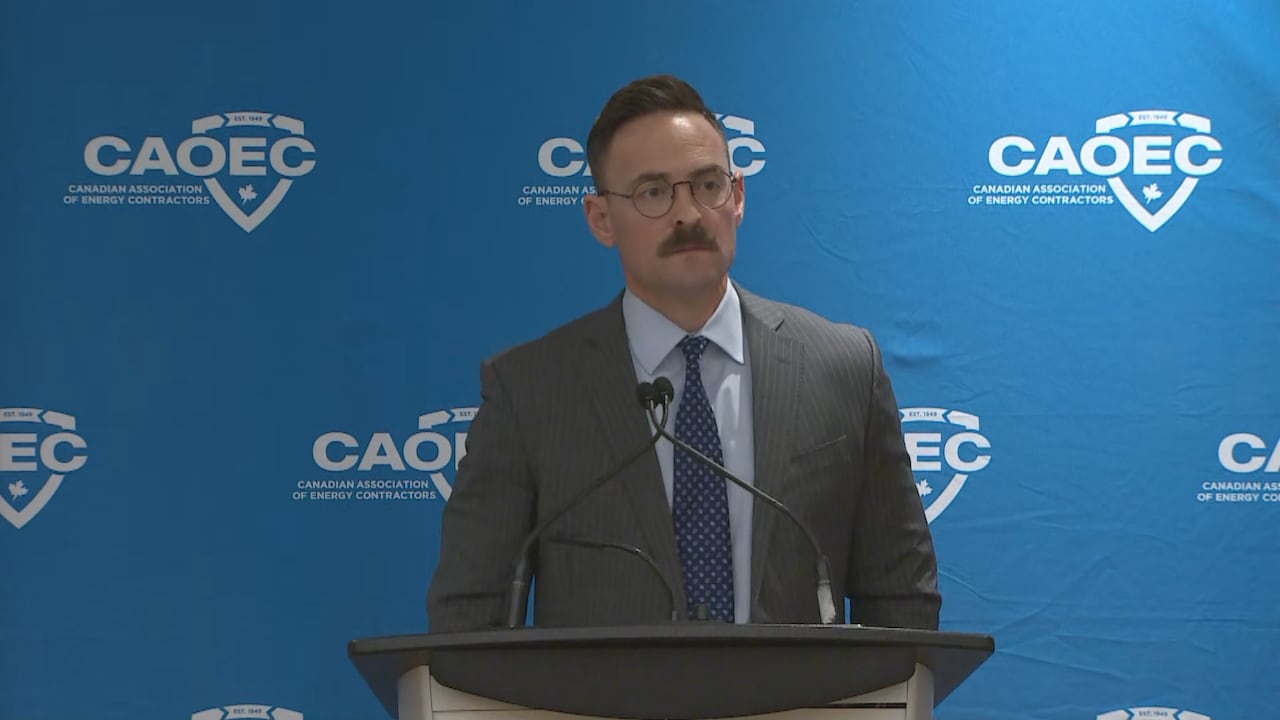 Mark Scholz, president of the Canadian Association of Energy Contractors, told reporters Monday that the recent Alberta-Ottawa deal is a positive step for the conventional oil and gas industry. (Mike Symington/CBC)
Still, the CAOEC is expecting a slight uptick in activity next year. The industry group wrote in its 2025 State of the Industry report that it is expecting about 5,700 wells to be drilled in 2026, which would be up about three per cent from this year.
“The reason why we were seeing such a drop in activity was because we were seeing gluts within the market for natural gas within Western Canada, and it impacted our operations significantly,” Scholz said.
“Part of that was because of the timing issue with LNG offtake, and the ability to export that off the continent. We see that well dealt with, in the second half [of 2026], and so we do see a continued strong demand for natural gas drilling within Western Canada.”
He said CAOEC is also hopeful that oil markets show more discipline.
“We have already heard discussions about production cuts with OPEC, some more discipline from the Middle East producers. So I think that will firm up crude oil prices, which will provide some stability,” he said.
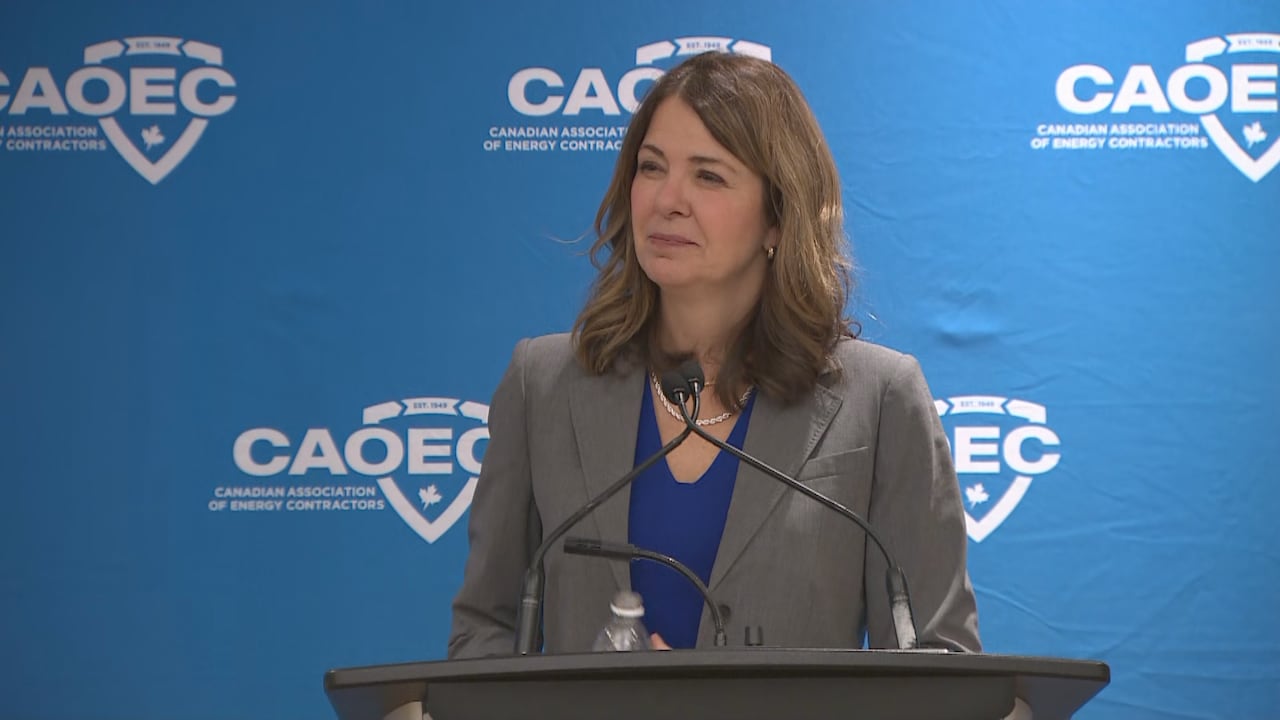 Speaking to reporters on Monday, Alberta Premier Danielle Smith said while price fluctuations are painful for governments who rely on energy revenue, she remained optimistic about the industry’s long-term outlook. (Mike Symington/CBC)
A separate industry forecast from the Calgary-based Enversa was released last week. It suggested that drilling activity would fall further in 2026, as North American oil prices remain below $60 US a barrel.
That report suggested oil and gas companies would see their total capital spending decline by 5.6 per cent this year and a further 2.2 per cent in 2026.
The U.S. Energy Information Administration projects prices will decline to an average of $55 US in 2026, and while projections vary, others see prices headed lower in 2027.
Speaking to reporters Monday, Alberta Premier Danielle Smith said “short-term price fluctuations are painful for governments” that rely on oil and gas as a source of revenue.
“But I remain very confident that when we look forward five, 10, 15 years, that there’s going to be more Alberta energy on the market,” Smith said.