
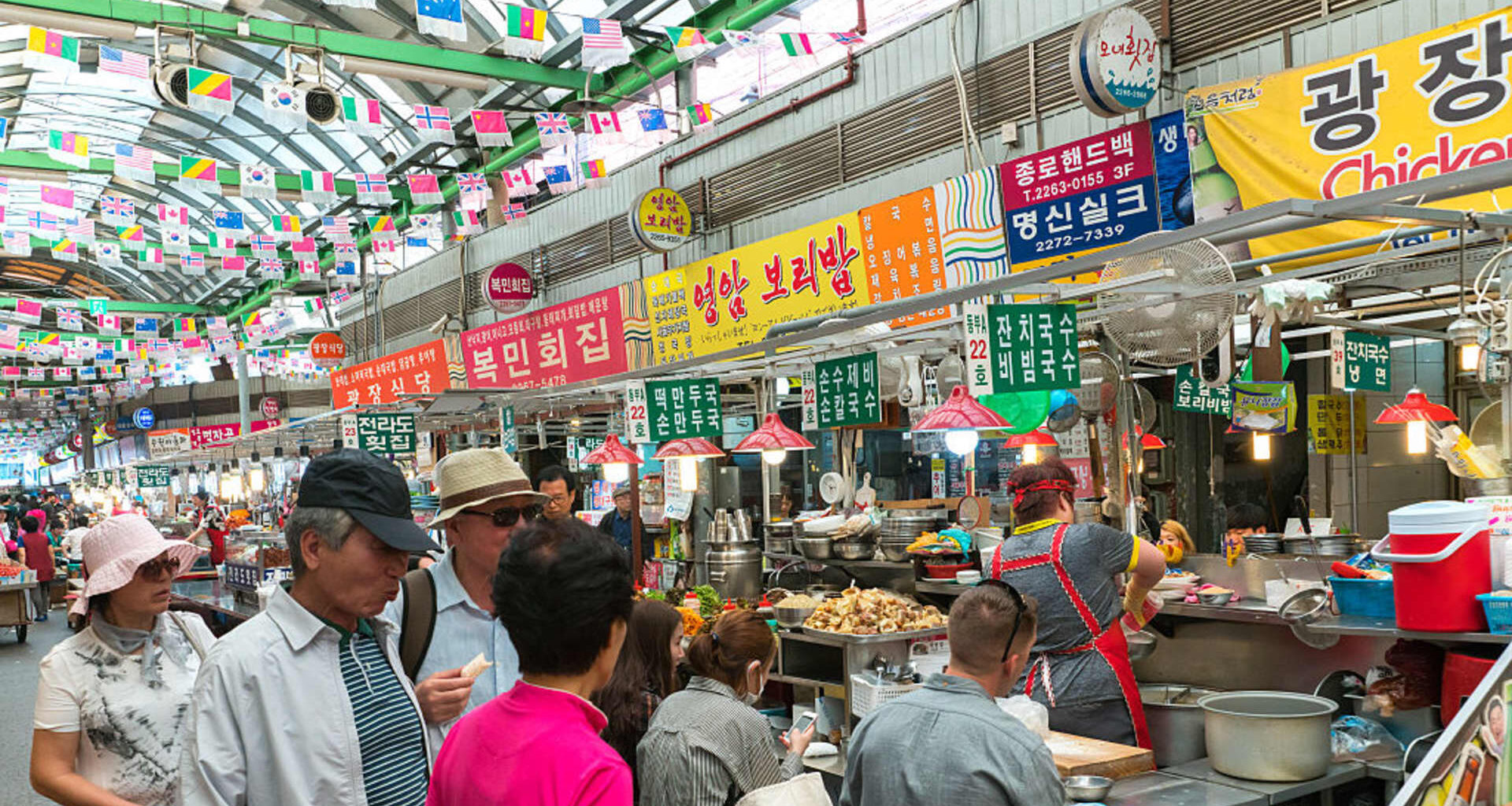
Stalls at the Gwangjang traditional market in Seoul, South Korea.
Eric Lafforgue/art In All Of Us | Corbis News | Getty Images
South Korea’s consumer prices rose 2.4% in November from a year earlier, driven by higher food and services costs, bolstering the case for the Bank of Korea to maintain interest rates at the current level for longer.
The consumer price index was roughly in line with median forecasts for a 2.35% figure, but stayed above the BOK’s inflation target level of 2% for a third straight month.
An index on prices of agricultural and fishery products increased 5.6% from a year earlier, mainly because prices of fresh produce, including rice and mandarins, soared 18.6% and 26.5%, respectively.
The BOK kept interest rates unchanged for a fourth straight meeting at 2.50% last week as a tumbling won currency reduced the scope for further easing and signaled the bank could be nearing the end of its current rate cut cycle.
“Processed food prices remain high, having risen sharply in the first half of the year. This is due to the impact of adverse weather conditions, including frequent rain, and the won’s declines, which has led to a sharp increase in the price of agricultural, fishery, and petroleum products,” Finance Minister Koo Yun-cheol said at a policy meeting.
The median analyst expectation is now for one more cut in the first quarter of next year and then a prolonged pause.
The consumer price index declined 0.2% on a monthly basis, compared with a 0.25% decline expected by economists.
Core inflation, which excludes volatile food and energy components, was up 2.0% from a year ago.