
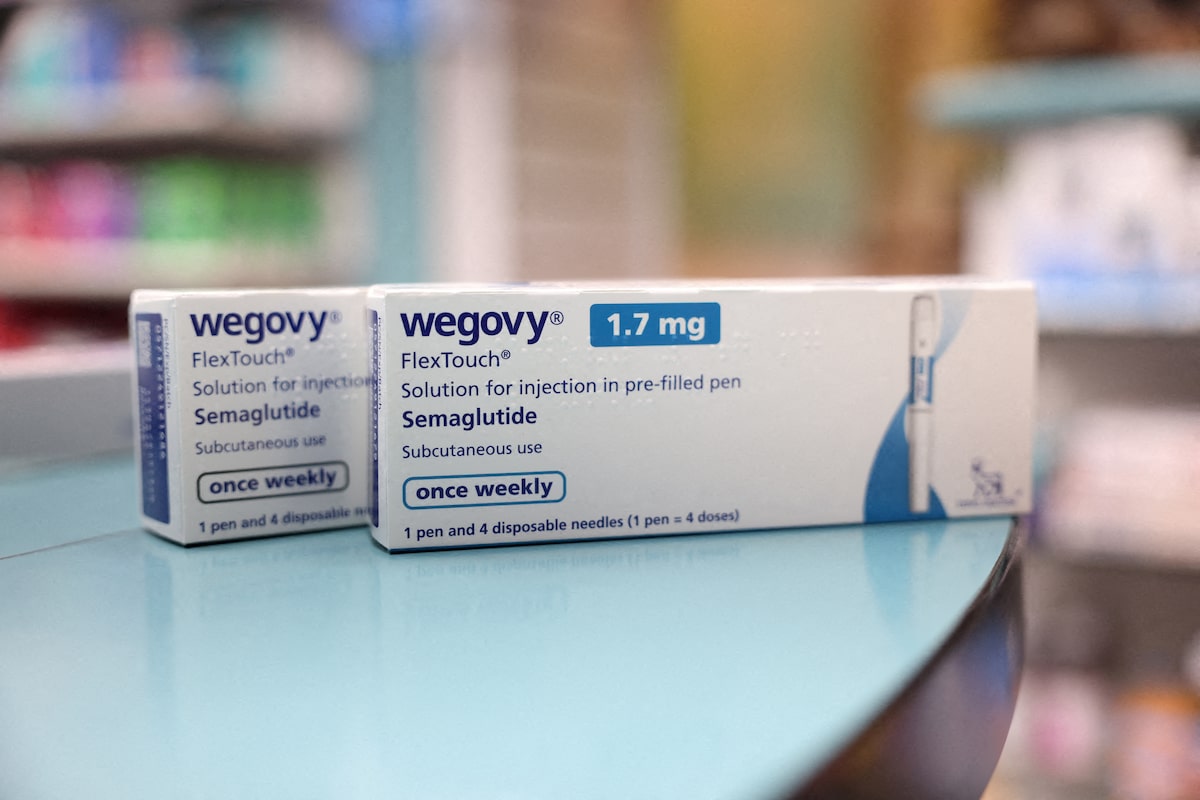
Canada’s public health plans and Danish drugmaker Novo Nordisk NVO-N have broken off talks to cover the blockbuster weight-loss drug Wegovy.
The pan-Canadian Pharmaceutical Alliance (pCPA), a body that represents all federal and provincial drug plans, said Monday that it had concluded negotiations with Novo Nordisk without a deal after two months because the manufacturer had declined to negotiate Wegovy’s price.
Wegovy is a drug prescribed for weight loss that contains the same active ingredient – semaglutide – as Ozempic, which is prescribed for patients with type 2 diabetes.
Ozempic is by far the best-selling drug in Canada, earning $2.2-billion at retail pharmacies for the first nine months of 2025, according to aggregated prescription data collected by IQVIA Canada. Wegovy is No. 9 with $441-million in sales as of Sept. 30.
Novo Nordisk says that more than a million Canadians are currently taking semaglutide.
Canadian firm enters race to bring generic Ozempic to market
Ozempic has been covered by public health plans since shortly after the pCPA successfully concluded negotiations with Novo Nordisk over the drug’s price on Dec. 17, 2023.
Since then, public health plans (other than Quebec) spent $667-million on semaglutide in 2024, according to the Canadian Institute for Health Information.
Wegovy is a higher dose form of Ozempic and also has a higher list price. Canada’s Drug Agency, a non-profit that evaluates medication for cost effectiveness, among other factors, says Wegovy costs about $5,066 per patient per year.
The CDA had recommended this summer that public drug plans cover Wegovy for patients with a body mass index (BMI) of 27 or higher who also had pre-existing cardiovascular disease. The drug was to be taken along with a reduced-calorie diet and increased physical activity.
The CDA estimated the cost to cover Wegovy for public drug plans was $600-million over three years, although it could be as high as $3.5-billion, depending on uptake.
Indian pharma giant says Health Canada rejected its application to make generic semaglutide
The agency, which often recommends price reductions, had suggested public plans seek a discount of 67 per cent off the list price.
The pCPA said it was prepared to negotiate with Novo Nordisk when it sent a letter of engagement on Oct. 2, but ultimately the company declined to participate and no offers were exchanged.
“We remain ready and available to re-engage this file should they change their mind,” Mauro Chies, chief executive officer of the pCPA, said in an e-mail. “To do this, Novo Nordisk can submit an unsolicited offer, which we would welcome.”
Novo Nordisk spokesperson Kate Hanna said the company had ultimately decided to not pursue public reimbursement at this time.
Patient group Obesity Canada said many Canadians would have benefited from a deal.
“Given that these medications are not accessible to the majority of Canadians that could benefit from them due to lack of coverage and cost, this is a disappointing outcome that means Canadians will continue to lack access to effective treatment,” said Ian Patton, director of advocacy and public engagement.
Ozempic and Wegovy both lose market exclusivity on Jan. 4, meaning generic versions will be legal next year. So far, seven drug manufacturers have filed submissions to Health Canada to make generic semaglutide, although the products are not currently expected to hit pharmacies until spring or summer of next year.
With a report from Kelly Grant