
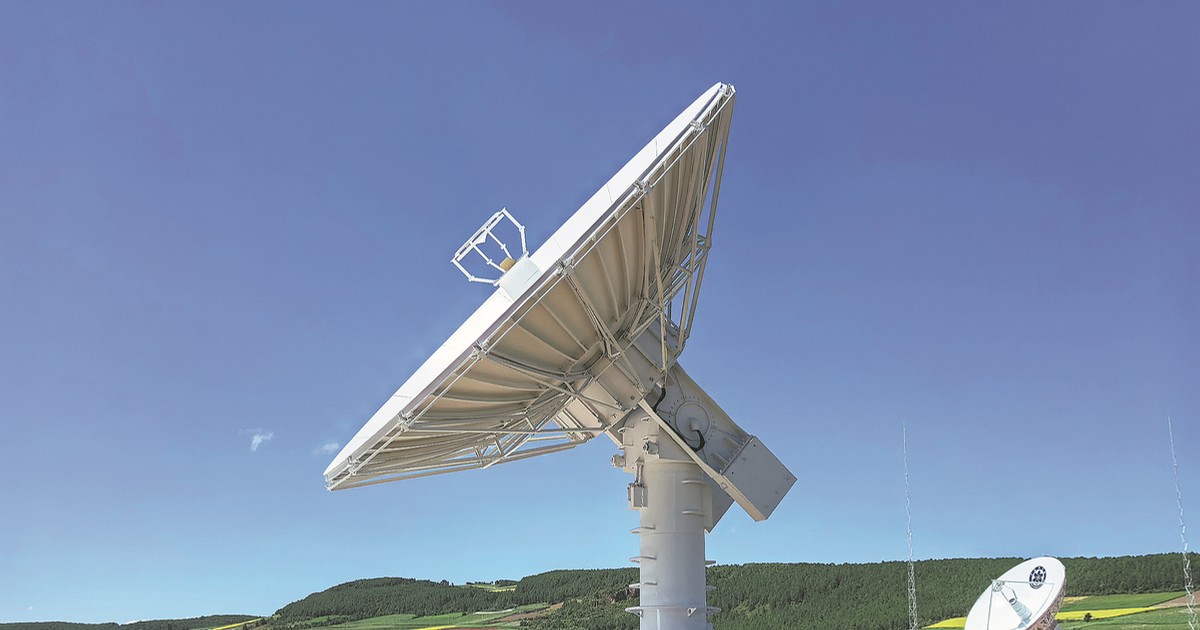
The handover reflects more than just the completion of a project; it also represents Namibia’s growing commitment to increasing its footprint in space technology.
With the SGDRS now under its supervision, the country’s ability to receive, process, and use satellite data improves.
The handover and takeover ceremony was attended by officials from both nations, where official documents were signed to seal the deal.
Senior representatives from Namibia’s Ministry of Education, Innovation, Youth, Sports, Arts, and Culture (MEIYSAC) and the People’s Republic of China Embassy in Namibia attended the event on November 20, 2025.
The signing of the official Handover and Takeover Certificate for the SGDRS project was spearheaded by Namibia’s Dr Lisho Mundia, Deputy Executive Director for Higher Education at MEIYSAC, and China’s Ambassador to Namibia, Zhao Weiping.
The signing signals the completion of Phase 1 of a historic bilateral project aimed at strengthening Namibia’s indigenous technology and research abilities.
This phase, as seen in SpaceAfrica, began in 2023, with deliverables that include a tracking and data receiving station, a comprehensive data processing system, and the training of Namibian technicians equipped to operate the facility.
The station will be an invaluable asset for several sectoral offices, ministries, and agencies, as well as higher education institutions and research organizations around the Southern African country.
After the SGDRS is fully functional, it will supply vital remote sensing data to support a variety of national priorities, such as better management of natural resources, increased agricultural productivity, disaster risk reduction, adaptation and mitigation strategies for climate change, and anti-poaching initiatives.
![Namibia is one of the emptiest countries in the world [Tripadvisor]](data:image/svg+xml;charset=utf8,%3Csvg%20xmlns%3D'http%3A%2F%2Fwww.w3.org%2F2000%2Fsvg'%20width%3D'700'%20height%3D'500'%20data-ring-placeholder%3D'1'%3E%3C%2Fsvg%3E "Namibia is one of the emptiest countries in the world [Tripadvisor]")
The bill is intended to establish a well-organized legal framework that will control and drive the country’s space sector ambitions.
Namibia’s Minister of Information and Communication Technology, Emma Theofelus, unveiled the bill, which also seeks to align the country’s space scientific activities with broader socioeconomic growth goals.
Furthermore, in March 2024, the National Commission for Research, Science, and Technology established the second National Space Science Council to serve as a technical and advisory body.
The council consists of professionals with backgrounds in astronomy, law, electrical engineering, information and communication technology, and geographic information systems. The council will serve until March 2027.