
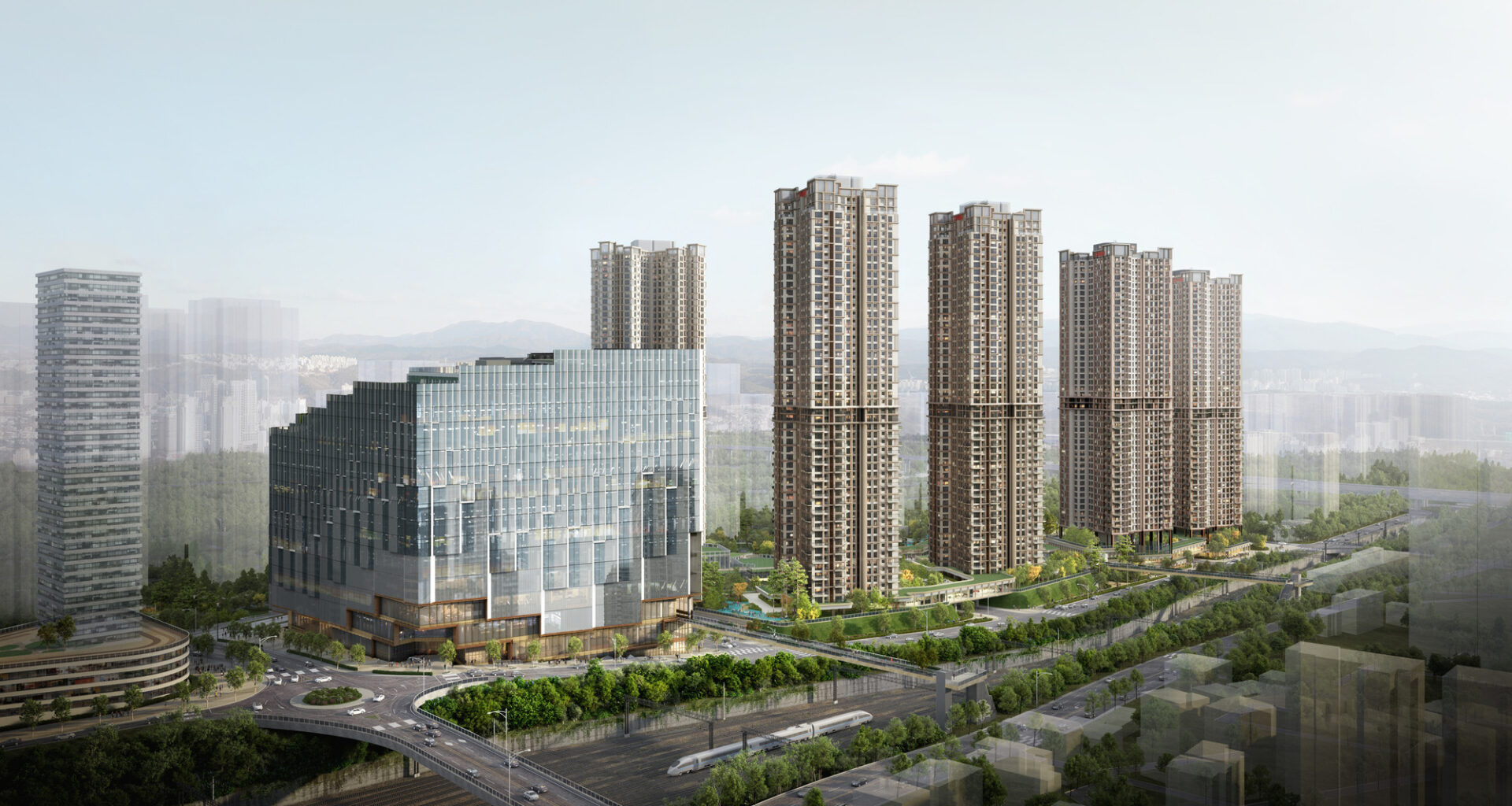
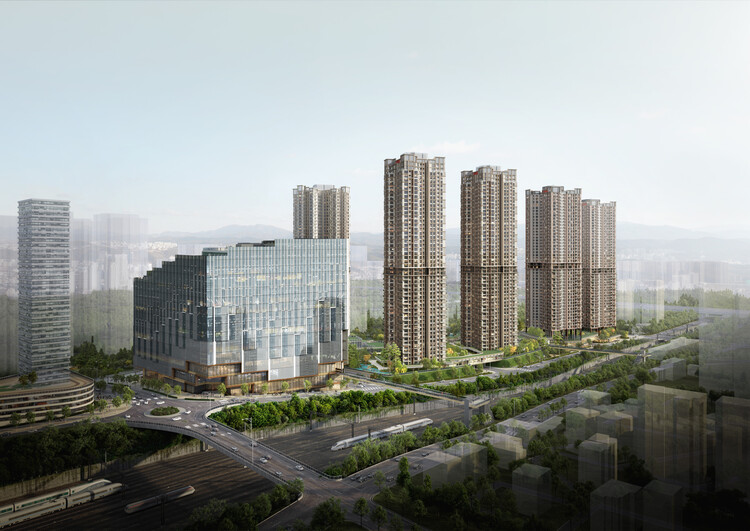
 SeoulOne master plan by UNS. Render. Image © Bluesquare
Share
Or
https://www.archdaily.com/1036582/uns-designs-a-10-minute-walkable-city-master-plan-for-multigenerational-living-in-seoul-south-korea
UNS has revealed images of SeoulOne, a master plan designed for Hyundai Development Company (HDC) in Seoul, South Korea, intended as a new model for multigenerational living. The project, already under construction on a brownfield site in the northeast of the city, reimagines an existing industrial site and railway area as a 405,000 m² car-free neighborhood for a multigenerational community. A never-sleeping, green master plan for Seoul, SeoulOne is envisioned as a mixed-use mini-city where all essential services for people of all ages are available within a 10-minute walk. The design includes 24/7 residential towers, retail spaces, offices, a hotel, sports facilities, daycare centers, senior living facilities, and a medical center, offering permanent services within walking distance. More than 30% of the site is dedicated to vegetation, including pocket parks, roof gardens, water gardens, and a forest walk, creating a year-round green village.
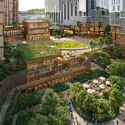
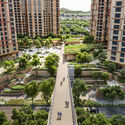
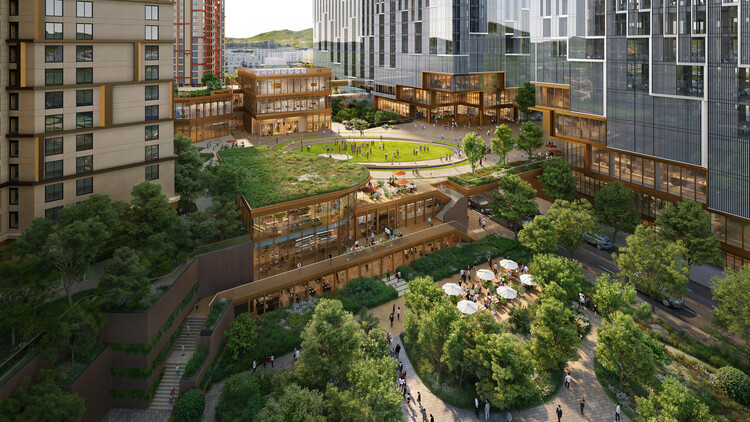 SeoulOne master plan by UNS. Render. Image © ATCHAIN
The concept for SeoulOne is also guided by traditional Korean urban planning principles, which typically respond to surrounding natural landscapes. The site, located close to the city’s mountainous northeast, sets the stage for the project’s conceptual and organizational design language. The continuity of green space is to be maintained throughout the development, while the buildings’ forms follow the topography of the nearby mountains and create visual corridors toward them. Keeping the master plan car-free extends this respect for nature and led to the introduction of pedestrian bridges connecting to surrounding neighborhoods. According to UNS, SeoulOne integrates green and blue networks, clean energy systems, and smart city technologies to reduce its environmental impact. Locally sourced materials, including those inspired by traditional Korean ceramics, were used to minimize waste and lower the project’s carbon footprint.
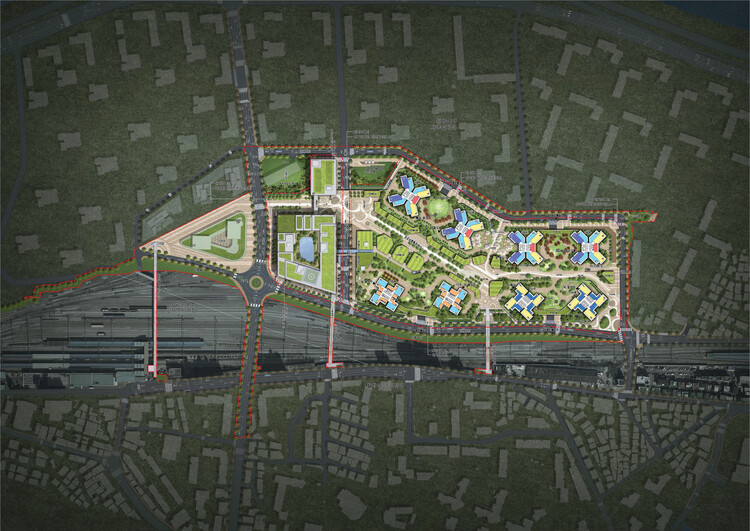
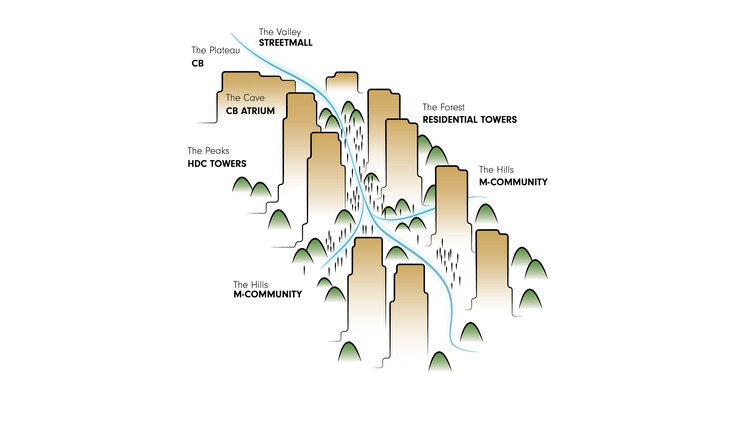 SeoulOne master plan by UNS. Masterplan concept diagram. Image Courtesy of UNS
 SeoulOne master plan by UNS. Render. Image © Bluesquare
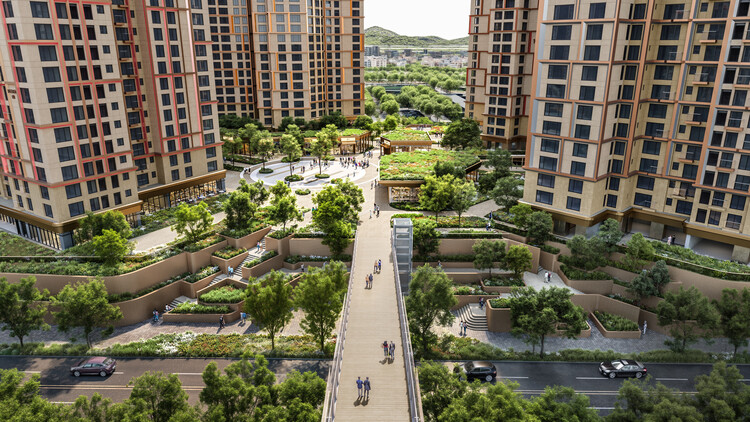
The core concept of the master plan is structured around six layers that collectively express the idea of the Grand Circle of Life. First, SeoulOne is designed as a multigenerational development. From children’s services and amenities to elderly centers and medical facilities, it supports a broader range of age groups than traditional developments in the country. Second, building on this principle, the foundation of the master plan is a 10-minute, walkable city where urban conveniences are a short distance from residents’ homes. Built on a car-free, elevated platform, vehicular access to underground parking is provided via an outer ring road encircling the site, while a ring of outward-facing retail outlets connects the development to surrounding communities. A planned metro station adjacent to the site will also ensure quick access to the heart of Gangnam.
Related Article The Korean Hanok: Exploring Traditional Architecture’s Environmental Principles
The third layer supports the 10-minute city approach through mixed-use programming that fosters 24/7 activity. It combines housing for all ages, retail of various scales, restaurants and cafés, daycare and healthcare centers, a library and learning center, sports facilities, offices, and a hotel. This mix ensures that residents can live, work, play, shop, and learn within walking distance. The fourth layer expands the commercial offering, with retail experiences for different user groups, from large-scale shopping malls and flagship stores to small street pavilions, serving both residents and visitors. The fifth layer focuses on public space, featuring interconnected plazas, pocket parks, a forest walk, water gardens, roof gardens, recreational spaces, green courtyards, and green roofs to create a green village designed for year-round enjoyment. The final layer centers on revitalization, transforming an unused railway yard into a new urban typology.
 SeoulOne master plan by UNS. Render. Image © ATCHAIN
 SeoulOne master plan by UNS. Render. Image © Bluesquare
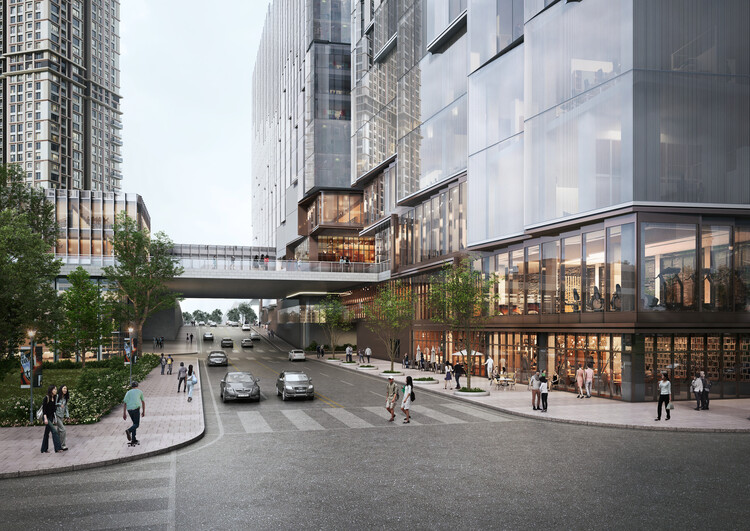
The project also includes the design of landmark destinations within the neighborhood. A building called The Cube serves as a major anchor for the entire development. The west wing contains a large retail mall on its lower levels, offices on the middle floors, and a hotel with stepped rooftop terraces and a sunken secret garden at the top. The office spaces within The Cube are organized around a large collaborative atrium courtyard, featuring a sweeping ramp that links all office floors. This green courtyard is crowned by stepped skylights that allow natural daylight to flood the interior. Another area, called The Cube Nest, houses retail, fitness, and entertainment spaces and is connected to the main building via a sky bridge. To encourage interaction and reduce isolation, every two towers in the development are connected by a shared podium. These podiums form M-community levels, dedicated spaces for residents to meet and engage.
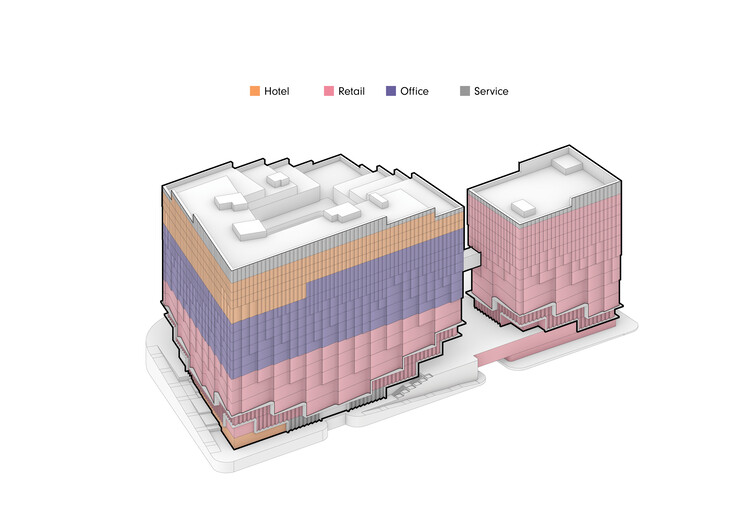 SeoulOne master plan by UNS. The Cube program diagram. Image Courtesy of UNS
For the SeoulOne masterplan we have aimed to create the ultimate contemporary 10-minute city, where the daily life experience of the residents is the top priority. We do this through the inclusion of a rich density of uplifting, curated on-site experiences that provide an extensive range of options for how residents of all ages can spend their living, working and leisure time. — Ben van Berkel, founder and principal architect of UNS
Other recent news from Seoul includes Foster + Partners’ design for IOTA Seoul I, a mixed-use development located between Seoul Station and Namsan, a 270-meter-high peak in the Jung-gu district in the south-central part of the city. The city also recently hosted the 2025 edition of the Seoul Biennale of Architecture and Urbanism, curated by Thomas Heatherwick, with an exhibition focused on making cities more joyful, engaging, and radically human-centered. Among the installations, Walls of Public Life, a collective work by 24 designers, explored how building exteriors can become more expressive, engaging, and emotionally resonant. Another highlight was Breathing Cells, an installation by MAD Architects presenting an alternative vision for future urban environments, where architecture behaves more like a living organism than a static object.