
It is becoming harder to ignore silicon-carbon batteries in smartphones. This new technology, which promises denser batteries without extra physical size, has been powering a raft of new smartphones this fall, including the OnePlus 15, Oppo Find X9 Pro, and the Honor Magic V3. Apple’s iPhone 18 and Samsung’s Galaxy S26 could be next. Check out my video on why above.
Apple Hints At iPhone 18 Battery Increases With iPhone Air Design
There are hints that Apple is considering denser batteries in the iPhone Air’s internal design. In the slim phone, engineers shifted the logic board and converted most of the phone’s center into pure battery space. To do this, they used something called “metal can” technology, as Gene Berdichevsky, CEO of battery materials manufacturer Sila, described it in a TechCrunch story.
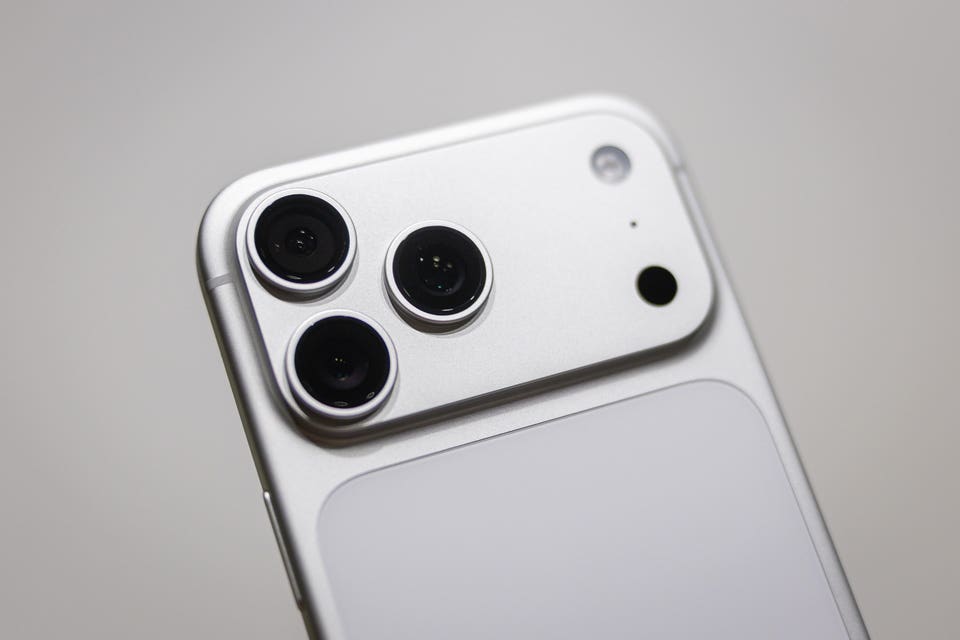
The Apple iPhone 18 and Samsung Galaxy S26 will fall behind rivals on battery life if they don’t use silicon carbon battery technology in 2026.(Photo by Annice Lyn/Getty Images)
Getty Images
In short, that is a rigid metal casing that lets the battery take new shapes and sit closer to the frame edges—something that was not possible with the flexible foil pouches used before. This, Berdichevsky said, “definitely helps introduce silicon in these kinds of devices.”
It’s Not Just The iPhone 18 Battery, The Samsung Galaxy S26 Battery Could Use Silicon Carbon Too
Samsung, too, redesigned its internals to make the ultra-slim Galaxy S25 Edge and Galaxy Z Fold 7. Read about how it did that here. The Korean company will also be looking at silicon-carbon technology to maximize this extra space, especially since the Edge’s poor battery life may have hurt sales.
Rumors suggest the company will extend the battery life in the Galaxy S26 Ultra from 5,000mAh to 5,200mAh. This small jump may be Samsung dipping its toes into silicon-carbon cells, as Honor initially did with its first dense battery phones, or perhaps it has utilized its new internal space-saving technology in the Galaxy S26 for a larger lithium-ion battery.
The company told Tom’s Guide in an interview that it is “always looking at…emerging technology” in response to a question about silicon-carbon batteries. That reluctance to dive headfirst into the new battery technology may stem from the risks it can pose: silicon swells more during charging and has a shorter battery lifespan. To combat this, manufacturers limit how much silicon they use and add engineering tricks to keep durability reasonable.
What is more likely, and as we’ve seen with Apple and Samsung this year, is that both companies will dip their toes into silicon-carbon battery technology via an entirely separate phone. The iPhone Air and Galaxy S26 Edge (and the Note Edge in 2014) exist outside of the main smartphone lines of both companies. The Galaxy S26 Edge arrived months after the Galaxy S25 with its own separate launch event. Don’t be surprised if the main lineup for both companies have familiar battery size numbers, but a new handset lands at another point in the year.
Rivals May Leave Samsung’s Galaxy S26 And Apple’s iPhone 18 With No Choice On Silicon Carbon Batteries
The internal redesigns of the Galaxy S26 Edge and iPhone Air to maximize battery space suggest both companies are flirting with silicon-carbon battery technology. The emergence of giant batteries from lesser rivals may force the hands of Apple and Samsung.
Regardless of their market dominance, battery life remains the number one concern for smartphone buyers, which is swiftly followed by price. Both of which Chinese manufacturers beat Samsung, Apple, and Google on. The difference between a phone that lasts a day and one that lasts three, with high-end specifications, may be too strong an allure for buyers and force the American tech giants into adopting silicon-carbon in the iPhone 18 and Galaxy S26.