
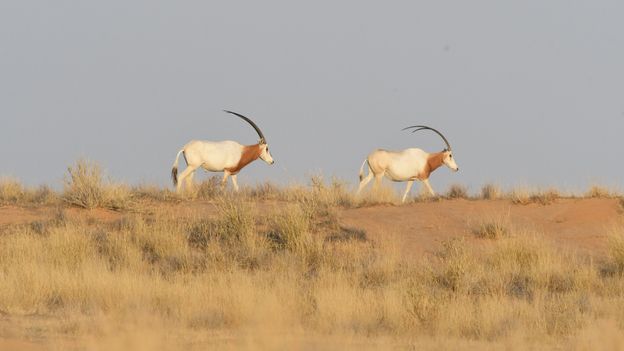
Despite once roaming thousands of miles from the Nile to the Atlantic and on both the Sahara’s northern and southern rims, scimitar-horned oryx were last seen in the wild during the 1980s in central Chad and the Aïr Mountains of Niger. Although they had been hunted sustainably for millennia, the arrival of 4x4s and automatic weapons led to rapid declines. “A big part of the reason why they went extinct in the wild is that they’re very tasty,” says Gilbert, while their tough skin – useful when clashing horns – “makes excellent quality leather”.
Since the 1960s a group of oryx have been shuffled around zoos and institutions like Marwell, with keepers acting as matchmakers to prevent inbreeding among the captive population. Marwell is the keeper of the scimitar-horned oryx studbook, a sort of “Tinder” for endangered species, says Sophie Whitemore, a zoologist at Marwell Wildlife and the international studbook keeper. “If an animal is born, it pops up on my system and I know who the parents are and where they come from,” says Whitemore.
Keepers like Whitemore and Gilbert track each animal’s bloodline, similar to the pedigree databases for horses. To prevent inbreeding and keep their genetic stock varied, each year some zoos move individuals, usually males, to replicate the type of shifts that happen in the wild, says Gilbert. Starting out, the studbook had fewer than 50 individuals, mostly captured in Chad, but with notable gaps in early record keeping, she recalls. From such small founder populations, they risked inbreeding of traits that can cause populations to collapse. Yet, today, the studbook lists 3,295 animals in 182 zoos and institutions.
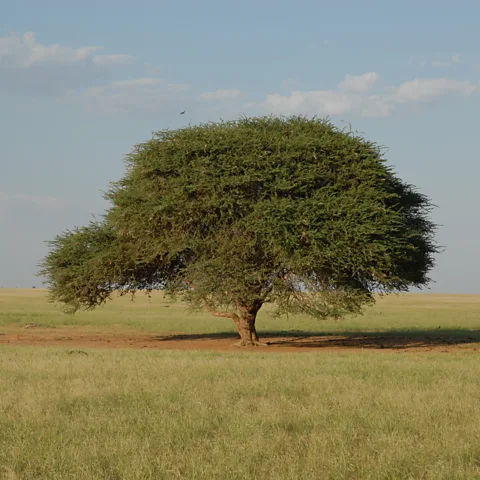 Sahara ConservationIn the arid lands at the edge of the Sahara, trees act like “umbrellas on the beach” (Credit: Sahara Conservation)

In contrast with their dire situation in the wild, the oryx has fared well in captivity, and the breeding programme has preserved much of the genetic diversity they will need to rebound in the wild. In addition to the population in zoos, there are roughly another 10,000 spread out between private holdings and hunting estates in the US, mainly in Texas. These are not part of a controlled breeding programme, so aren’t “optimum candidates for what we’re trying to do in Chad,” says Newby, but do form “part of an insurance policy against extinction in the wild, which is already a good thing”. However, genetic testing, led by the Royal Zoological Society of Scotland and partners, is increasingly allowing scientists to test if these US-based oryx contain genes that are unrepresented in the studbook, potentially allowing them to further expand the gene pool.