
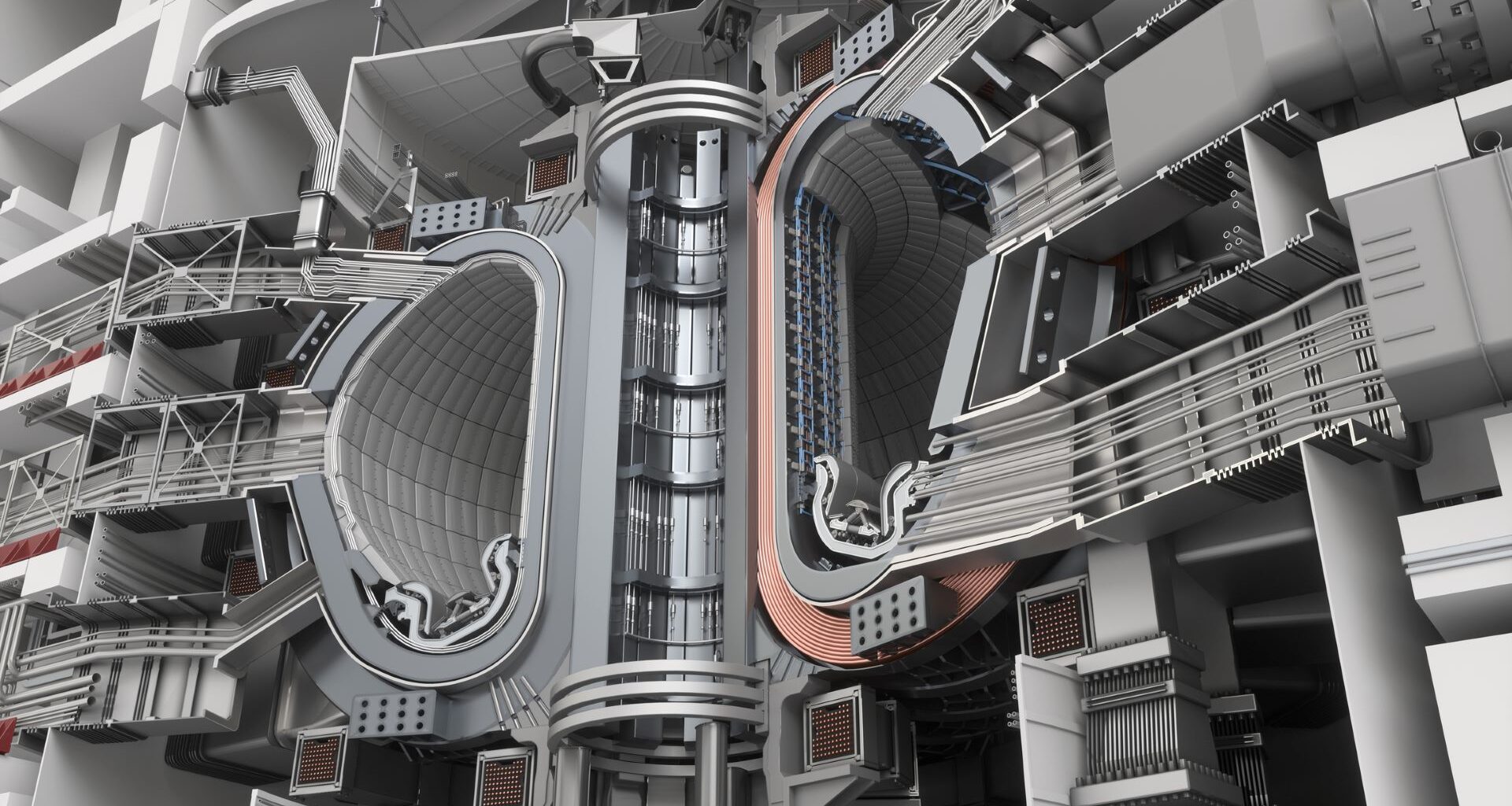
It turns out that containing the same process that powers the sun can be turbulent work.
Even microscale eddies in fusion plasma experiments can cause performance degradation, according to a release by Japan’s National Institutes of Natural Sciences, part of a group of researchers that included experts from multiple labs.
At issue are the expensive, complicated fusion experiments happening around the world as part of the search for a sustainable way to contain superhot plasma. The work includes tokamak machines and compressed energy pulses.
The payoff is nearly unlimited electricity without heat-trapping air pollution, according to the U.S. Department of Energy — but only if all the conundrums can be solved sustainably.
A better understanding of the turbulence problem, especially as fusion experiments grow in size, can help.
But full eddy knowledge has been elusive “due to the extremely precise measurement technology required,” the experts wrote.

Unlock your next great adventure with a high-tech e-bike at an unbeatable price. Upway saves you up to 60% off retail prices from top-tier brands like Specialized, Aventon, Cannondale, and many more.
And this holiday season, you can get an extra $1,500 off your perfect ride, from electric city cruisers and cargo rigs to mountain bikes and road racers.
For its part, plasma is “ubiquitous in nature.” It can be seen in the sky during the aurora borealis, as one example of its manifestation in nature, according to the study abstract and the DOE.
In response, the experts developed finely tuned instruments to gather data about eddy strength at various scales, with particular focus on smaller ones. The scientists observed how the eddies influenced the electric field, critical information for the reaction, per the release.
“The team discovered that when the strength of the larger-scale turbulence suddenly decreased, that of the smaller-scale turbulence conversely increased,” the release continued.
It’s a “world-first discovery” via experimental observation about how the eddies interact with each other and the electric field. Next up is accelerating theoretical models to limit the impact on the reaction, the experts said.
Nuclear energy is already contributing about 20% of America’s electricity, according to government data. But it’s fueled by fission reactions, which split atoms instead of combining them like fusion. Fission carries meltdown risks and causes long-lasting atomic waste.
The risk/reward is heavily debated, with some experts downplaying the waste’s hazardous potential, while watchdogs continue to cite disaster fears.
Eliminating planet-warming fumes is a clear win for each type, as NASA has linked air pollution to increased risks for severe heat that could make more places uninhabitable. Heat waves are already impacting animal behavior in bizarre ways, The Guardian reported.
In the end, the solution to energy independence may not be understanding the sun’s power source, but rather leveraging the sun itself. Solar power is among the fastest and cheapest energy sources to develop, according to Reuters.
It’s also a power source homeowners can leverage on their own, as rooftop panels can reduce or eliminate their electricity bill. The Cool Down’s Solar Explorer has valuable partners that can help you compare quotes, find an installer, and lock in tax breaks before they expire Dec. 31, saving up to $10,000.
In the meantime, powerful fusion experiments will continue in labs around the world. The right breakthrough could unlock the power of the stars.
“Research is advancing to efficiently confine fusion plasma and harness its immense energy for power generation,” the experts wrote.
💰Get TCD’s free newsletters for easy tips to save more, waste less, and make smarter choices — and earn up to $5,000 toward clean upgrades in TCD’s exclusive Rewards Club.
