
Bella Bella, British Columbia —(Map)
In 2021, the Heiltsuk Nation in Canada set traps to catch invasive European green crabs. The traps kept getting destroyed, and no one knew how. When scientists set up a camera to learn what was going on, they got a surprise: a clever wolf had used a series of complicated steps to get food from the trap. The video may be the first proof of a wolf using a tool.
The Heiltsuk Nation and European Green Crabs
The Heiltsuk Nation is a group of Indigenous people in Canada. As part of their efforts to protect their lands, they have been working to control the European green crab in the surrounding ocean. These invasive crabs don’t belong in the area, and have been causing serious damage in the sea.
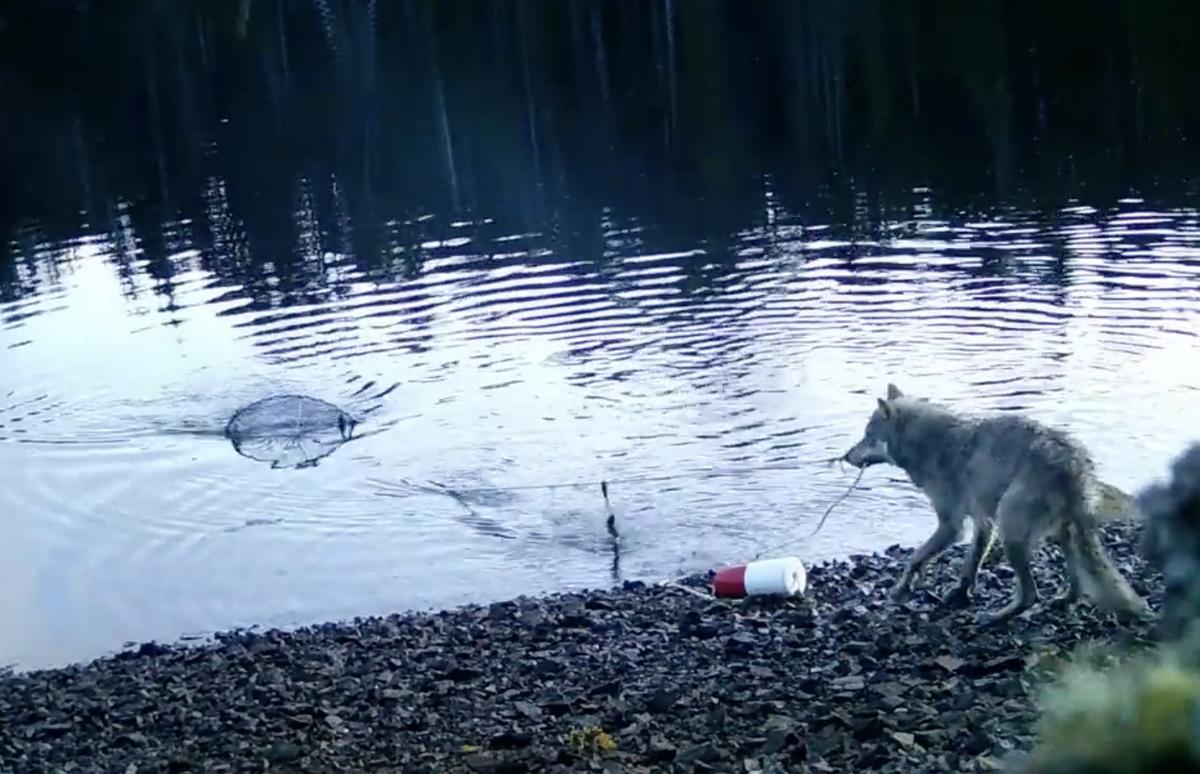
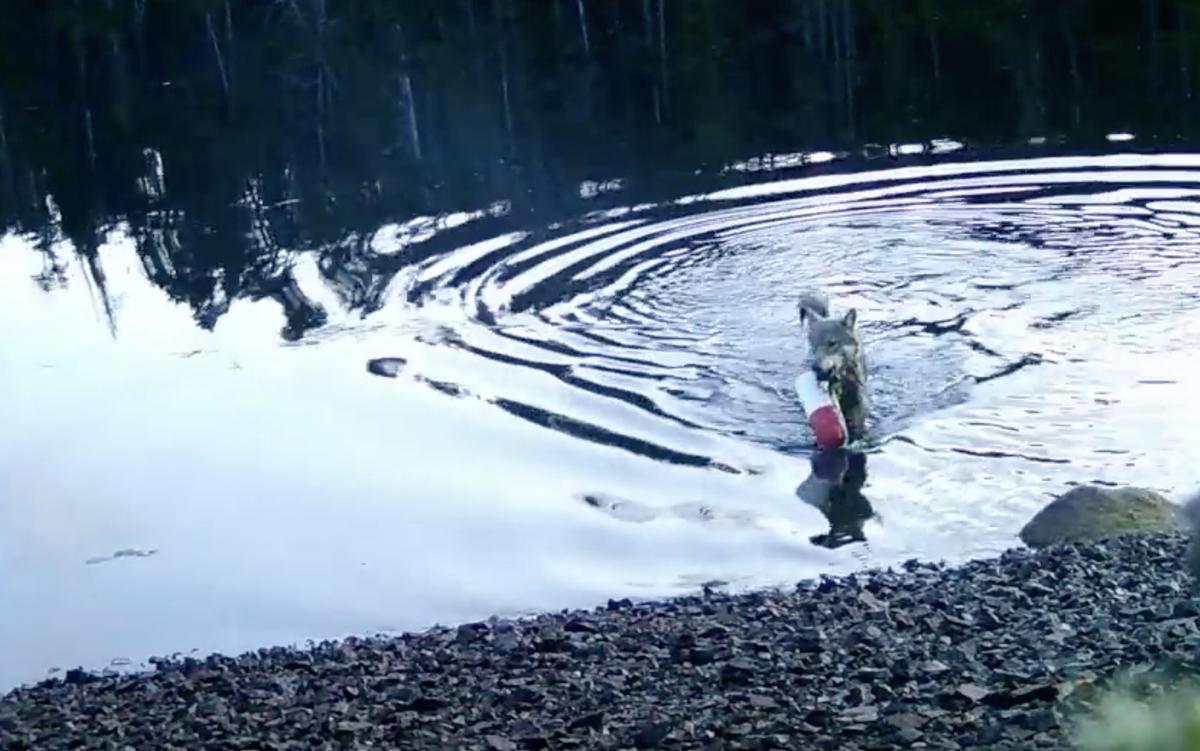 After crab traps kept getting destroyed, scientists set up a camera to solve the mystery. They got a surprise: a clever wolf had used a series of complicated steps to get food from the trap. Above, the wolf swims ashore pulling a red and white buoy.
(Source: Heiltsuk First Nation and Kyle Artelle, via University of Victoria.)
The people of the Heiltsuk Nation set special traps to catch the crabs. The traps are round-framed nets with a cup of bait inside. The traps are set underwater, and their location is marked by a floating “buoy”, which is tied to the trap with a rope.
The problem was that the traps kept getting destroyed. Some traps could be seen at low tide, but others were in deep water and couldn’t be seen at all. People were puzzled about what was destroying the traps. Scientist Kyle Artelle said people thought it could be otters or minks or seals, but they just weren’t sure.
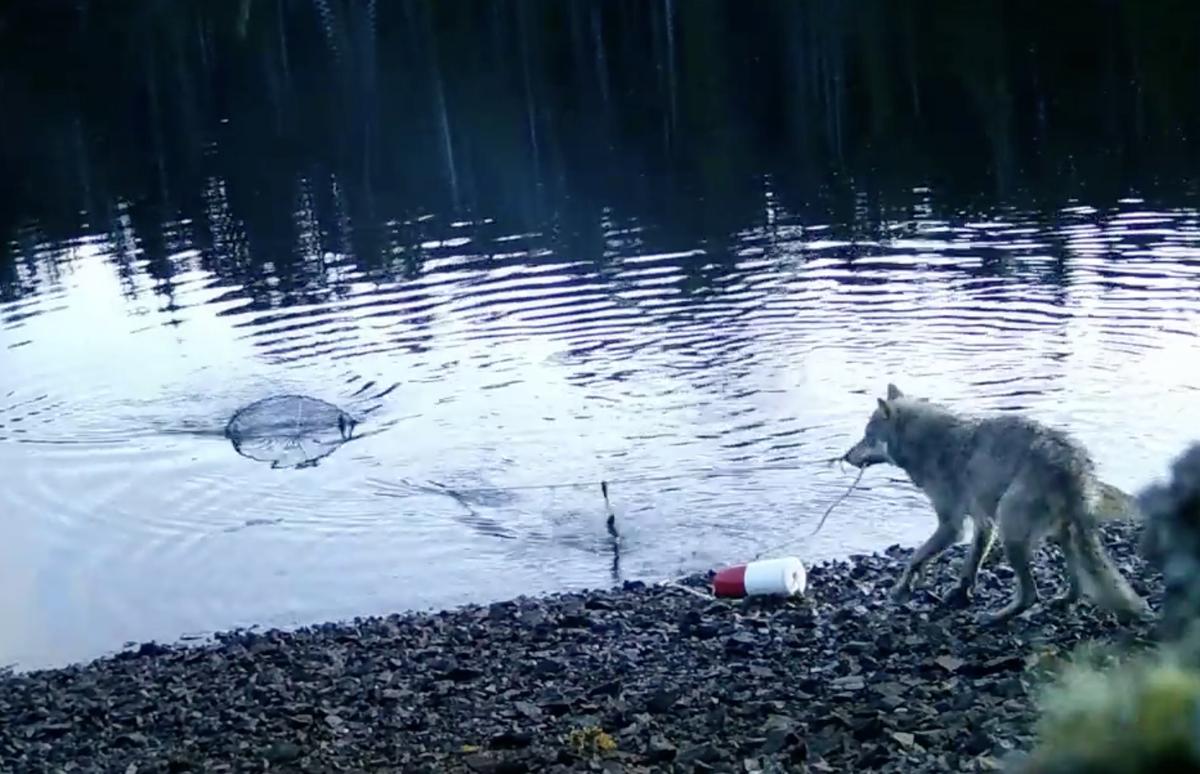 Some traps could be seen when the sea was at low tide, but others were in deep water and couldn’t be seen at all. Even so, the wolf knew that pulling on the rope would bring in the trap with the food.
(Source: Heiltsuk First Nation and Kyle Artelle, via University of Victoria.)
In May, 2024, a student, called Milène Wiebe, and Richard Cody Reid, a member of the Heiltsuk Nation, set up a video camera on one of the traps to help them solve the mystery.
The next day, the camera revealed the answer: The thief was a wolf.
The video showed a female wolf swimming to the shore, using its teeth to drag the rope attached to the buoy. Once she was on shore, the wolf kept pulling the rope until the trap was in very shallow water.
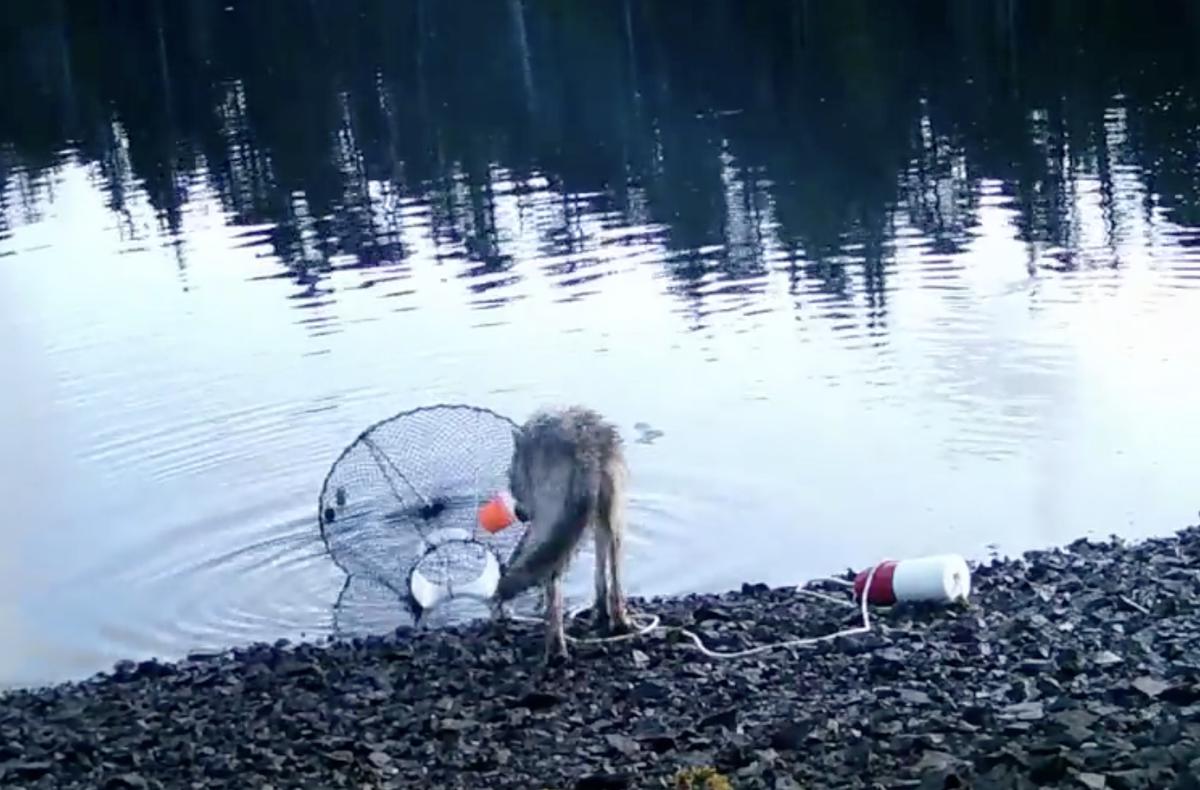 A video camera revealed that the thief was a wolf. She pulled the rope until the trap was in shallow water and then broke into the crab trap to get to the bait cup (above).
(Source: Heiltsuk First Nation and Kyle Artelle, via University of Victoria.)
Once the wolf could reach the trap, she tore open the net to get to the bait inside. The wolf ate the bait and then left. It all took less than three minutes.
Now Dr. Artelle and scientist Paul Paquet have written a paper about the wolf’s actions. Dr. Artelle describes what the wolf did as “incredible”. The work was done quickly and with a clear goal in mind. The wolf knew to pull the rope in, even though the trap was out of sight.
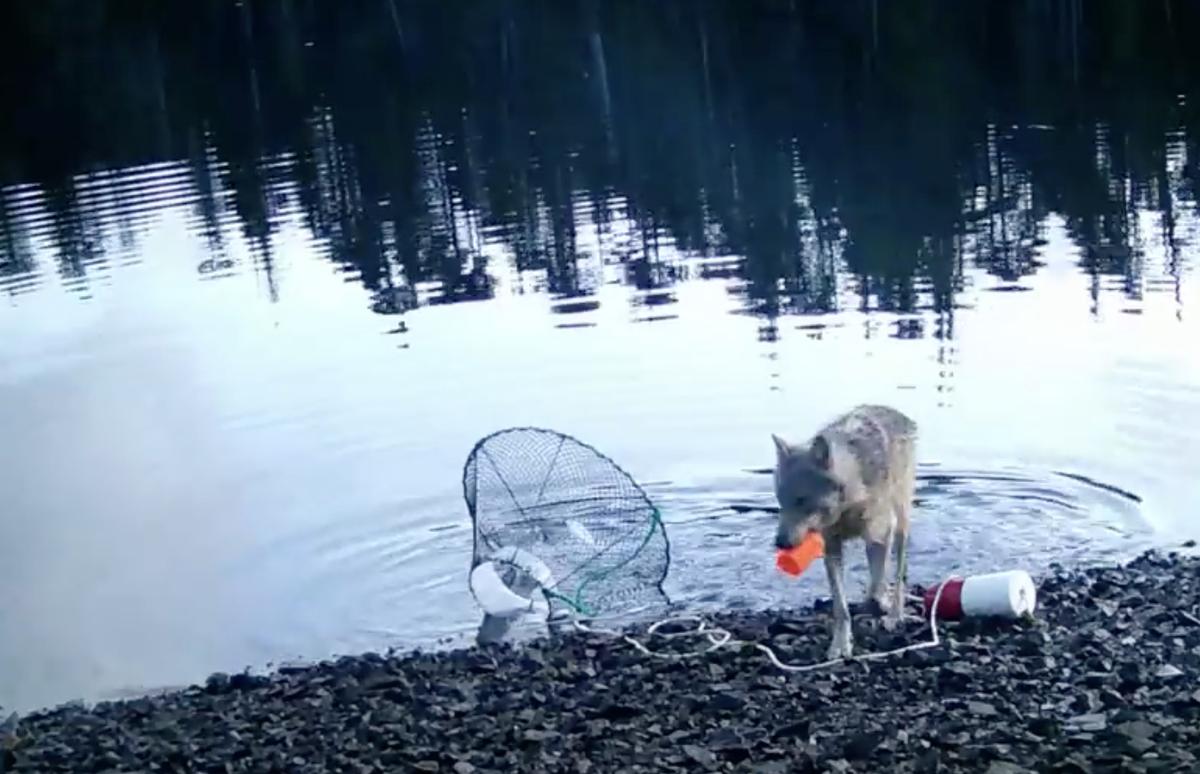 In their paper, the scientists say the wolf may have been using a “tool”. She worked quickly and with a clear goal in mind. It all took less than three minutes. But because the wolf didn’t put the rope there, some scientists don’t consider it a tool.
(Source: Heiltsuk First Nation and Kyle Artelle, via University of Victoria.)
In their paper, the scientists say the wolf may have been using a “tool”. In the past, people thought that only humans used tools. But scientists have since learned that quite a few animals also use tools. Still, using a tool is rare in the animal world.
In this case, the wolf used the rope to pull the trap closer and get the food. So the rope could be considered a tool. But because the wolf didn’t put the rope there, some scientists don’t consider it a tool. Even so, most agree that the wolf’s actions show great intelligence.
Because so many traps have been destroyed, some people in the area believe that several wolves know how to break into the traps. One interesting question is whether the wolf in the video learned to use the trap on its own, or if it learned about the traps from other wolves. It’s also possible that the wolf learned from watching humans.
😕
This map has not been loaded because of your cookie choices. To view the content, you can accept ‘Non-necessary’ cookies.