

WordPress’s experimental AI development tool, Telex, has already been put to real-world use, only months after its September debut. At the company’s annual “State of the Word” event on Tuesday in San Francisco, WordPress project co-founder and Automattic CEO Matt Mullenweg shared several examples where Telex had been used within a working WordPress shop to do things like create price comparisons, price calculators, and pull in real-time business hours plus a map link to a retail store, among other examples.
Telex, which Mullenweg previously described as a “v0 or Lovable, but specifically for WordPress,” is essentially the publishing platform’s attempt to build its own vibe-coding tool for the AI era. The software allows developers to generate Gutenberg blocks — the modular bits of text, images, columns, and more — that make up a WordPress website.
While the software is still labeled as an experiment, Mullenweg was able to demonstrate several real-world examples that had been built by community creator Nick Hamze.
In the first example, Mullenweg showed off a pricing comparison tool built with Telex, noting that these sorts of rich, interactive web elements were something that a developer used to have to custom-build but could now be created in a few seconds.
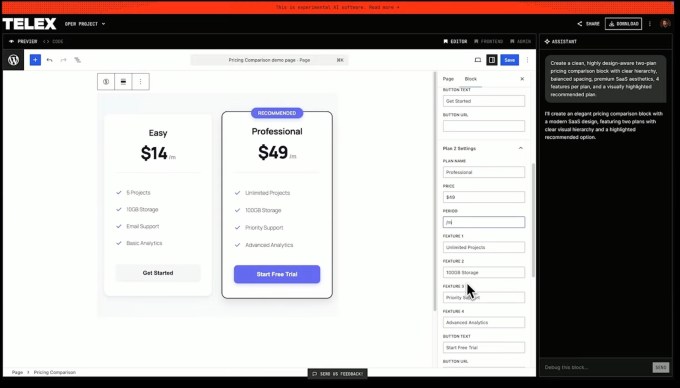 Image Credits:WordPress State of the Word (opens in a new window)
In another demo, a developer used Telex to add real-time store hours, a phone number, and a link to get directions to the header block of their WordPress site.
 Image Credits:WordPress State of the Word (opens in a new window)
Telex was also shown being used to create a carousel of partner logos on a business’s site, a custom pricing tool, a Google Calendar integration, and a grid for posts on a WordPress homepage, where each post’s card on the site had the same height.
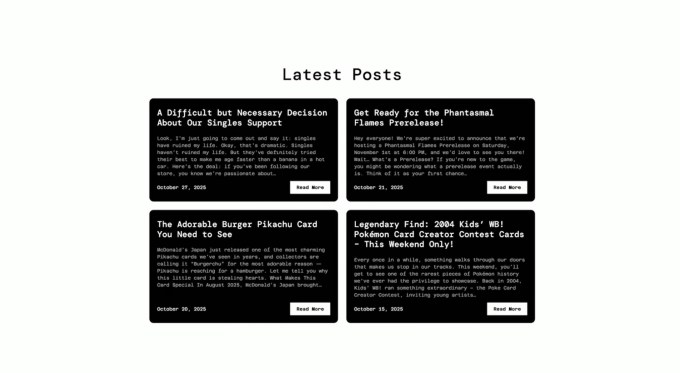 Image Credits:WordPress State of the Word (opens in a new window)
“Again, things that you used to have to, like, hire developers, do custom software like this would have cost thousands, tens of thousands of dollars to build, even just years ago. We’re now able to do in a browser for pennies,” said Mullenweg. “It’s kind of insane.”
Techcrunch event
San Francisco
|
October 13-15, 2026
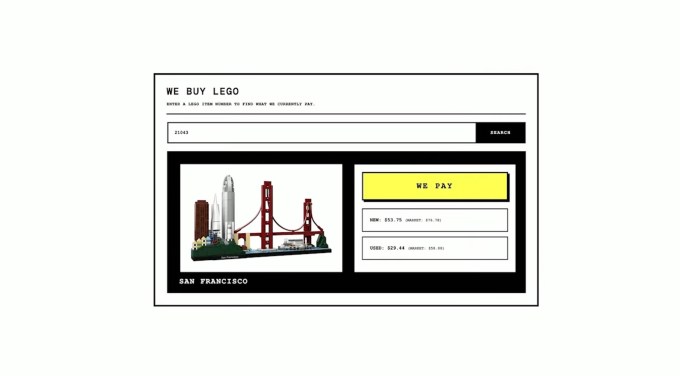 Image Credits:WordPress State of the Word
Another developer, Tammie Lister, used Telex to create a new Gutenberg block every day in the month of October, creating things like a playable, ASCII version of Tetris and a trick-or-treat block for Halloween.
In an email to TechCrunch, Hamze touted Telex’s capabilities, saying, “the thing that blows my mind and should blow yours is I’m not a developer. I can’t write a single line of code, but I can describe what I want to Telex, and it can make it for me. That freedom is intoxicating, and I’m all in on AI,” he said.
“I think as long as people think of these tools as ‘developer’ tools, they are missing the point on what they can really accomplish, which is letting regular folks do things they never could have done before,” Hamze added.
The Telex demos were discussed alongside other AI-focused initiatives at WordPress, including architectural developments, like the Abilities API and MCP adapter. The former defines what WordPress can do in a way that AI systems can interpret, the company explained, while the latter exposes those abilities so any MCP-compatible tool can understand and use them.
“This adapter pattern means WordPress can participate in AI workflows without duplicating logic or creating separate integrations for every AI platform,” Mullenweg told event attendees. “So you can now connect a WordPress installation to popular tools like Claude, Copilot, and many other platforms that support MCP.”
In addition, he noted that developers were already using AI in their everyday workflows through tools like Cursor, Claude Code, and other next-generation CLIs. This, Mullenweg said, “means you can refactor projects, search code bases, automate tasks, [and] run scripts with WP CLI alongside the AI agent.”
Mullenweg said that, in 2026, WordPress would introduce some benchmarks and evaluations that AI models can use to test on WordPress tasks, like changing plugins, editing text, or even manipulating the WordPress interface using browser agents.
This article was updated after initial publication with a comment from Hamze.
Check out the latest reveals on everything from agentic AI and cloud infrastructure to security and much more from the flagship Amazon Web Services event in Las Vegas. This video is brought to you in partnership with AWS.