
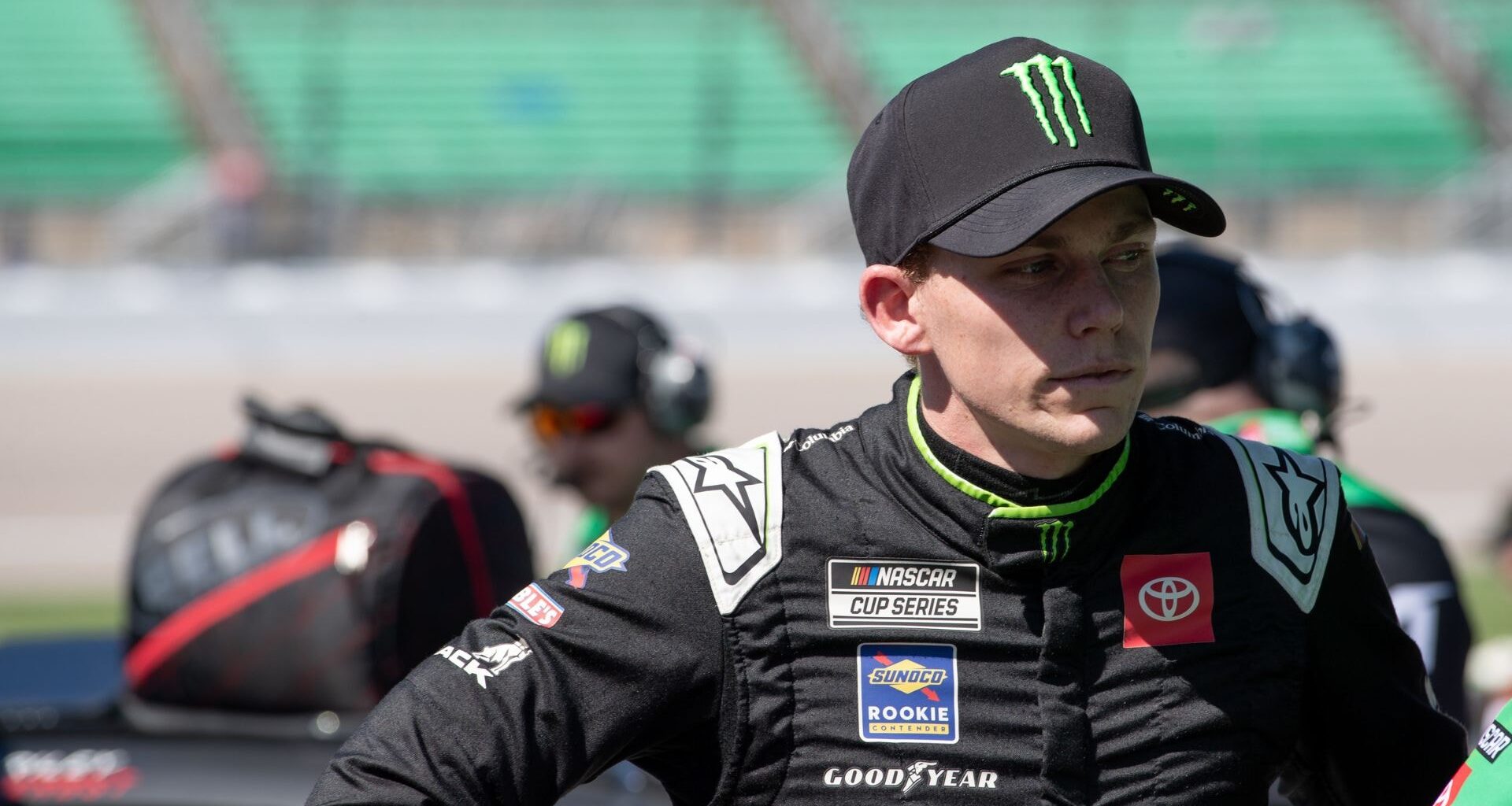
Tyler Reddick has shown remarkable consistency in the Cup Series in recent years, but fatherhood seems to have added another dimension to his life, much like it did for peers Kyle Busch and Bubba Wallace. Busch famously toned down his on-track aggression after his son Brexton began racing go-karts, and Wallace has spoken openly about finding calmer ground after welcoming his son, Becks. For Reddick, the shift has been just as profound.
Reddick and his partner, Alexa, now have two boys: Beau, born in January 2020, and their second son, Rookie, who arrived in May 2025. But even back in 2021, only a year into fatherhood, Reddick admitted that the experience had changed him at his core. His son’s presence, he said at the time, became a daily push to get moving and to honor a role he had not fully understood until he stepped into it.
The 23XI Racing Driver explained, “For me, it motivates me to get out of bed, get out the door, and put my best effort forward, not just for myself and my career, but for trying to be a good role model for my son, even at a super early age, or providing the best upbringing that I can…”
“He just motivates me in ways I never really saw or would have understood before, to be a better person, try to make the most out of my days,” he continued.
Reddick also understood the long-game impact. Greater success on the track could yield better opportunities and stability later in life, and none of that, he noted, could possibly hinder his son’s future. If anything, climbing higher professionally only widened what he could eventually offer.
Parenthood also sharpened his perception of time. He realized how little of it anyone truly has, and how essential it becomes to seize every free moment, maximize each stretch of daylight, finish the job, and return home with enough mental space left for Beau and Alexa.
Reddick later described the shift as a necessary recalibration: fatherhood forces improvement, whether one feels ready or not. If a parent isn’t locked in, the whole experience can swallow them whole. He acknowledged that navigating new territory without a blueprint had stretched his mental toughness in ways only raising a child can. Every challenge, every surprise, every sleepless night helped him with that.
That strength, Reddick believes, bled directly into his racing. When the pressure increases, or a situation goes beyond control, he leans on the same instinct parenthood demands: the person has to figure it out because no one else can take the wheel for them. In racing, people can, but in raising children, passing the responsibility to someone else simply isn’t an option.
For example, earlier this year, when his younger son, Rookie, was hospitalized because of a tumor on his renal vein and renal artery, Reddick found himself walking an emotional tightrope.
Yet Reddick still had to strap into the car each weekend, earn a living, and shoulder the weight of providing for his child’s care while carrying the constant fear that shadowed his four-to-five-month-old’s condition.