
This is the seventh and final story in a series on Canada-U.S. cross-border measures to protect North Atlantic right whales.
North Atlantic right whales are teetering dangerously close to functional extinction – the point at which there are too few animals to recover – yet they are dying from known problems with known solutions.
Researchers know what the risks are: mostly fishing gear entanglements and vessel strikes, but also ocean noise pollution caused by human activity and climate change shifting where the whales feed. Policy makers know what to do: Remove fishing lines to reduce the risk of entanglement, reroute and slow vessels, and implement these protections wherever the whales travel.
Yet despite this knowledge, only 384 North Atlantic right whales remain, including 72 mothers. While these numbers represent slow growth in recent years, the population is a fraction of historic abundance.
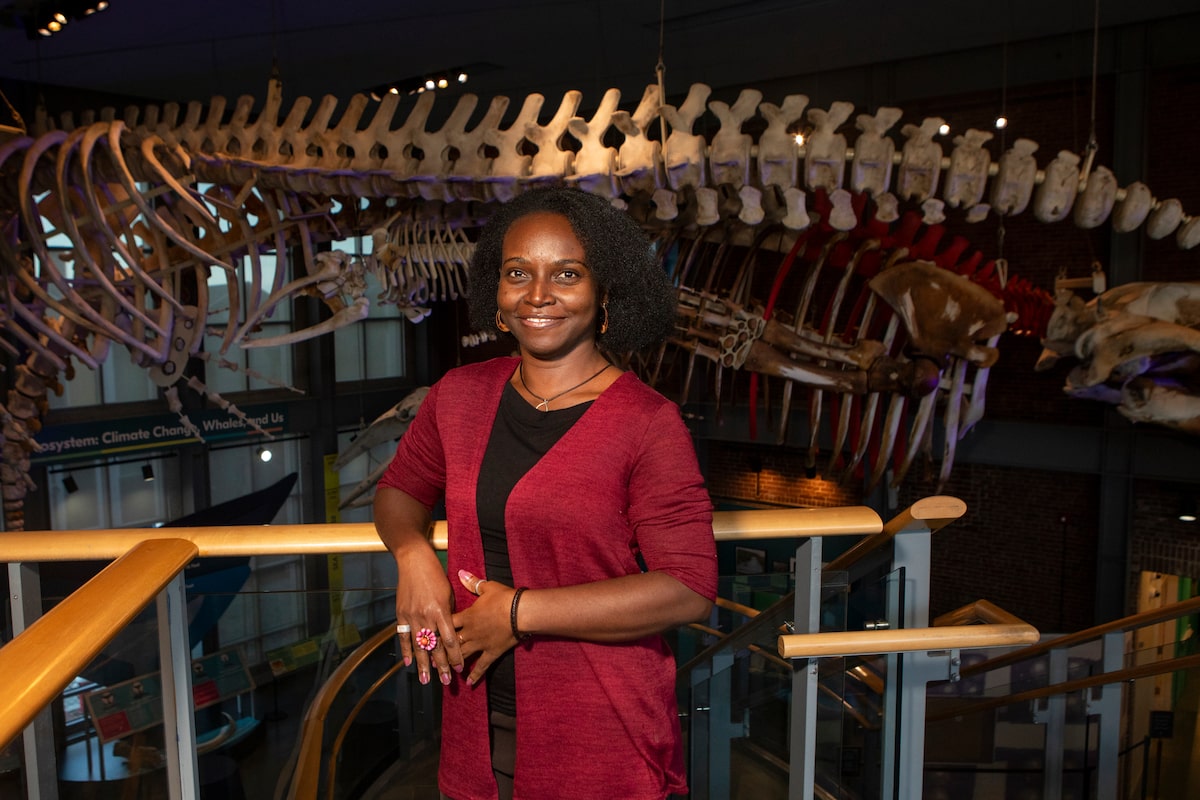
The gap between knowing and doing has frustrated scientists for decades. “We’re trained to get the facts, show the facts, prove with the facts,” says Nadine Lysiak, a wildlife and ocean health research scientist at the New England Aquarium’s Anderson Cabot Center for Ocean Life. “But I just don’t think we live in a society where that matters as much as we want it to.”
Michael J. Moore, a veterinary scientist at the Woods Hole Oceanographic Institution, puts it more bluntly: “The bottom line is the bottom line: It’s all about money.” While a “conservation lobby” pushes for measures to reduce whale deaths, Dr. Moore says a stronger “consumer lobby unintentionally is pushing exactly the opposite direction. They want to have more ships, faster ships, more deliveries and more seafood.”
‘There has to be a fundamental change’ in how we view North Atlantic right whales, says Michael J. Moore from the Woods Hole Oceanographic Institution.Lauren Owens Lambert/The Globe and Mail
Yet public opinion offers hope. A 2024 Ipsos poll of 1,053 Americans, commissioned by Oceana, an international ocean conservation organization, found that 86 per cent of U.S. voters believe right whales should be protected from human-caused threats. In Canada, a 2019 unpublished Abacus Data survey of 1,850 Canadians, commissioned by Oceana Canada, found that despite 68 per cent of respondents knowing nothing about right whales, 96 per cent said it was important that the government of Canada protect them.
The poll findings suggest that the disconnect is not about public interest – it’s about translating that into meaningful change.
The gap between knowing and doing has been a throughline of the Entangled series. Over the past year, supported by the Pulitzer Center’s Ocean Reporting Network, The Globe investigated the plight of North Atlantic right whales – drawing on more than 60 scientific studies, government reports and datasets, nearly 50 interviews with scientists, policy makers, fishers and advocates, and records tracking 32 individual whales. The series examined the threats – entanglements, vessel strikes, habitat shifts and ocean noise – and the policies to address them. Now, as the series closes, we return to where we began: the people working to change the outcome.
The Globe spoke to six people – including scientists, educators and rescue organizers – who have taken up action to protect the right whale to understand what compels them and what it will take to close the implementation gap.

Right whale
critical habitat
area
North Atlantic
right whale
Lifespan: Unknown;
likely >70 years, but
rarely >45 years due
to human activity
Diet: Zooplankton (copepods)
Range: U.S.-Canada Eastern
seaboard; occasionally
elsewhere in the
North Atlantic
Broad, black
smooth-
edged fluke
Callosities
(cornified skin)

Right whale
critical habitat
area
North Atlantic
right whale
Lifespan: Unknown;
likely >70 years, but
rarely >45 years due
to human activity
Diet: Zooplankton (copepods)
Range: U.S.-Canada Eastern
seaboard; occasionally
elsewhere in the
North Atlantic
Broad, black
smooth-
edged fluke
Callosities
(cornified skin)

Right whale
critical habitat
area
North Atlantic
right whale
Lifespan: Unknown;
likely >70 years, but
rarely >45 years due
to human activity
Diet: Zooplankton (copepods)
Range: U.S.-Canada Eastern
seaboard; occasionally
elsewhere in the
North Atlantic
Broad, black
smooth-
edged fluke
Callosities
(cornified skin)
1. See the whales as relatives
Bradford Lopes of the Aquinnah Wôpanâak tribe in Martha’s Vineyard, Mass., draws on oral traditions that tell of Moshup, a benevolent giant who transformed his children into killer whales to protect them from the harm of settlers.
For Wôpanâak people, right whales aren’t just endangered animals – they’re family.
“It is devastating in a way that I struggle to explain,” Mr. Lopes says. “It’s no different than losing your own family. It’s heartbreaking. Because they’re our cousins.”
Last year, Mr. Lopes held a workshop on the Wôpanâak’s connection to the whales at the North Atlantic Right Whales Consortium, the largest gathering of right whale researchers.
The Wôpanâak have fought to remain in their homelands despite centuries of displacement and cultural erasure. “When I see their story, I see a story that we not only know spiritually, but we know historically.”
The parallel runs deep. “This is something that we’ve experienced with Wôpanâak people in lots of ways. I can relate to that. There’s a very visceral kind of relation there.”
Bradford Lopes is a citizen of the Aquinnah Wôpanâak. Their ancestors have stories of how Moshup the giant shaped Martha’s Vineyard, Mass. (called Noepe in Wôpanâak) – where Mr. Lopes stands at the Aquinnah Cliffs – and taught them to fish and hunt whales.Lauren Owens Lambert/The Globe and Mail
But Mr. Lopes also finds hope in the whales’ persistence. “The other thing I see reflected is their continuance, this fight, this spirit, about not disappearing from their home waters and to hang on.”
As Mr. Lopes told The Globe in April when discussing one of last season’s mothers, Nauset (known under the identification code #2413 in the North Atlantic Right Whale Catalog): “I see these mothers as I see our own mothers. I see our grandmothers, and I see that fight,” he said. “The reason why we’re still here as Wôpanâak people is our women – the strength they’ve had and the fight they’ve had, but also the vision they’ve had.”
This world view – whales as relatives rather than resources – represents what Dr. Moore calls the “only hope” for the species. “There has to be a fundamental change in how we view these animals,” Dr. Moore argues.
2. Start young and stay curious
In the small coastal town of Castine, Maine, middle school science teacher Bill McWeeny posed a simple question to his students in 2004: “How’d you like to help a really big animal?”
“I introduced them to the right whales,” Mr. McWeeny recalls. “And that was that.”
Mr. McWeeny’s teaching philosophy is built on experience rather than textbooks. He brought researchers into the classroom and took his students – who called themselves “The Calvineers” after Calvin (#2223) the right whale – to scientific conferences.
Calvin (#2223), namesake of the Calvineers, has survived eight entanglements and had four calves.Pam Snyder/New England Aquarium
For student Molly McEntee, one of the first Calvineers, the pivotal moment came on a whale-watching trip to the Bay of Fundy in Grade 8.
“We’d already spent two years talking about them and learning about them, and it was just really exciting to see them in real life,” she says.
Dr. McEntee is now a marine biologist studying elephant seals in California.
Molly McEntee has kept up her studies of ocean life since her time as a Calvineer. This photo is from 2018 field work studying dolphins in Western Australia.Supplied
The Calvineers didn’t just study whales – they took action. “Once we had the facts like Calvin’s mother was killed by a ship, then we could advocate for changing shipping lanes,” Mr. McWeeny says. (Advocacy had worked before: As The Globe reported in June, Transport Canada rerouted Bay of Fundy vessel traffic around the Grand Manan Basin in 2003, marking the first time in International Maritime Organization history that shipping lanes were moved to protect a marine mammal species.)
The students wrote letters to lawmakers, their youth giving them unique power as messengers. “You get a bunch of kids up there who have done their homework, who do not have the agenda that adults have, and they’re saying all the same conservation messages – it just hits different,” Dr. McEntee says.
Twenty years on, the legacy extends far beyond the few students who took up ocean conservation vocations. “This small group of kids at this small school is, over the years, accumulating into a lot of people in the state who really know more about this than most adults,” Dr. McEntee says.
Amadi Afua Sefah-Twerefour, a doctoral student in South Carolina, studied how the news media cover right whales, to see what narratives have the best chance of changing their fate.Lauren Owens Lambert/The Globe and Mail
3. Understand that news media shapes policy
As a PhD student at the University of South Carolina, Amadi Afua Sefah-Twerefour initially planned to study how risks to North Atlantic right whales differ across their various habitats, having previously studied oceanography and fisheries in her home country of Ghana, and ocean engineering in South Korea. But as she dug deeper into her research, she realized something crucial was missing.
“If the main risk is from human activities, then there’s a whole new side to this – what compels social change?” she asks. That realization led her to pivot to analyzing how news coverage shapes public understanding and policy response.
“We understand the facts. We are still learning a lot more about the species. But we realize there’s still a disconnect in our efforts and how effective they are,” she says.
Ms. Sefah-Twerefour’s research, the findings of which are not yet published but currently in peer review, scraped tens of thousands of news articles since 2000 about right whales globally, creating a database that tracks volume of coverage, how stories are framed and when they appear relative to key policy decisions.
“Even if there are diverse opinions or people on opposite sides, the media can actually be that connecting agent,” she said, adding that journalism can point to workable solutions.
Coverage that crosses borders (right whales migrate between U.S. calving grounds and Canadian feeding grounds) while rare, is especially important, Ms. Sefah-Twerefour says.
“Even if one country is able to be excellent at protecting the species, it eventually is watered down if the other is not.”
Despite never having seen a right whale, Ms. Sefah-Twerefour can name individual whales such as Punctuation (#1281) and Clipper (#3450), both dead – their stories burned into her memory through repeated news media coverage. One image particularly haunts her: the 2021 calf of Infinity (#3230), struck and killed by a vessel off Florida’s coast in February that year. “I keep seeing the images of that calf with marks across the back.”
4. Bear witness and document the reality
Nick Hawkins started as a whale-watching tour guide in his 20s on the Bay of Fundy. Now a conservation filmmaker based in Fredericton, he’s spent nearly a decade developing techniques to safely film right whales – work that resulted in unprecedented footage of a successful disentanglement for Apple TV’s wildlife documentary The Wild Ones, released this year.
The journey began with a moment Mr. Hawkins cannot forget. In 2019, he got a call that a dead whale, Punctuation (#1281), had been towed to a remote beach for necropsy.
“I had never seen a whale like that. Despite being around whales for years, there’s a big difference in seeing it out of the water compared to on the surface.”
Standing next to it, seeing the whale lice still moving, the baleen (the keratin filter-feeding “teeth” in the whale’s mouth), the eye – “it’s like standing next to this completely alien creature.” That encounter changed his perception.
Nick Hawkins, photographing Atlantic salmon underwater in 2021, took a different tack to observe North Atlantic right whales.Juliette Larocque
Mr. Hawkins recognized early that “there wasn’t really any high-quality footage of North Atlantic right whales. They live in remote areas. Underwater isn’t an option [because of permits]. And that was a real problem.” Researchers had so far collected footage, but it did not meet the broadcast standards necessary for reaching broad audiences.
The solution required years of work: buying a boat capable of reaching whales 30 nautical miles offshore, mastering both seamanship and whale behaviour, and lobbying government to acquire species at risk permits in order to document the whales that had never been granted to a filmmaker before. He designed camera systems that could withstand being soaked on a bouncing boat while flying drones and managing audio – all solo. He also became a trained whale disentangler through the Campobello Whale Rescue Team course, a requirement for anyone on the rescue boat.
It took three summers before all conditions aligned – finding the whale (the yearling Athena, then known as #5312), calm seas and a successful rescue.
The danger of disentangling a whale is real. “It’s a scary thing to be that close to an animal that weighs 40 to 80 tonnes, and that animal is distressed and scared, and it does not want you there,” he says.
His drone work proved to have unexpected benefits beyond filming. Flying above the whale, he could tell the rescue team “it’s right there, it’s crossing under the boat, it’s going to port, it’s going to starboard.” This allowed perfect positioning. “It’s a matter of inches. When that whale comes up, you gun the boat in, the cutter reaches [the line] – it’s inches that make the difference.”
Now Mr. Hawkins is helping train others to use drones in rescues. “The drone is one of, if not the most important tool in whale rescue, other than the cutting tool,” he says. But he’s careful about credit: “The real heroes are the whale rescuers. I’ve been an asset to them. It’s one more tool in the tool box.”
5. Learn to co-exist – from setting traps to setting whales free
When the Atlantic cod fishery collapsed in the early 1990s, Mackie Greene, then only 12, found himself adrift. He had spent his childhood summers fishing the waters around Campobello Island, N.B. “There were a few boats whale watching around here, so I got a little boat and started myself.”
For 26 years, Mr. Greene ran whale-watching tours. On the water, he witnessed something troubling – whales tangled in fishing gear, suffering, with no organized response to help.
Mr. Greene understood better than most that fishermen were not villains in this story. “There’s not a fisherman out there that ever wants to catch a whale,” he says. “He’s losing his gear, he’s losing his catch, he’s going to waste time looking for his gear. It’s just a nightmare for the fishermen to catch a whale.”
Mackie Greene, middle, works at the Canadian Whale Institute colleagues with rescue and research technician Randy Russell, right, and director of science Moira Brown.Nick Hawkins/The Globe and Mail
Mr. Greene first encountered whale rescue after he was sent by the province to Cape Cod’s Center for Coastal Studies. But he credits his fishing background most – years of handling rope and reading the water – for preparing him to rescue whales.
In 2002, Mr. Greene and fellow fisherman Joseph (Joe) Howlett co-founded the Campobello Whale Rescue Team at the Canadian Whale Institute as volunteers with minimal government support. Their approach stood out: “Our motto has always been fishermen helping fishermen. We’re not there to condemn the fishermen. We’re there to help them,” says Mr. Greene, now the director of whale rescue at the Canadian Whale Institute.
The emotional rewards made the risks worthwhile: “When you set a whale free, there’s just no feeling like it. I always say it feels like you can jump out of the boat and run home.”
But there was also heartbreak if a rescue attempt fails: “When you don’t get a whale disentangled, it’s that long, quiet ride home.”
Mr. Howlett co-founded the Campobello Whale Rescue Team with Mr. Greene.Courtesy of the International Fund for Animal Welfare
In 2017, Mr. Howlett, 59, was fatally struck in the head by a right whale’s tail immediately after freeing the female whale (#4123) from fishing gear. “Joe’s funeral was the biggest funeral Campobello has ever seen,” Mr. Greene remembers. “The church was solid full. Everybody loved Joe.”
After an extensive investigation, the Department of Fisheries and Oceans implemented sweeping safety reforms in 2018. Responders who had been volunteers now receive paid positions and insurance coverage. The department also developed national procedures for federal fishery officers during disentanglement operations and created specialized training for marine mammal response teams.
Today, Mr. Greene is one of only a handful of people in the country who can lead a whale disentanglement. On July 10, 2024, seven years to the day when Mr. Howlett died, the Campobello team successfully disentangled Athena (#5312) in the Gulf of St. Lawrence – the same whale whose rescue Mr. Hawkins filmed.
The responsibility weighs on Mr. Greene, but also fills him with purpose. “These whales are so endangered right now, with just 70 breeding females, every one we can save really makes a big difference,” he says.
North Atlantic right whales are one of the species Lydia (Liddy) Clever, 11, seeks to help with her non-profit Save Sea Life. Her home state of Georgia is a valuable calving ground for the species.Lauren Owens Lambert/The Globe and Mail
6. Meet people where they are – at the marina
At seven years old, Lydia (Liddy) Clever was fed up with the trash littering the beaches of Tybee Island in Chatham County, Ga. Georgia’s easternmost point, Tybee is a popular destination where beachgoers flock to its white sand shores – the same shores that serve as critical habitat for loggerhead sea turtles, manatees and the calving grounds for the North Atlantic right whale.
Liddy repurposed the collected debris from the beach – plastic bags and other trash – into braided bracelets to keep them out of the ocean. But she realized she could help stop the source of trash before it reached the sea by working with schools. She started “Tidy Tuesdays” at her elementary school, where half her class would pick up trash during recess one week, and the other half the next.
That’s when Liddy, now 11 years old, founded her non-profit, Save Sea Life.
“Our mission is to educate kids at a young age to love the ocean so that when they get older, they don’t destroy it,” Liddy says.
In February, 2021, what washed up on Tybee’s shores moved Liddy to expand her mission: a right whale calf, the offspring of Infinity (#3230), struck and killed by a recreational vessel. “That’s when I really started getting into it, because not only big cargo ships are hurting right whales – small boats hurt them too,” she says.
This past year, Liddy and her mother visited roughly half the marinas in and around Savannah, Ga., to survey boaters about their awareness of right whales. “It was really awesome to see how many boaters did know about them,” she says.
But her findings also revealed a dangerous gap: While more boaters than expected had heard of the species, few understood how to identify them or what to do if they encountered one. That knowledge gap is particularly perilous in Georgia and northern Florida – the only known calving grounds for North Atlantic right whales – where mothers and newborns are most vulnerable to vessel strikes.
To help close that gap, Liddy is working with local government to distribute educational flyers when boats are registered – information “to tell them what to look for in the North Atlantic right whale and who to call if they do see one, how to stay away from them,” she says.
Liddy presented her research at this year’s North Atlantic Right Whale Consortium meeting.
Saving a species is a big job, but as Liddy insists, “No act is too small and you’re never too young to make a big difference.”
This story is part of a series produced in partnership with the Pulitzer Center’s Ocean Reporting Network.
Entangled: More from this seriesThe Decibel podcast
Human-made ocean noise is stressful for whales, and researchers are beginning to understand how that hurts their health. Jenn Thornhill Verma spoke with The Decibel about the latest science. Subscribe for more episodes.
Jenn Thornhill Verma reports
Habitat shifts make right whales harder to track, and to save