
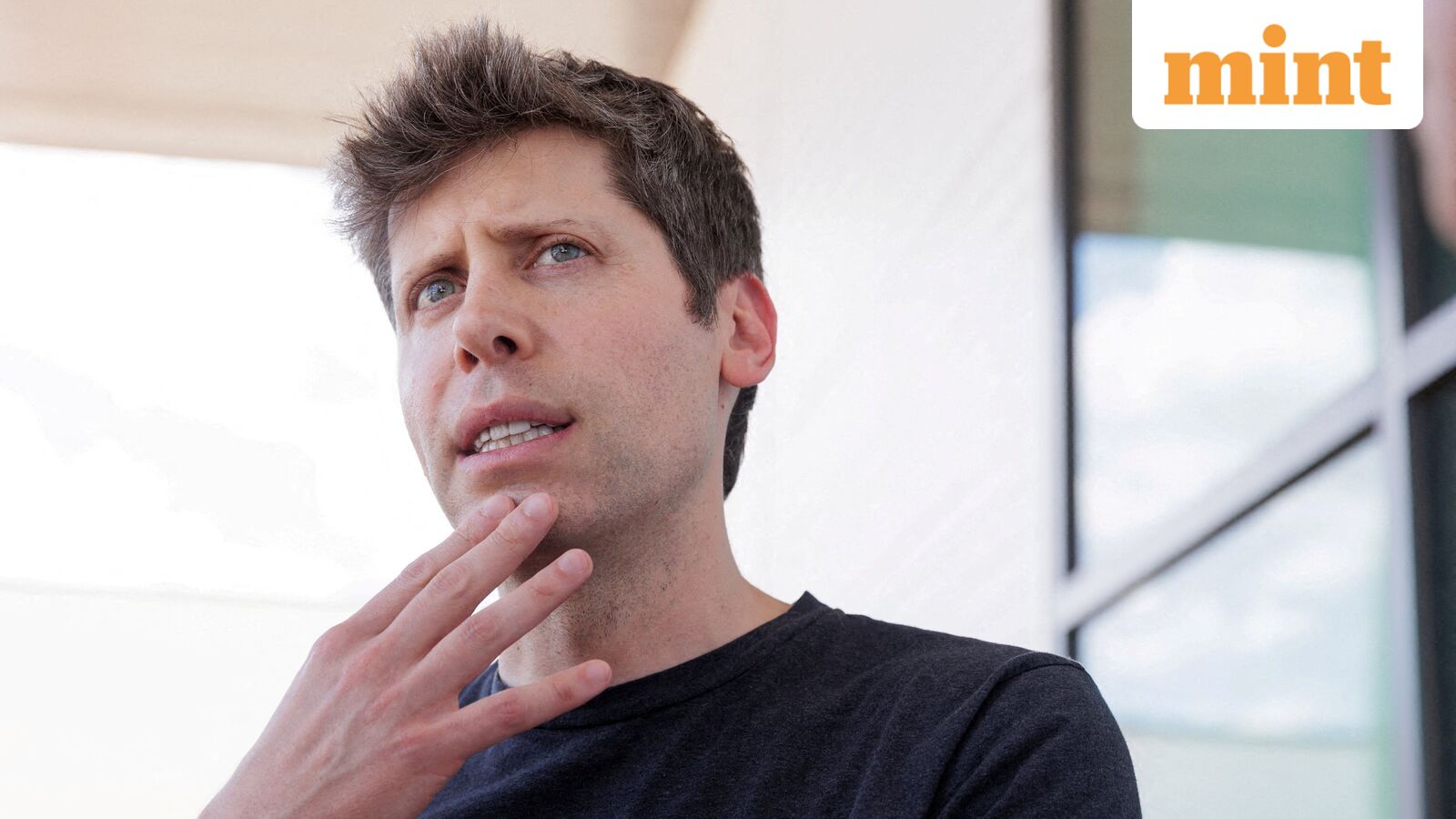
Altman reached out to at least one rocket maker, Stoke Space, in the summer, and the discussions picked up in the fall, according to people familiar with the talks. Among the proposals was for OpenAI to make a series of equity investments in the company and end up with a controlling stake. Such an investment would total billions of dollars over time.
The talks are no longer active, people close to OpenAI said.
Altman and OpenAI are facing market headwinds after striking hundreds of billions of dollars in computing deals without publicly offering a clear picture of how the startup will pay for the build-out.
OpenAI on Monday declared a “code red” to improve ChatGPT after it began losing market share to Google’s Gemini chatbot. As a result, OpenAI is delaying the rollout of other products, including advertising, and encouraging employees to temporarily transfer teams to work on the chatbot.
Altman has been interested in the possibility of building data centers in space for some time, suggesting that the insatiable demand for computing resources to power artificial-intelligence systems eventually could require so much power that the environmental consequences would make space a better option. Orbital data centers would allow companies to harness the power of the sun to operate them, advocates say.
Founded by former employees at Jeff Bezos’ Blue Origin, Stoke is working on building a fully reusable rocket, something SpaceX is also attempting to pull off. Tech CEOs including Bezos, Musk and Google’s Sundar Pichai have extolled the possibility of building AI computing clusters in space.
The concept is unproven, although Alphabet’s Google and satellite operator Planet Labs struck a deal to send up two prototype satellites with Google AI chips on board in 2027.
“I do guess that a lot of the world gets covered in data centers over time,” Altman recently said on a podcast with Theo Von. “Like, maybe we build a big Dyson sphere around the solar system and say, “Hey, it actually makes no sense to put these on Earth.”
The discussions over a potential rocket investment began taking shape at a time when market enthusiasm for AI was at a peak. Altman announced a series of chip and data center deals in September and October with companies including Oracle, Nvidia, Advanced Micro Devices and others.
Investors greeted those announcements warmly, with Oracle and Nvidia shares rising rapidly in the weeks after the announcements, where Altman promised a vast build-out of computing warehouses. But the market has since soured on expansionist AI ambitions, with Oracle shares falling about 19% in the last month and Nvidia declining some 13%.
The chief financial officer of Nvidia said this week that the company’s $100 billion deal with OpenAI has yet to be finalized.
OpenAI signed up for almost $600 billion in new computing commitments in the past few months alone, raising questions about how it will pay for the developments. The startup is set to make $13 billion in revenue this year, and is also coming under pressure from the startup Anthropic, which is quickly growing sales among coders and enterprises.
News Corp, owner of The Wall Street Journal and Dow Jones Newswires, has a content-licensing partnership with OpenAI.
Altman is a longtime venture capitalist who once ran the startup incubator Y Combinator, which invested in Stoke. He oversees an opaque and sprawling investment portfolio that includes more than 400 companies, The Wall Street Journal reported last year.
He no longer makes as many personal investments as before but isn’t shy about using OpenAI’s balance sheet to fund ambitious projects. Earlier this year, for example, he committed OpenAI to investing $18 billion in a new data-center company, called Stargate, alongside SoftBank.
The proposed partnership with Stoke would have put Altman in even more direct competition with Musk, given SpaceX’s dominant position in rocket launch and Musk’s rival AI startup xAI. Altman also recently started Merge Labs, a brain-computer interface startup that competes with Musk’s Neuralink, and OpenAI is building a social network that could compete with X.
Striking a deal with Stoke would have given Altman exposure to a rocket, called Nova, the company has been developing. Creating a new rocket is rife with technical challenges and regulatory issues and can often take a decade, making it difficult to start a new company from scratch. Several launch companies are working to challenge SpaceX’s position, including Blue Origin, Rocket Lab and Stoke.
“Should I build a rocket company?” Altman asked rhetorically in a June podcast appearance with his brother.
“I hope that eventually humanity is consuming way more energy than we could ever be generating on Earth,” he said.
Write to Berber Jin at berber.jin@wsj.com