
Your support helps us to tell the story
From reproductive rights to climate change to Big Tech, The Independent is on the ground when the story is developing. Whether it’s investigating the financials of Elon Musk’s pro-Trump PAC or producing our latest documentary, ‘The A Word’, which shines a light on the American women fighting for reproductive rights, we know how important it is to parse out the facts from the messaging.
At such a critical moment in US history, we need reporters on the ground. Your donation allows us to keep sending journalists to speak to both sides of the story.
The Independent is trusted by Americans across the entire political spectrum. And unlike many other quality news outlets, we choose not to lock Americans out of our reporting and analysis with paywalls. We believe quality journalism should be available to everyone, paid for by those who can afford it.
Your support makes all the difference.Read more
A family’s yacht was attacked by a pod of killer whales in the middle of the night, the latest in a series of similar incidents off the Portuguese coast.
The Dutch family was sailing between Porto and Lisbon off Portugal’s west coast when their vessel was “violently” buffeted by orcas at around 5am.
The incident caused significant damage to the boat, which the family managed to steer back towards a beach, where it capsized on the sand.
In an interview with the Portuguese news outlet Correio da Manhã, one of the group said: “We were sailing at night. Suddenly, we felt our boat moving violently.”

open image in gallery
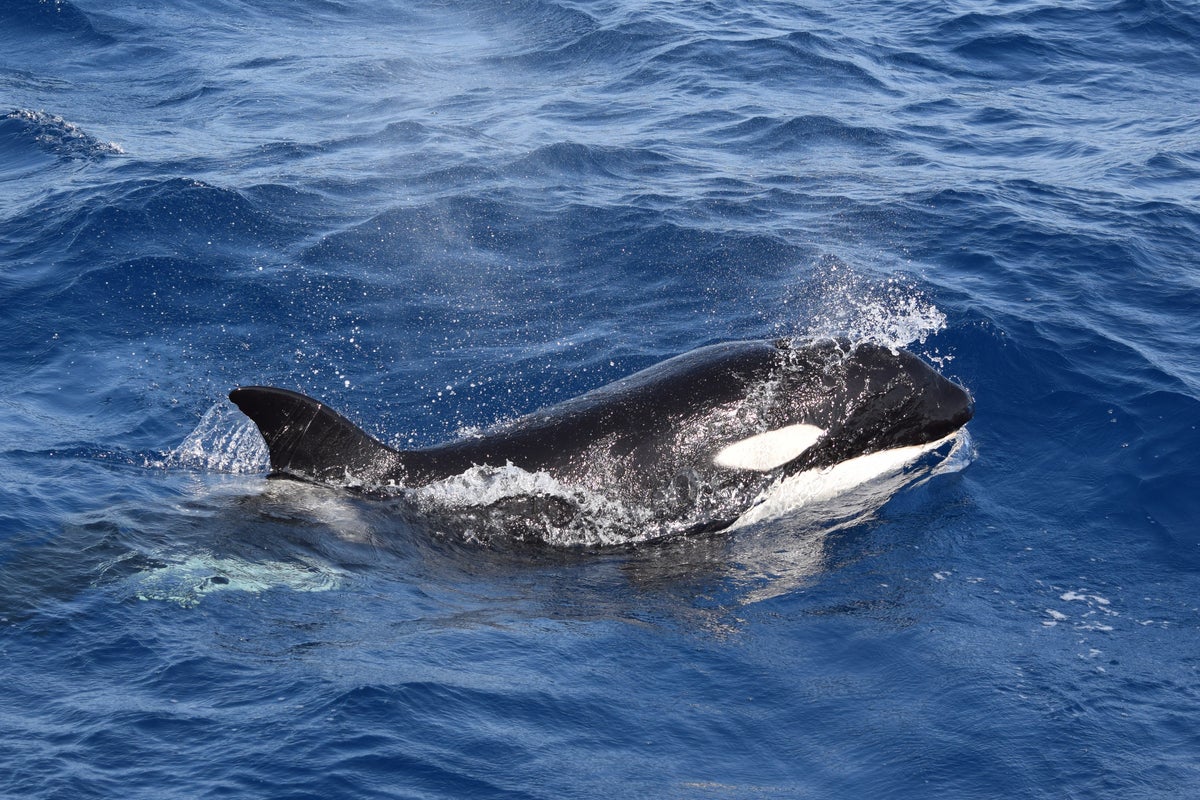
A killer whale in waters off the south coast of Spain – where numerous attacks on boats have been recorded in recent years (Getty Images)
No injuries were reported and authorities then took the boat away for inspection.
The incident comes weeks after another family, with young children, had to be airlifted one by one by the Portuguese Air Force in pitch black conditions from their stricken vessel, which sank after a similar attack by killer whales.
In September this year, three separate orca attacks in a single week off the coast of Portugal saw 13 people rescued from boats, one of which – a yacht carrying five people – ultimately sank.
Footage of that incident showed an orca repeatedly ramming into the side of the yacht before it sways and starts to sink, with a witness hearing: “Oh my God.”
In July, orcas also sank another yacht carrying five people, all of whom were rescued, and then the group of whales went and attacked another boat on the same day. Later, the same month, they attacked a French-flagged boat off the coast of Bilbao in Spain.
open image in gallery
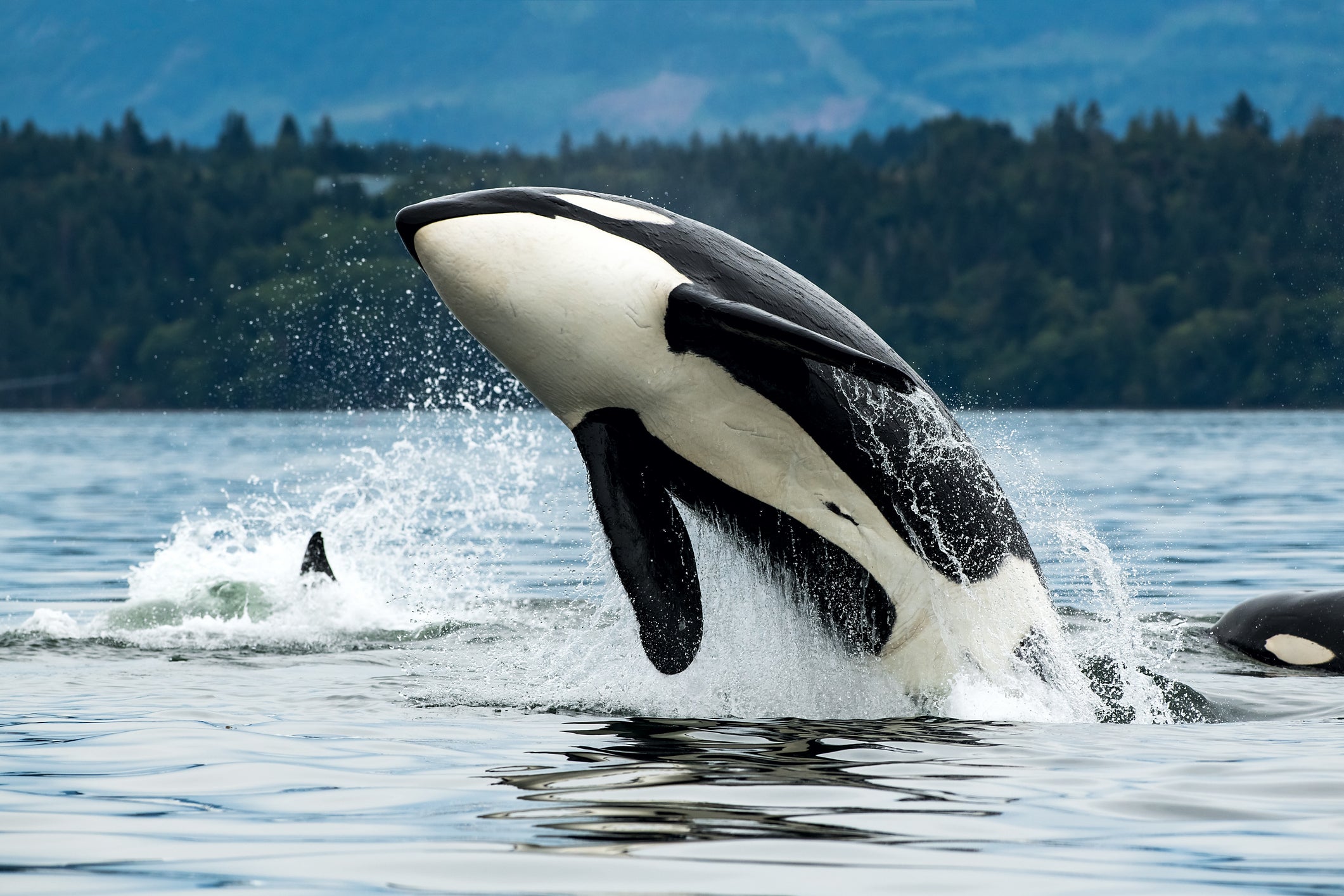
Experts have been perplexed by the spate of attacks (Getty/iStock)
Earlier this summer, experts advised sailors to be cautious and familiarise themselves with what to do if they encounter orcas, as the attack in Spain came weeks after Iberian orcas were first spotted in Cornish waters.
Guidance includes turning off boat engines and lowering sails if orcas are spotted. Skippers are also advised to turn off autopilots and echo sounders and not to make loud noises.
Other recommendations include staying in shallow waters, which makes it harder for orcas to ram the rudders of boats.
The spate of attacks in recent months follows a string of similar attacks by killer whales in the nearby Strait of Gibraltar. Between 2020 and 2024, researchers documented nearly 700 incidents of killer whales ramming into boats near the Iberian Peninsula.
The sudden uptick in aggressive behaviour in this region has perplexed sailors and scientists, with many suspecting that killer whales are teaching each other to attack boats in the region.
Last year, leading marine biologist Alex Zerbini, chair of the scientific committee at the International Whaling Commission (IWC) and a member of a working group put together by the Spanish and Portuguese governments, said the killer whales’ behaviour is most likely to be a new “cultural tradition” without an obvious purpose.
“Some populations may also develop unusual and temporary behavioural ‘fads’ and other idiosyncrasies that do not appear to serve any obvious adaptive purpose,” he said at the time.
In one famous example of strange orca behaviour, whales in the South Pacific developed a habit of carrying dead salmon on their heads in 1987, which began with younger individuals and then spread throughout the population despite having no obvious purpose.