
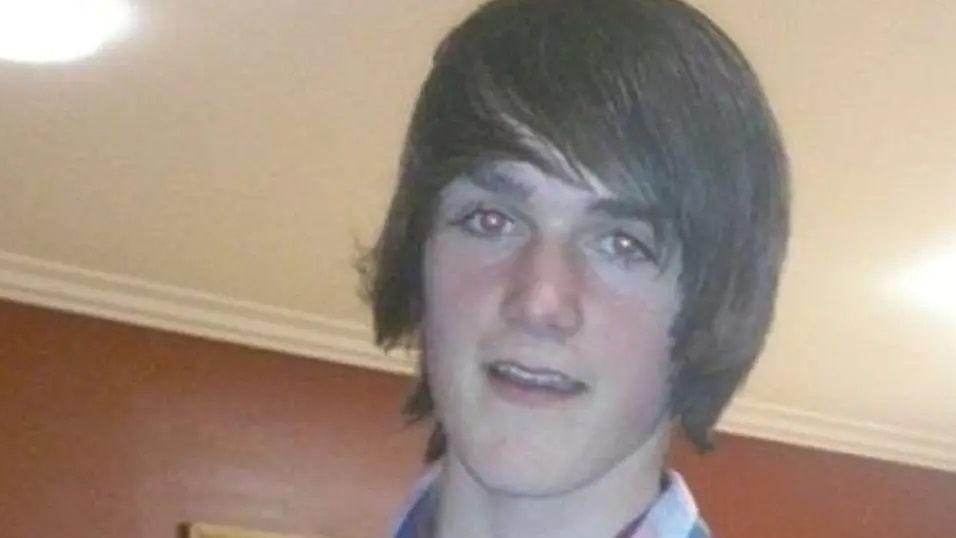
Doctors “missed opportunities” to treat a 14-year-old boy who died from meningitis, an inquest has heard.
Callum Hubbard died on 8 February 2014 at Sheffield Children’s Hospital after collapsing three months before.
The teenager, from the Dronfield area of Derbyshire, was rushed into hospital by paramedics, days after doctors withdrew antibiotic medication after an operation on his ear.
On Thursday, a jury concluded that decisions made by both paediatric and ear, nose and throat (ENT) departments at Chesterfield Royal Infirmary “probably contributed to his death”.
The inquest was the second to be held to examine the events leading to Callum’s death.
An initial hearing was held in 2018, but at the family’s request, the High Court ruled a fresh inquest should explore the circumstances surrounding his treatment.
The court heard the “fit and healthy” teenager had a history of recurring ear infection “since a young age”.
He was seen at the Chesterfield hospital on 5 November 2013 with an infection in his ear where he was referred for corrective surgery to a cholesteatoma – a tumour-like growth in his middle ear.
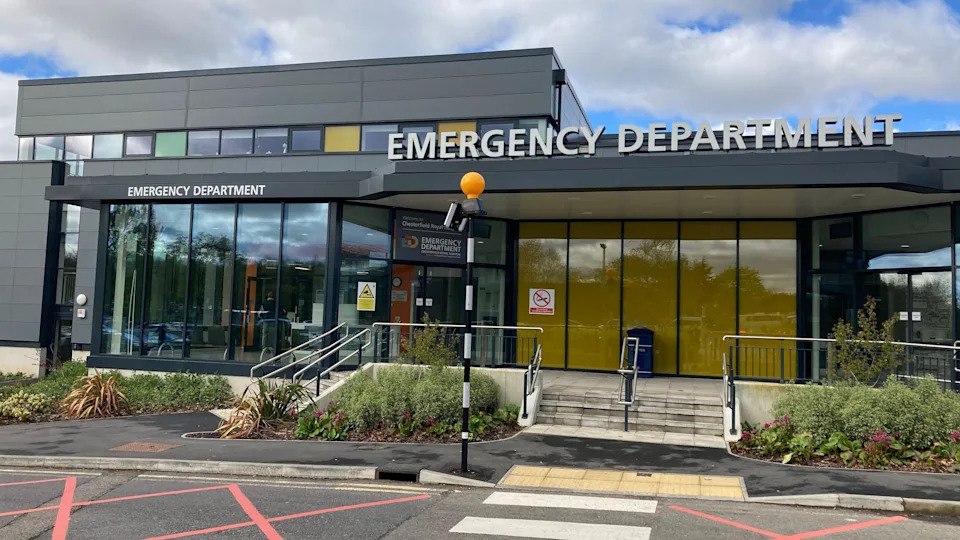
Callum had been treated at Chesterfield Royal Infirmary since 2011 [BBC]
After being discharged, Callum complained of a stiff neck and headaches, and had been struggling to eat and drink.
His parents had him seen again on 14 November, but they were told to return in four days for a CT scan.
Jurors found medics missed an opportunity to review his condition during this appointment.
The court heard that, before the scan, Callum was taken by his parents to the Emergency Department where paediatric doctors suspected meningitis and put him on antibiotics, which saw his condition improve overnight.
The following day, Callum was taken by the ENT department and his surgery was brought forward.
The court heard that jurors believed that a lack of communication and agreed clinical responsibility between the two departments “probably contributed to his death”.
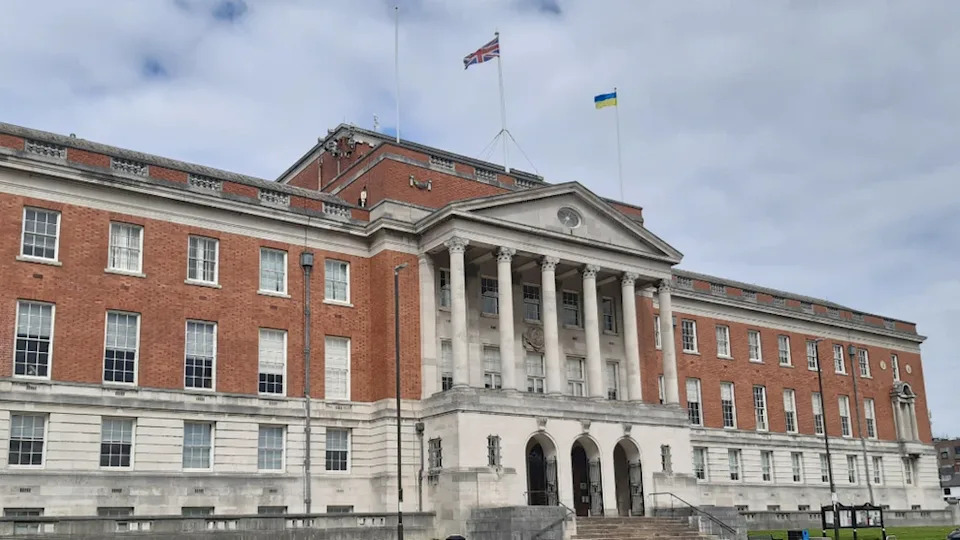
The inquest began on Monday at Chesterfield Coroner’s Court in the town hall [LDRS]
Callum was then discharged and a decision made to stop his antibiotics.
Jurors said that Callum “probably” would not have died if the medication was not withdrawn.
At home, his condition worsened over the next few days and his father called the hospital again, but was told to bring his son in for an emergency appointment the following day.
However, Callum’s condition deteriorated overnight and he was rushed into Chesterfield hospital by ambulance after he collapsed on 22 November.
Jurors told the court medics again missed opportunities to treat the teenager by restarting the antibiotics.
After being assessed by medical staff, he was transferred to Sheffield Children’s Hospital where he remained for three months until his death in February 2014.
Peter Nieto, senior coroner for Derbyshire, said that Callum’s medical cause of death was meningitis encephalitis, hydrocephalus and severe hypoxic ischaemic encephalopathy.
This means his brain was damaged due to a build-up of fluid caused by an infection, which led to inflammation of the brain and its protective layers.
‘His spirit lives on’
In a statement released following the inquest’s conclusion, Callum’s family said he was a “shy boy with a big smile”.
“Today marks the end of a long and painful journey to fight for answers and accountability,” they said.
“For years, we have carried the weight of knowing that what happened to Callum deserved to be heard in full, and that justice for him mattered.
“This conclusion is another step in honouring the boy who meant everything to us. Callum’s absence will always leave a hole in our lives, but his spirit lives on in every memory, every laugh, and every football match we watch.”
Follow BBC Derby on Facebook, on X, or on Instagram. Send your story ideas to eastmidsnews@bbc.co.uk or via WhatsApp on 0808 100 2210.
More on this storyRelated internet links