
What to know
Starting in 2026, the city will no longer manage recycling, with Circular Materials taking over blue bin collection for homes, apartments, schools, and long-term care facilities.
Most aspects of the program will remain unchanged, though residents must now contact Circular Materials directly for issues, and some new items will be accepted.
The shift comes under Ontario’s Extended Producer Responsibility system, which moves recycling duties from municipalities to producers.
The City of Toronto is reminding residents that it will no longer be responsible for managing recycling in 2026, as a private company will be taking over the blue bin program.
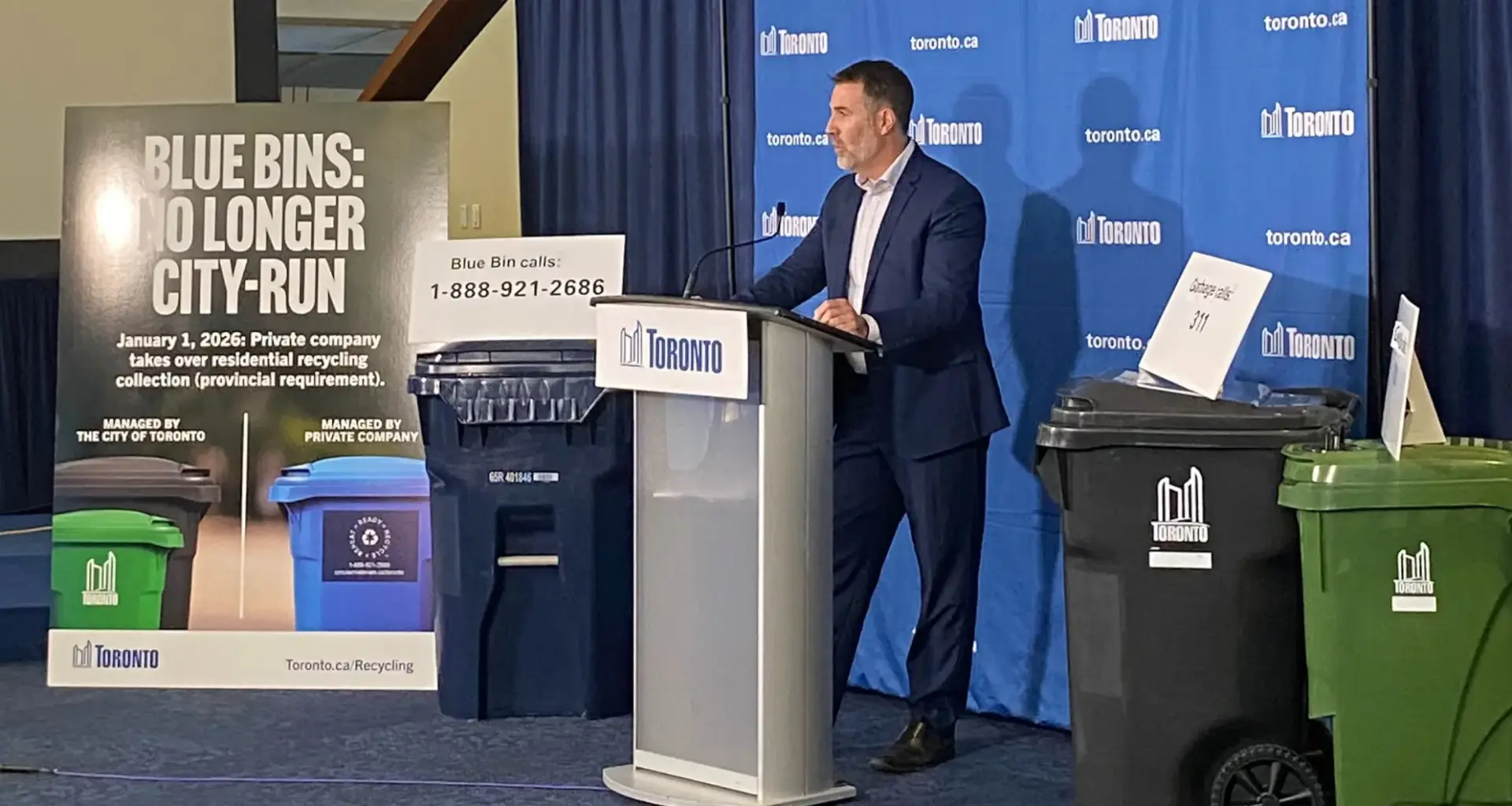
During a press conference on Thursday, city officials spoke about upcoming changes to the program, which will change how recycling will be handled for single-family homes, multi-residential buildings, long-term care facilities, retirement homes, and schools.
Starting Jan. 1, the City of Toronto will no longer be responsible for collecting and managing recyclables, with management of the system being taken over by private company Circular Materials.
Read More
Solid Waste Management Services General Manager Matt Keliher says the city has been working diligently to ensure that the transition is smooth for residents and the new service provider, and says the change should not affect the effectiveness of the system.
“Recycling is one of the simplest ways that we can reduce the amount of materials that goes to landfills and extend the life of our precious landfill resources,” he said to reporters on Thursday.
“The city is fully committed to ensuring the smooth transition, but also that we, as a city, divert as much material as possible. So, please continue to recycle, continue to use your [blue] bins, continue to go to our [Community] Environment Days.”
WHAT WILL CHANGE WITH THE BLUE BIN PROGRAM
Keliher says the transition won’t have many significant changes for residents, who can continue to put their recyclables into the blue bins for collection. Recycling days will also not change for residents, and still follow the same pick-up schedule in the new year.
Circular Materials will continue to accept the same materials in the blue bin, while also accepting a few more items as of Jan. 1, including:
Coffee cups;
Ice cream tubs;
Deodorant;
Toothpaste tubes;
Black plastic containers;
Frozen juice cups.
Read More
The biggest difference is that now the system will be managed by the private company, which means residents will now have to contact Circular Materials directly if they find any issues with their bin or with the collection.
The contact number is 1-888-921-2686, and it has also been attached to blue bins across the city.
“You’re no longer to call 311 for your miscollection of blue bins or if your blue bin is damaged and needs to be repaired or replaced. You’re to call Circular Materials,” Keliher said.
TORONTO’S RECYCLING SYSTEM REDUCES WASTE FROM LANDFILLS BY 52%
Toronto’s recycling program was one of the first to be implemented in North America in 1988, according to Chair of the Infrastructure and Environment Committee (IEC) and Eglinton-Lawrence Councillor Mike Colle.
When it first started, the program only accepted a few select items, including newspapers, glass bottles and tin cans, and had the objective of diverting 15 per cent of waste from landfills.
Almost 40 years later, the program now diverts approximately 52 per cent of waste from landfills.
“We hope to keep this fantastic participation by Torontonians, and make it even better, despite these changes we’re going to see very soon,” Colle added.
Changes to the blue bin program come after the Ontario government introduced legislation in 2021 ordering a transition in the province’s Blue Box Program to full Extended Producer Responsibility (EPR), a system that shifts responsibility for recycling into producers.