
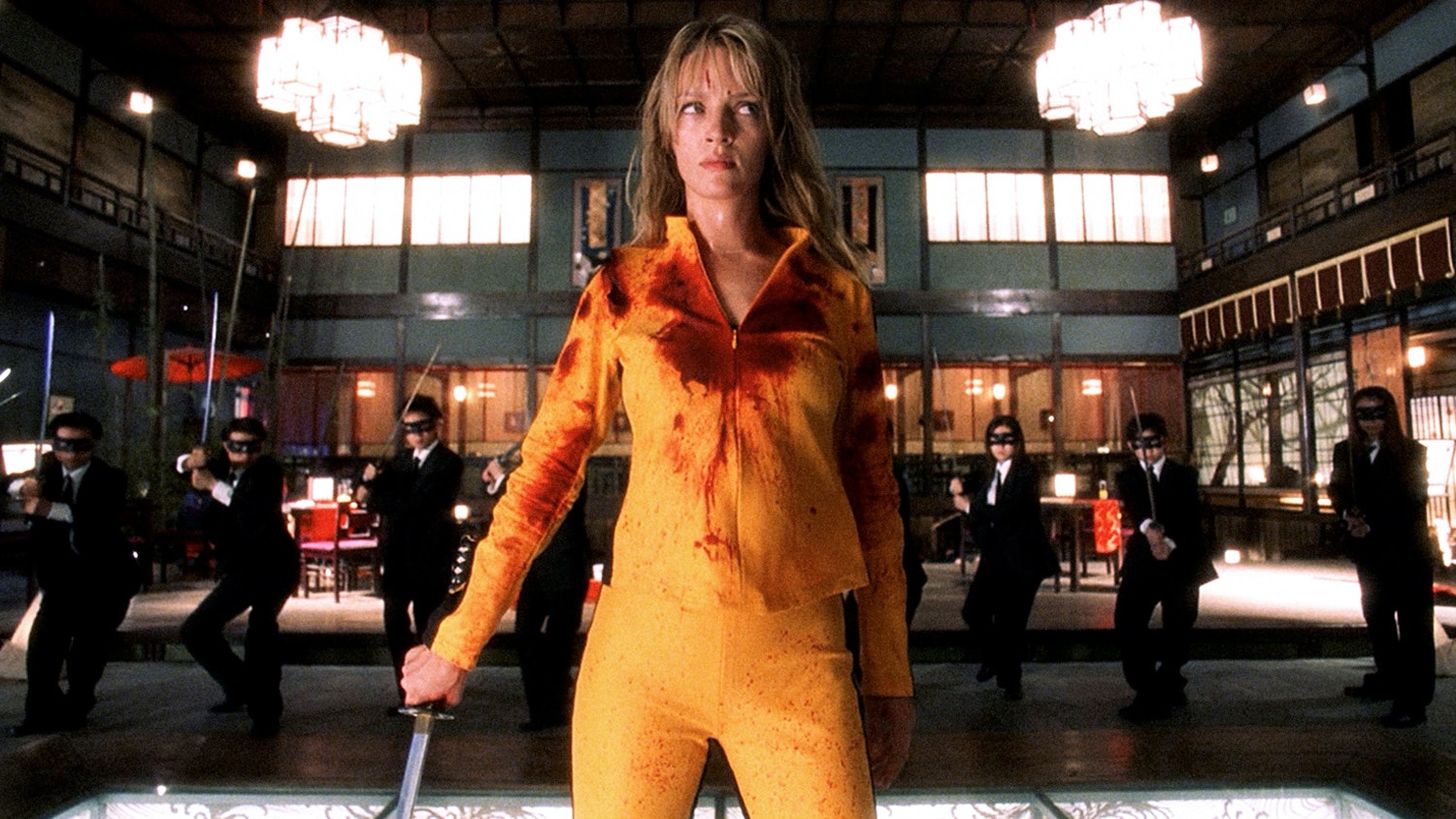
The Bride (Uma Thurman) hunts down the fellow assassins who left her for dead, cutting a vengeful warpath to her former boss and lover.
Every movie by Quentin Tarantino doubles as a tribute to his taste in other movies. But that’s doubly true of Kill Bill, a hyper-violent B-cinema epic too pregnant with video-clerk obsessions — samurai showdowns, kung-fu fighting, spaghetti-Western vistas, anime splatter — to make it to cinemas in one piece. Audiences originally experienced the East-meets-West revenge odyssey of the Bride (Uma Thurman) in two feature-length instalments released six months apart. Tarantino, however, has always maintained that Kill Bill is one movie, no matter how stylistically distinct its halves appear. And after years of rare one-off screenings, fans all over now get to see his reconstituted version on the big screen in all its four-plus-hour glory.
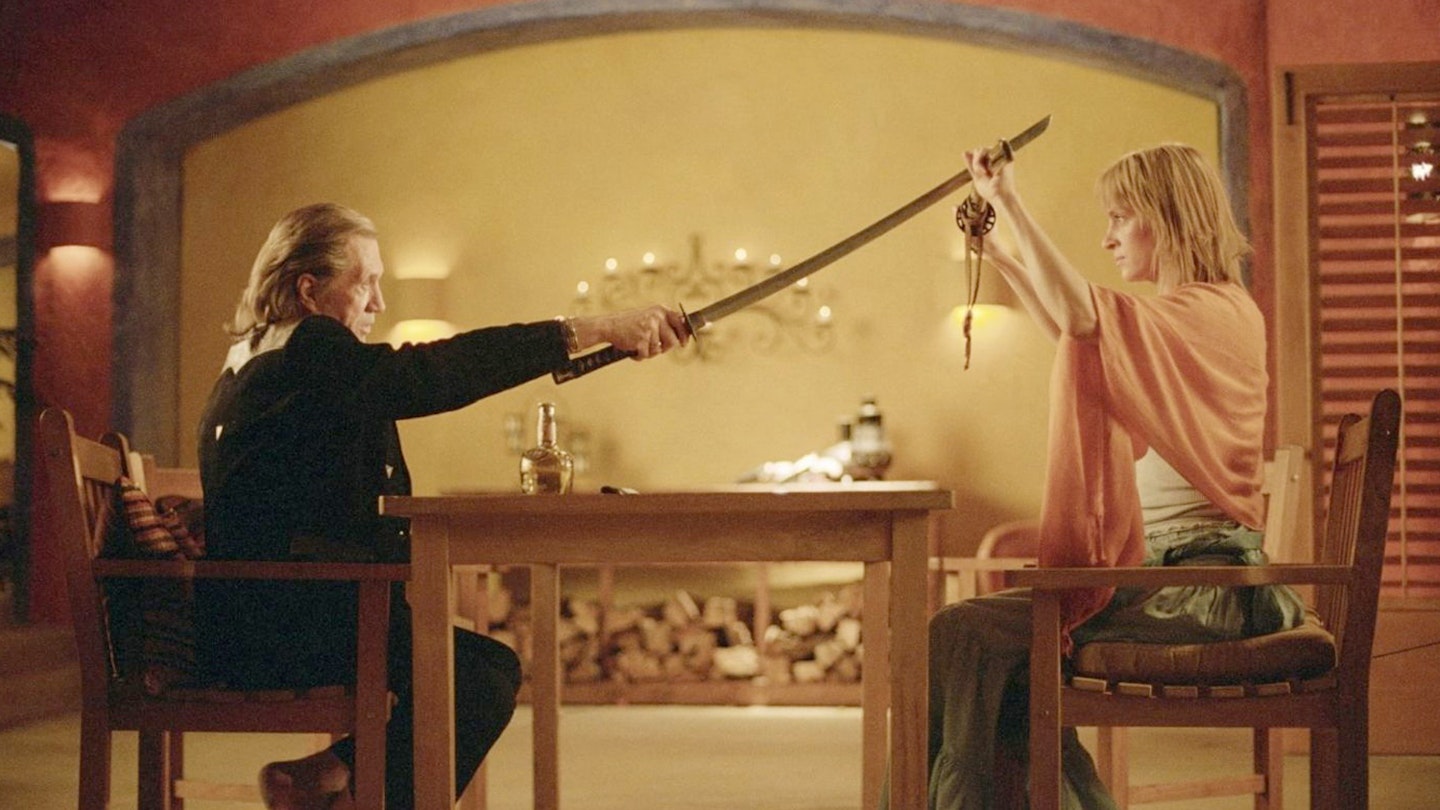
Those expecting a radically different experience may be surprised by how much the complete cut still resembles the bifurcated Bill, just without the need to switch discs or circle back to a streaming menu. There are more subtractions than additions. Gone is the miniature preview of Volume 2 and the fourth-wall-breaking recap of Volume 1 — both cleaved as cleanly as the second arm we now get to see Thurman’s Bride sever from an adversary. More significant, at least for those new to the story, is the excision of a half-time spoiler designed to goose anticipation for the final standoff to come. Good riddance to that ruinous cliffhanger reveal.
Suturing the saga back together really does improve the, well, whole bloody affair.
Whereas Tarantino’s splashiest set-piece once cut temporarily to black-and-white to appease horrified censors, the magnificent all-severed-hands-on-deck brawl at a Tokyo nightclub now plays out in full colour. For those hungry for even more of this more-is-more opus, QT has added new footage: an animated “lost chapter” from the gory origin story of Lucy Liu’s ascendant crime boss, O-Ren. There’s fun in seeing another loathsome goon get his grisly comeuppance, but you can also understand why these explosive but inessential five minutes never made the cut.
No, the real draw here is the chance to see Kill Bill as Tarantino intended, large and largely uncut. Suturing the saga back together really does improve the, well, whole bloody affair: while Volume 2 felt a tad anti-climactic after the more kinetic thrills of Volume 1, the two complement each other beautifully in one sitting, the subversive design of their yin-yang relationship snapping into clearer focus. Even in piecemeal, Kill Bill has always seemed like the purest expression of QT’s imagination, a direct feed into his movie-addled brain. Turns out that stream of consciousness is even more exhilarating when it flows without interruption.
Quentin Tarantino’s thrilling pastiche of Eastern and Western genre tropes returns to cinemas in the form of one massive magnum opus. It’s even better made whole.