
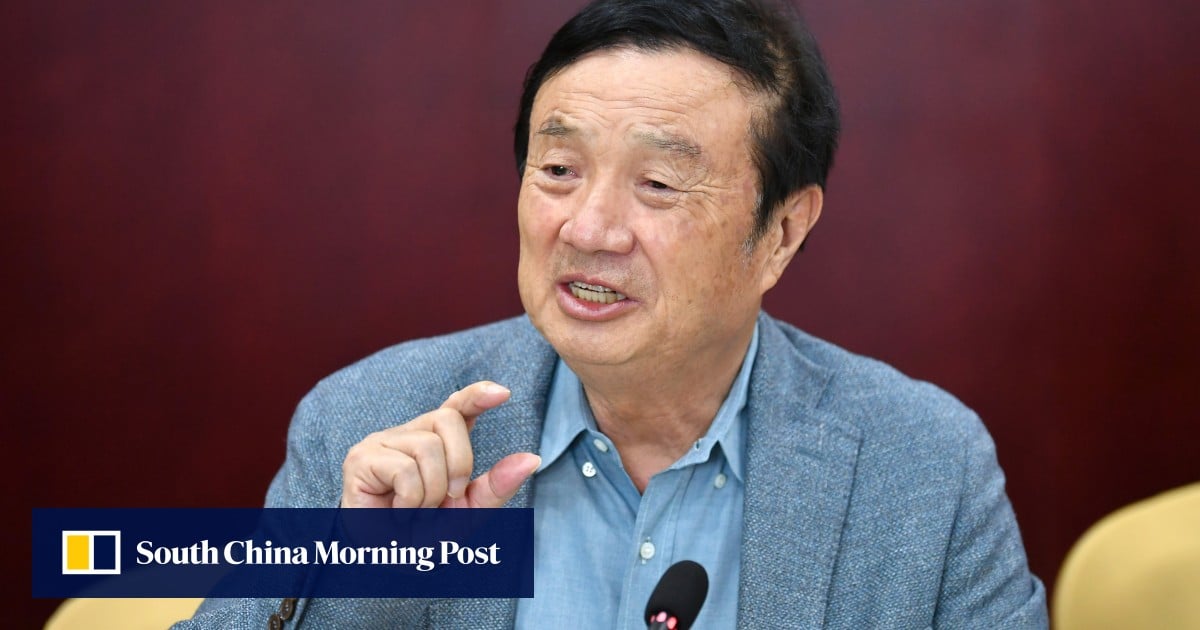
The United States and China are pursuing artificial intelligence in “different directions”, and the divergence is being reflected in the strategies that the governments and companies are adopting, according to the founder of one of the world’s largest technology investors.The US is focusing on supercomputing power and large models in the lofty pursuit of artificial general intelligence (AGI) and artificial superintelligence (ASI), while China was adopting a more practical approach, using AI to solve real-world problems in development, said Huawei Technologies’ founder Ren Zhengfei.
“The US is seeking AGI and ASI to get answers to questions like ‘What is human?’ and ‘What is the future of society?’ They are trying to solve the whole problem [at once], but it takes time for [humanity] to know what the problem is,” according to a transcript of Ren’s November 14 speech to the International Collegiate Programming Contest, released on Friday.
Ren’s subtle dig at the US approach to AI reflects the strategy behind Huawei’s own AI investments, as the Shenzhen-based company with one of the world’s largest research and development budgets builds its home-grown alternatives to Nvidia’s much-coveted AI processors. The strategic divergence also explains why China is racking up users and developers with open-source large language models, while US technology giants are spending hundreds of billions of dollars on building ever-larger models.
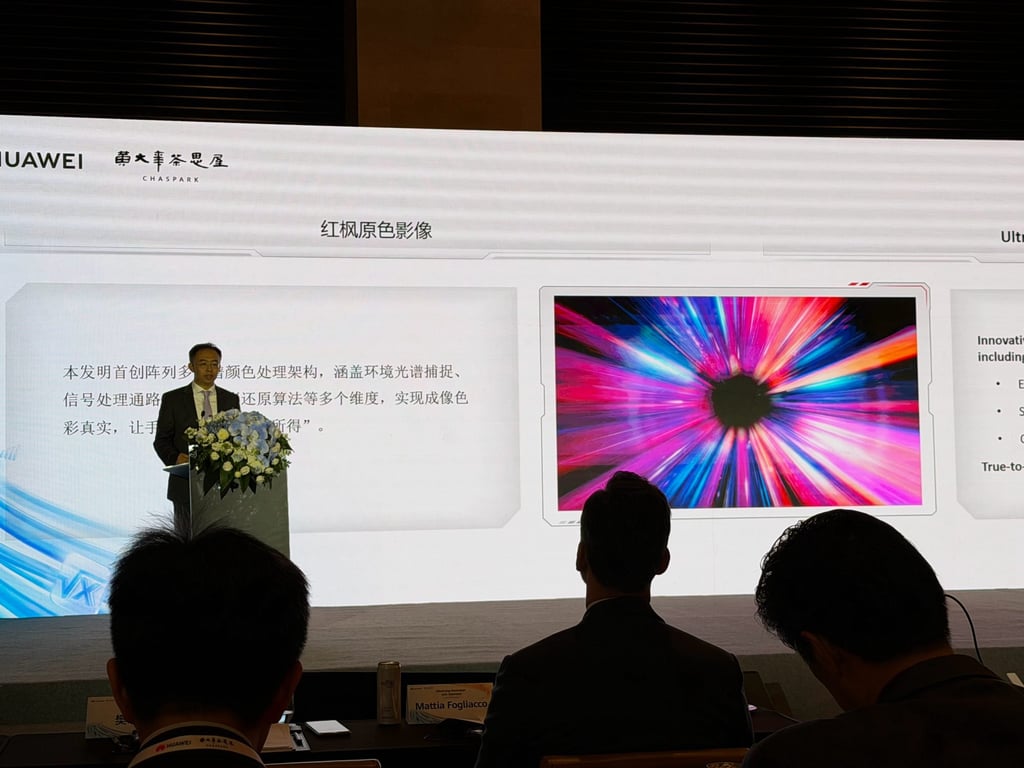 Huawei unveiled a range of improvements for artificial intelligence training efficiency on November 11, 2025. Photo: Weibo
“China is focusing on how to get things done [with AI] to create value and fix development issues,” the 81-year-old entrepreneur said.
China’s AI pursuit is about “safe cities, improvement in public education and healthcare, automated mining and cement factories…and enabling coal miners to go to work in suits and ties”, said Ren. Huawei has pioneered the application of remotely controlled mining machines and highly automated mines in China, connected by its 5G telecommunications infrastructure.