
At the end of each year, TIME selects its Top 100 photos of the year. As always, the 2025 edition is replete with superb photography, ranging from split-second action shots of important news events to powerful photos from longer-term projects, the collection is a compelling visual reminder of the major events of 2025 and, perhaps as importantly, photography’s power in telling the world’s most important stories.
PetaPixel chatted this week with Katherine Pomerantz, Director of Photography at TIME, about this year’s selections, the process of picking the top 100 photos of the year, and why specific images speak to her.
Pomerantz has been Director of Photography at TIME for eight years now, although TIME‘s Top 100 photos feature has been going on “much longer than that.”
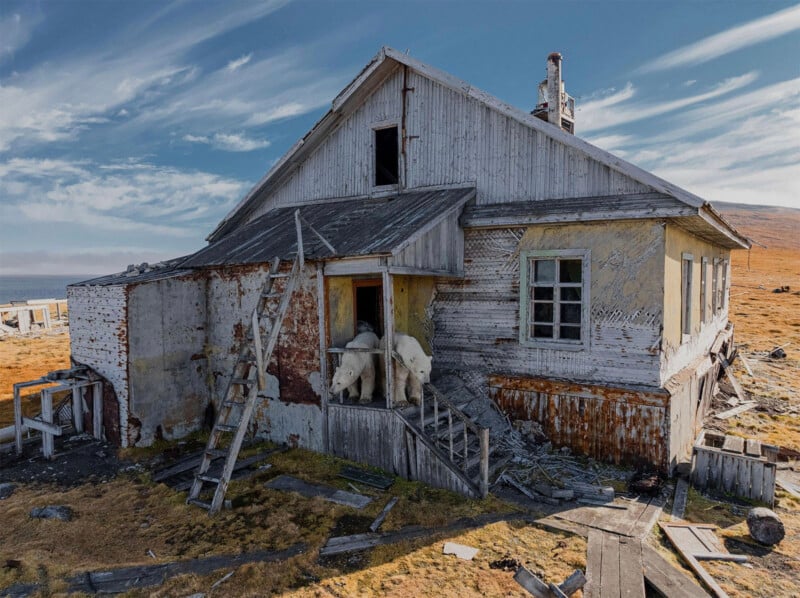 ‘Polar bears at an abandoned research station on Koluchin Island, off Chukotka, Russia, in the country’s Far East, on September 14.’ | Photo by Vadim Makhorov — AP (https://petapixel.com/2025/10/01/photographer-brings-drone-on-cruise-ship-finds-polar-bears-living-in-abandoned-building/)
“Every year we put together our top photos of the year,” Pomerantz explains. “It’s a complete collaboration of the entire photo team and my favorite project of the year, the project basically starts in January.”
The team gathers photos throughout the year and puts them in a big folder. Every month, Pomerantz says her team, which includes five photo editors at TIME, reviews the selections so far.
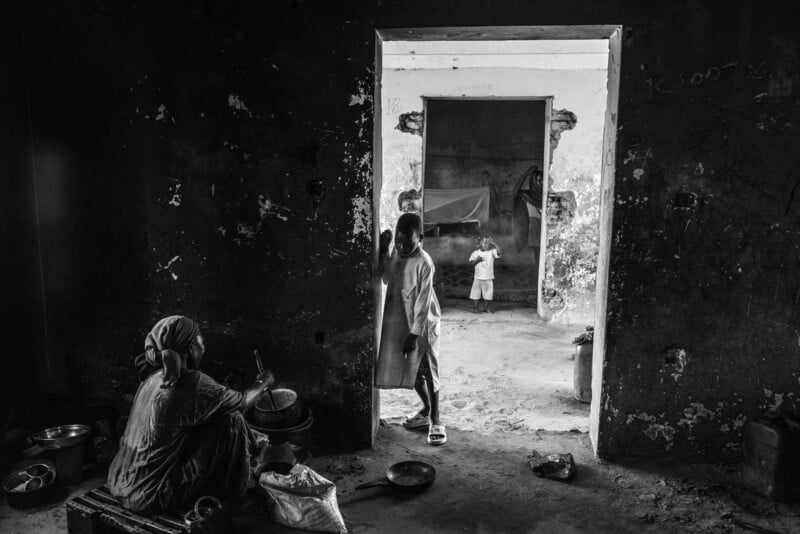 ‘A woman cooks in the shadows of a former orphanage while children move through adjoining rooms, now converted into living quarters for families displaced from Khartoum. The abandoned compound on the outskirts of Al Junaynah shelters dozens who fled Sudan’s civil war.’ |
Photograph by Moises Saman for TIME
Come August, the narrowing process goes into full swing, and the meetings become more regular and decisive.
“Part of it is debate, part of it’s agreement, lots of laughter. It’s a ton of fun,” Pomerantz remarks. “What’s cool is that everybody has different photographers they follow, they’re in touch with. Using everybody’s brains and their collective contacts, [we] pull in a bunch of different photographers and images.”
Sometimes Images Grab You and Won’t Let Go
A year is a long time, and, as cliché as it may be, 2025 felt longer than most. That’s a lot of news, and a massive amount of photos. Nonetheless, specific images strike one of TIME‘s editors so powerfully that they really want it to make the final cut. Pomerantz says that it’s common for one of her editors to send her a message with a photo and say that it’s so strong it has to be set aside.
But everyone has different preferences and finds various types of images especially captivating.
“Some of the photo editors really like graphic images or ones that are chaotic and loud images with a lot of tension,” TIME‘s photo director says.
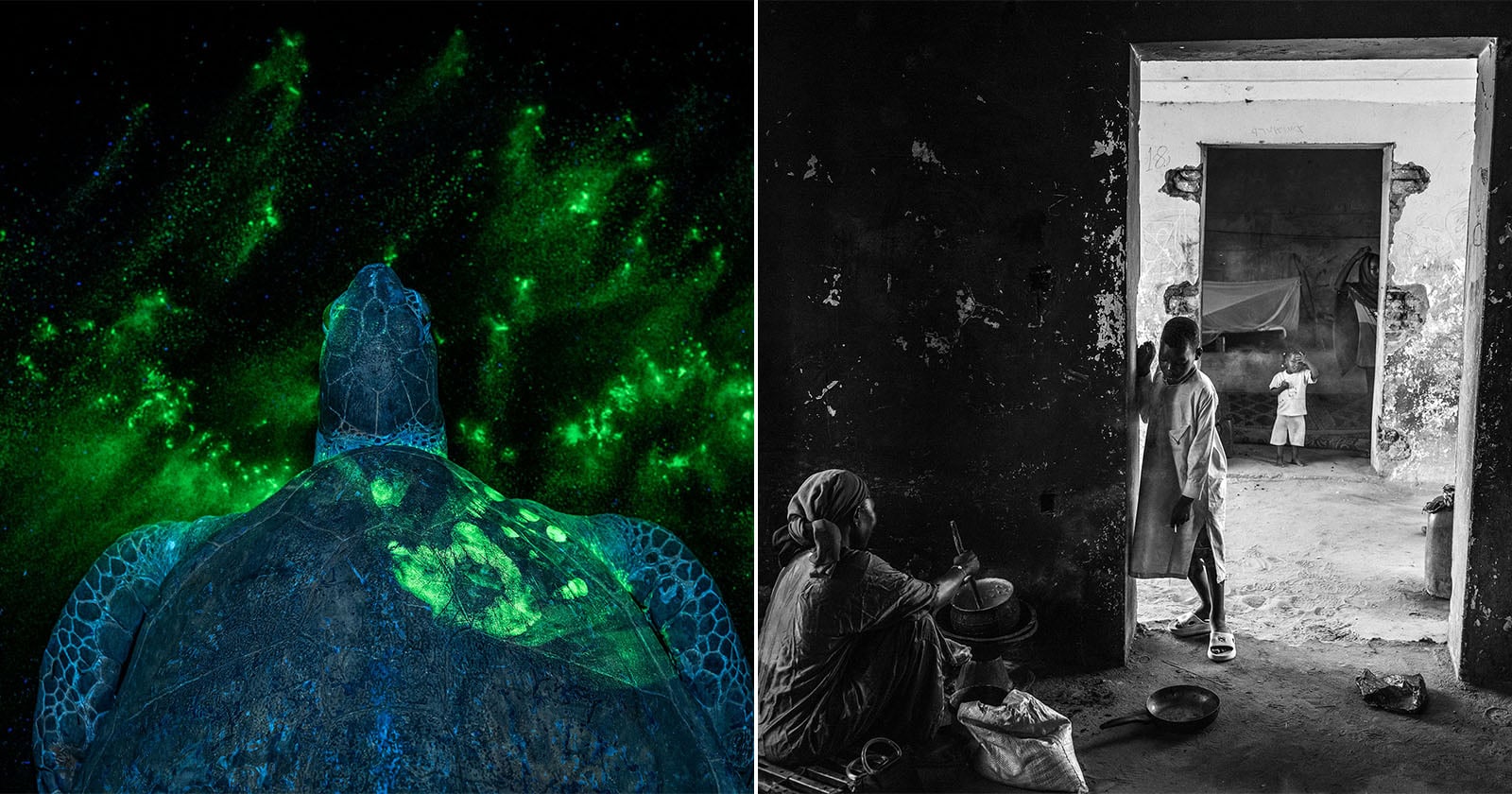
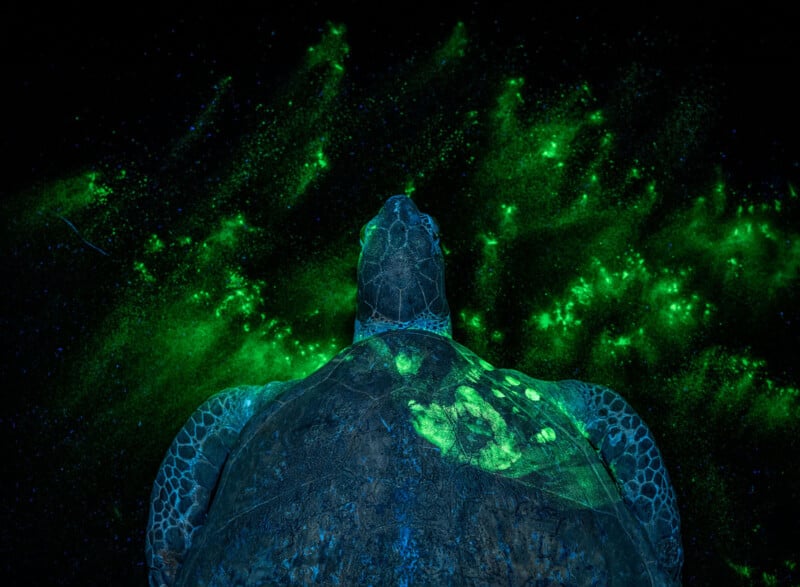 ‘Ultraviolet light reveals a human handprint on the shell of a green sea turtle—demonstrating a cutting-edge technique for capturing forensic evidence to be used against poachers and animal traffickers.’ | Photo by Britta Jaschinski
For Pomerantz herself, a lot of it comes down to composition, but she really appreciates images when a photographer’s exceptional skill is on full display.
“Especially in a breaking news moment or in a moment where things are happening very quickly, when you can tell the photographer had a vision in that moment of that picture. That speaks very loudly to me,” Pomerantz says.
When asked if there was an image that she couldn’t stop thinking about, Pomerantz instantly named Carol Guzy’s award-winning photo of a security guard on one side a pillar outside a building while a mother and her young child stood, distressed, following an immigration court hearing for the husband and father, who ICE had detained.
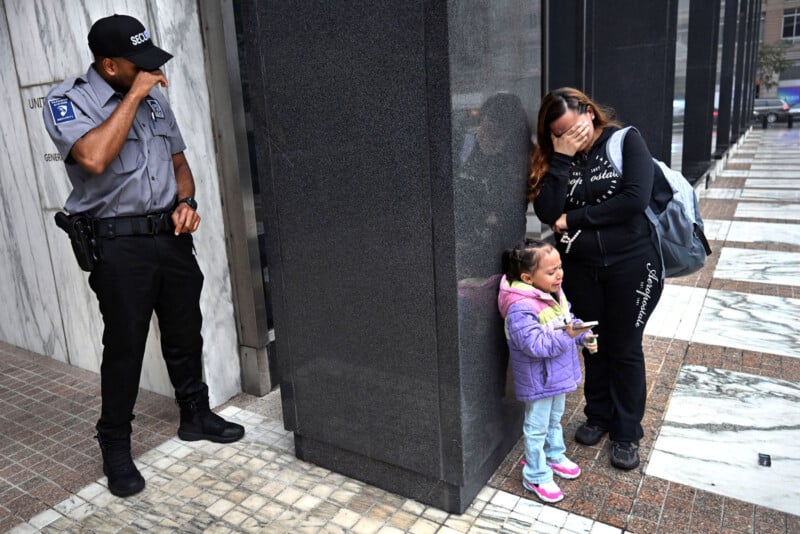 ‘After her husband was detained by ICE agents on August 20, a woman with her child wept outside a federal building in New York City; a security guard was moved to tears as well. There was no word at the time on if the detained man faced any criminal charges.’ | Photo by Carol Guzy
“The one that comes immediately to mind is the Carol Guzy image of a mother and child outside of the detention center in New York,” Pomerantz says. “And they’re both tears and then sort of around the corner is a security guard who’s also crying. And her perspective where you can see both these emotional moments happening at the same time, but it doesn’t seem like they can see each other, I think is a really, really powerful moment.”
This was also one of the images that was picked up by one of TIME‘s editors. Brooklyn-based senior photo editor Kim Bubello has been following Guzy’s work and brought this powerful photo to the rest of the team’s attention. Clearly, its power won over everyone else, too.
The Human Element and Emotional Storytelling
The human element of this image, and many others in the final selection of 100, is so crucial, says Pomerantz.
“A thousand percent,” she says, “Raw human emotion is something we’re all craving. When you can see that in a photograph, there’s nothing more impactful than that.”
In the case of Guzy’s photograph, and many others, the human emotion on full display is pain, horror, tragedy, and devastation. But that’s not all the news is. There are also moments of contemplation, contentment, and jubilation, along with photos of people doing incredible, inspirational things. The selection runs the gamut not only of aesthetic style and subject matter, but also of the human experience.
“It’s nice when the emotion is joy because I feel like we need that,” Pomerantz says.
It is not just the photos themselves that perform vital emotional storytelling, but also the way they are ordered, which is given extensive, careful consideration.
‘Raw human emotion is something we’re all craving. When you can see that in a photograph, there’s nothing more impactful than that.’
“It’s very intentional to represent the whole range of human emotion,” Pomerantz says. “When we put [all the images] together as 100 photos, we’re very intentional about the sequencing.”
When Pomerantz first started at TIME, this process included printing out every photo and spreading them across tables in a conference room. These days, the team meets online to discuss and share pictures. However, the way the conversations go has not changed. Pomerantz describes the final cuts as among her favorite parts of the entire process.
“I think when we disagree — and we have a very lovely, respectful, fantastic team, so the disagreements are very cordial — it’s good practice for us to talk about photography, to really think about the image,” she says. “I think that’s a very crucial part of the process is to be able to make your case and try to convince others for why one image, especially if they’re very similar frames from the same event, [deserves to be included].”
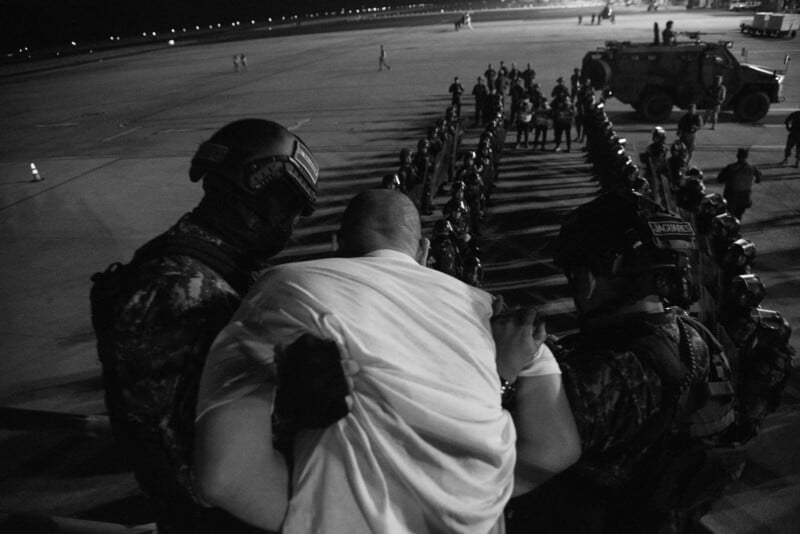 ‘On the night of Saturday, March 15, three planes touched down in El Salvador, carrying 261 men deported from the United States. A few dozen were Salvadoran, but most of the men were Venezuelans the Trump Administration had designated as gang members and deported, with little or no due process.’ | Photo by Philip Holsinger Picking the Perfect Cover
One of the most challenging parts of the process every year is selecting the cover. While many viewers enjoy TIME‘s Top 100 Photos feature online each year, it is also a significant print issue for the publication, and the cover of any magazine is critical.
This year, Britta Jaschinski’s striking photo of a green sea turtle under ultraviolet light graces the cover. It is not just visually powerful, but it also tells a compelling story about how people are using forensic evidence against poachers and animal traffickers.
Like Guzy’s included photo, this was also selected after a photo editor saw it online and brought it to the team’s attention.
“We looked at it and we reached out to the photographer to get the backstory of the photo and it ended up on the cover,” Pomerantz says.
It was the ideal cover photo for many reasons. Importantly, it works extremely well in a vertical format, which definitely matters. But it is also visually striking while also speaking to a major story — how new technology helps fight wildlife crime.
“It’s one of those that stops you and you’re like, ‘What’s going on here?’ So you have to, hopefully, pick up the magazine and take a closer look,” Pomerantz says.
 TIME magazine cover for December 8, 2025 | Photo by Britta Jaschinski
The Photo Director adds that the cover image can’t just be the most famous photo from the biggest news event, either, as that would make people think the magazine is about that event, rather than the photos of the year.
Ultimately, that’s what the incredible feature is about each year: celebrating the powerful images that talented photographers captured worldwide throughout 2025. From action-packed images of chaotic scenes to inspiring moments of human success, the team of TIME photo editors, led by Katherine Pomerantz, delivered the perfect bookend to 2025. The complete collection of TIME‘s Top 100 Photos of 2025 is available online and in TIME magazine’s newest issue, “Best Photos of the Year,” which arrives on newsstands and in stores next week.
Image credits: Images provided courtesy of TIME. Individual photographers are credited in the captions.