
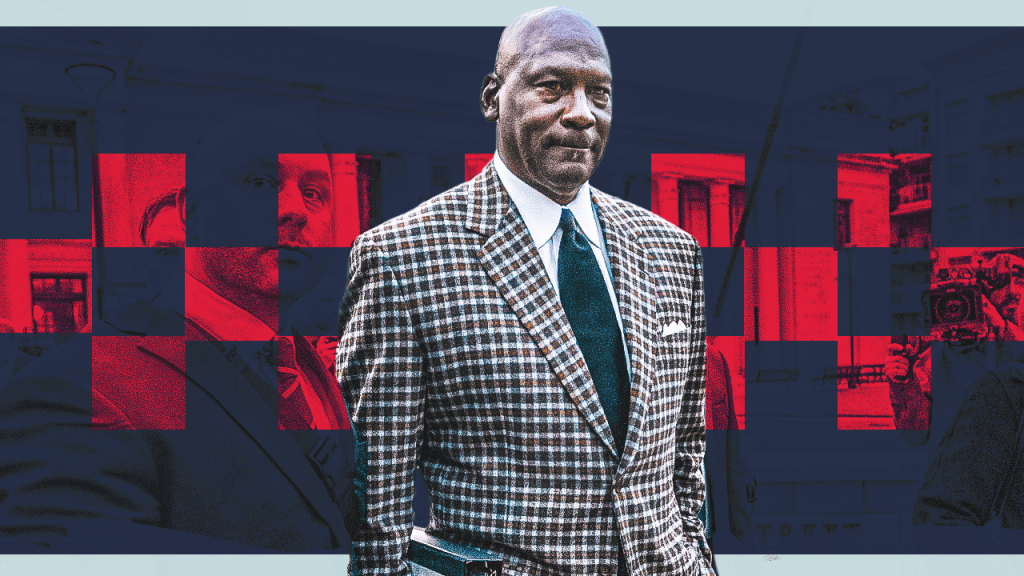
Michael Jordan, who co-owns 23XI Racing with Denny Hamlin and Curtis Polk, is expected to testify Friday afternoon in the antitrust jury trial for 23XI & Front Row Motorsports v. NASCAR.
Jordan will be a crucial witness for several reasons.
For starters, jurors will likely pay attention to everything he says. Jordan, one of the most celebrated athletes in American history, is by far the most famous person involved in this trial.
The North Carolina jurors might feel like they know him because of his deep ties to the community; he grew up in the state, won a national title for UNC and owned the Charlotte Hornets. Moreover, the 6-foot-6 Jordan is an imposing figure who quite literally stands out.
Jordan is also likely to speak in ways that jurors will “get.”
Antitrust trials involve complicated questions about the relationship between economic competition and the law. There’s math, statistics and analytics. For those who study such topics, antitrust trials can be fascinating. But for many others, antitrust trials can at times seem boring, confusing and esoteric. The best antitrust litigators are those who not only understand complex questions but can discuss them in conversational ways that don’t go over jurors’ heads.
Jordan is not an economist; he’s a businessperson with extensive media training and experience. The 62-year-old billionaire has done thousands of interviews and tackled difficult questions, including whether he has a gambling problem, his sometimes-adversarial relationships with other NBA players and the tragic murder of his father. Expect him to be well-spoken, calm and confident.
In addition, Jordan is a seasoned litigant. He has testified in trials, including in 2015 when he testified against a grocery store he said was using his NIL without permission, and in 1992 when he discussed paying $57,000 to cover gambling losses in a trial involving a suspected drug dealer. Jordan also spent eight years litigating against Chinese company Qiaodan Sports over its use of “Qiaodan”—which can be phonetically translated as “Jordan”—in its name and brand.
Further, Jordan has sued others for extortion and for unlawful use of his intellectual property. While not an attorney, he’s no stranger to the law.
During direct examination by his own attorney, Jordan will also deliver the central thesis of 23XI and Front Row’s case against NASCAR. 23XI and Front Row maintain NASCAR has too much control in the buying of services provided by premier stock-car racing teams. The two teams claim NASCAR exploits that control to impede potential rivals, pay teams less and prevent permanent ownership of charters, which are multiyear contracts between teams and NASCAR. That’s the heart of the case. Jordan will likely tell jurors that NASCAR has made it difficult for drivers and sponsors, too.
But Jordan testifying is a double-edged sword for the plaintiffs. During cross-examination, Jordan will be asked about how 23XI came into existence five years ago, with the questions trying to get Jordan to admit that the ability to buy and sell charters made that possible.
He’ll likely also be asked to explain why charters have massively increased in value in recent years—an increase that has directly benefited owners like Jordan—if NASCAR is so oppressive. Jordan might also be questioned about why other owners, who negotiated and signed charters, have testified they like charters and find them beneficial both to their teams and the sport’s financial success.
The bottom line is jurors will be listening. Jordan’s performance could be a game-changer as to whether his side wins or loses.