
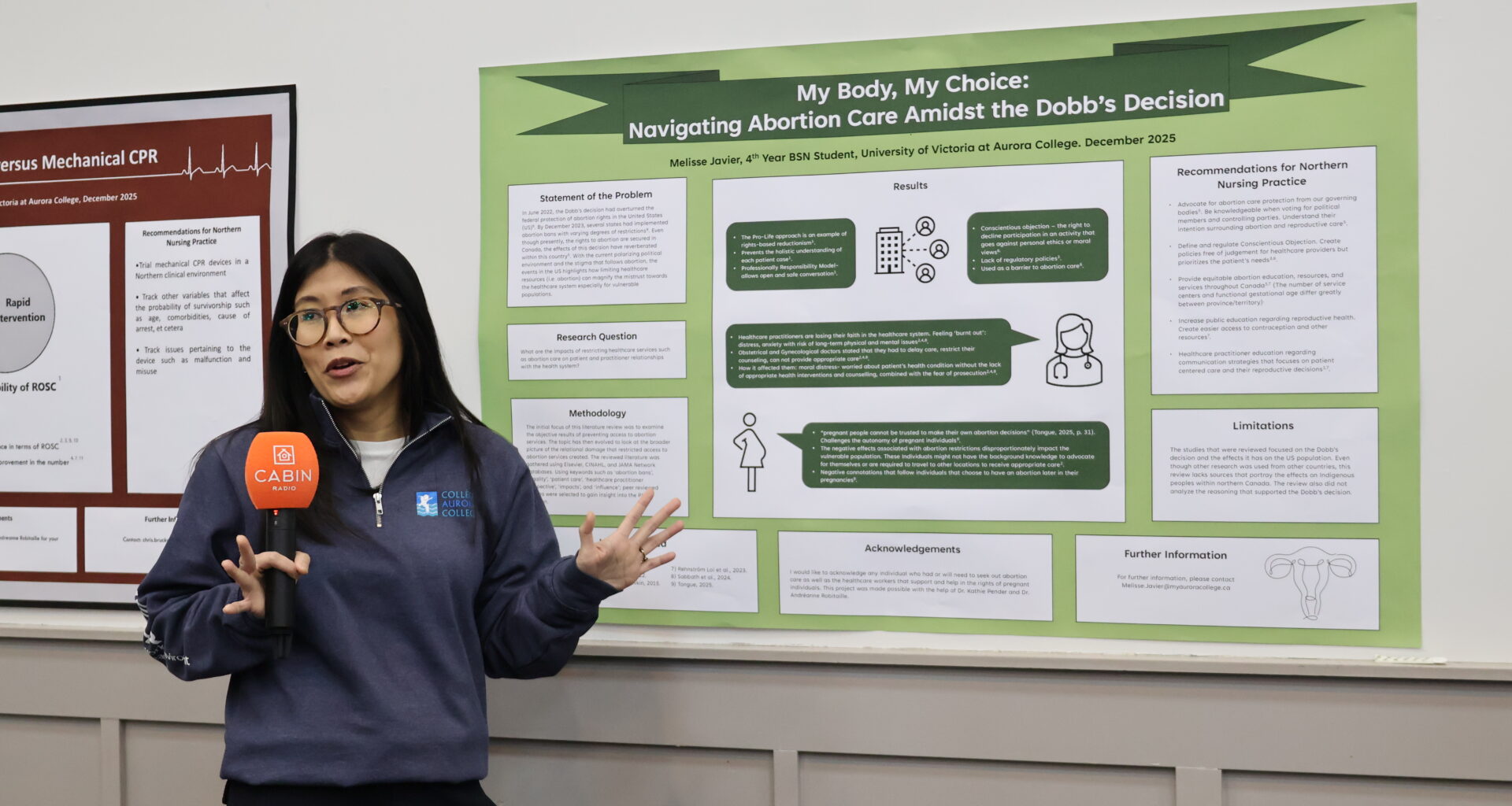
Dozens of nursing students gathered at downtown Yellowknife’s Chateau Nova on Wednesday morning for Northern Health Research Day.
Twenty-eight nursing students from Aurora College presented their research on a range of topics related to healthcare in the North.
Among them was Tori Blake, originally from Hay River, who examined the role of community health nurses in rural areas and highlighted gaps in the system – including the lack of ambulance access in many communities.
Blake said her interest in the subject grew after spending a month in Fort Providence for clinical work.
“Only six of 33 communities in the North have an ambulance and as per policy, community health nurses are not allowed to provide care outside of the health centre, nor are they allowed to transport patients to the health centre,” she told Cabin Radio.
Advertisement.
Advertisement.
Blake said that while she understands the policy is in place to protect the nurses – who she said shouldn’t be expected to fulfill the role of first responders – there’s “no filler in this gap of service.”
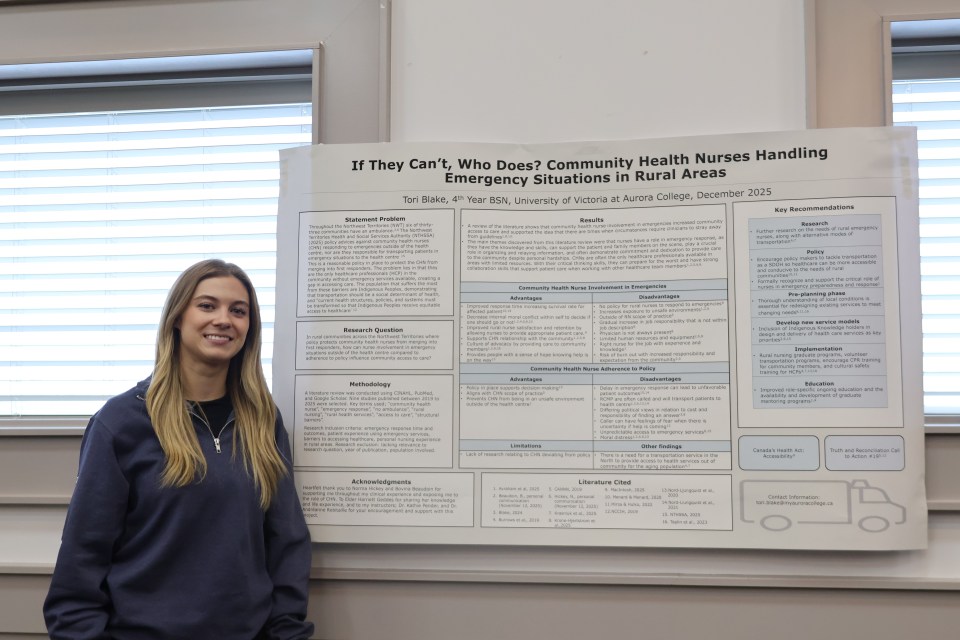 Tori Blake. Aastha Sethi/Cabin Radio
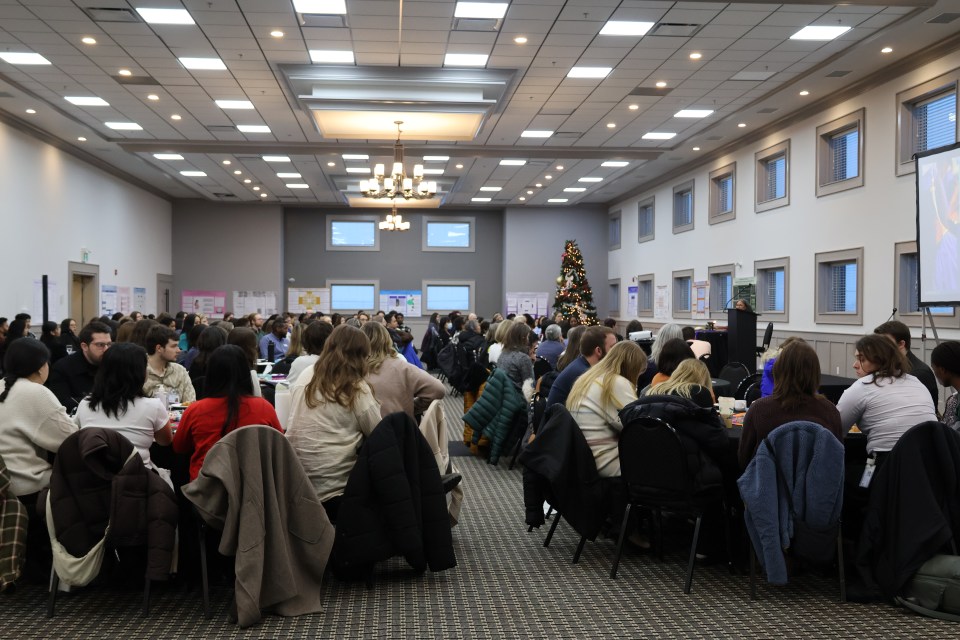 Roughly 150 people attended Wednesday’s event. Aastha Sethi/Cabin Radio
In her research, she explored alternative transportation methods to support rural emergency needs, as well as a pre-planning phase to identify challenges unique to each community.
“I do think we need to develop new service models, which would include Indigenous knowledge holders in the design and delivery of healthcare services,” she said.
Another presentation, by Princess Ndlovu, focused on access to dermatology care in the North and its impact on the mental health of people with alopecia.
Advertisement.
Advertisement.
Ndlovu noted that alopecia is particularly common among Black women, who face difficulties finding dermatologists in rural areas. While the shortage of specialists exists nationwide, it is more pronounced in isolated communities.
Her research found that the absence of accessible dermatology services can negatively affect both self-esteem and cultural identity.
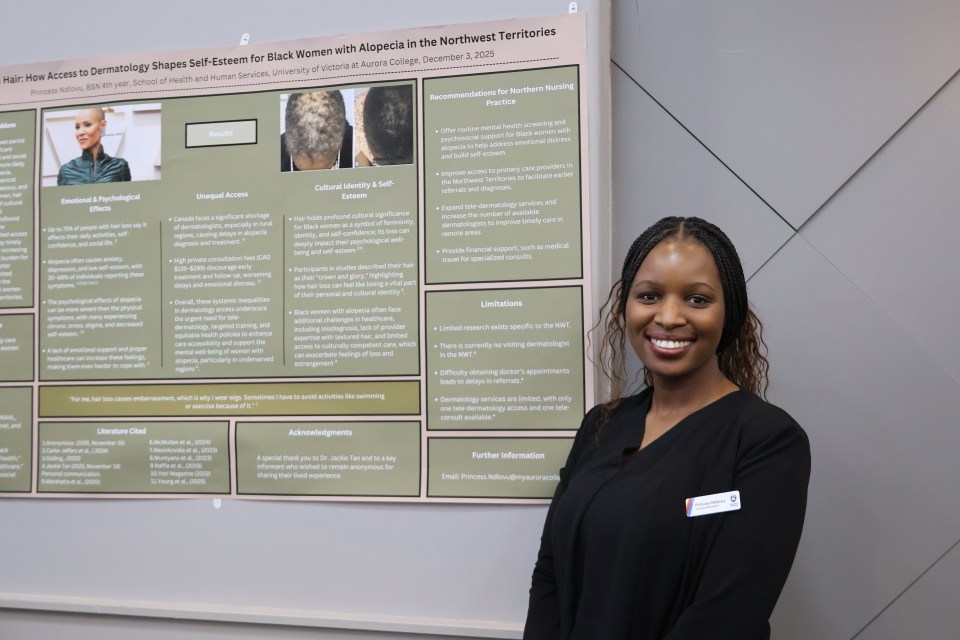 Princess Ndlovu. Aastha Sethi/Cabin Radio
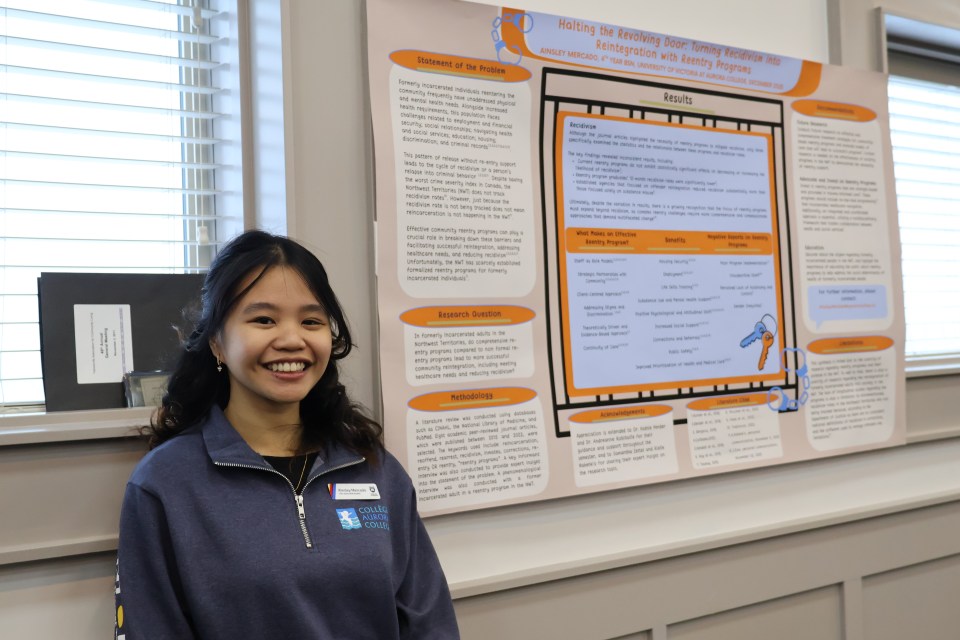 Ainsley Mercado. Aastha Sethi/Cabin Radio
Ndlovu said she couldn’t find research specific to Black women in the NWT. With her project, she wanted to encourage Black women “to be more comfortable in going out and seeking the help that they need when they do have these issues.”
“How would you feel if you started to notice your hair falling out and then you can’t really do anything about it? It comes with a lot of embarrassment, shame, and you feel scared half of the time, right?” she said.
“Up to 75 percent of people with hair loss say that it affects their confidence, their daily routines as well as their social lives. So for Black women, this impact is even greater because hair is so deeply connected to our culture, who we are, our femininity as well as how we express ourselves.”
Doing something different
Ainsley Mercado’s project examined the role of comprehensive re-entry programs in supporting inmates after they leave a correctional facility.
Mercado spent time at a correctional facility speaking with nurses to better understand why many former inmates do not receive adequate support and, in some cases, end up reoffending.
She said choosing a topic was the most challenging part of the process, given the many issues that could be addressed. Limited research specific to the NWT was an additional obstacle.
Advertisement.
Advertisement.
“This was an eye-opener for me,” Mercado said. “Part of nursing is beyond the clinical setting, where we also have to advocate for the underrepresented and the issues that tend to be overlooked.”
Bridget McLeod examined whether children’s participation in nature prescription programs could improve their physical health and emotional wellbeing. She found significant improvements not only in physical and mental health but also in community engagement and environmental stewardship.
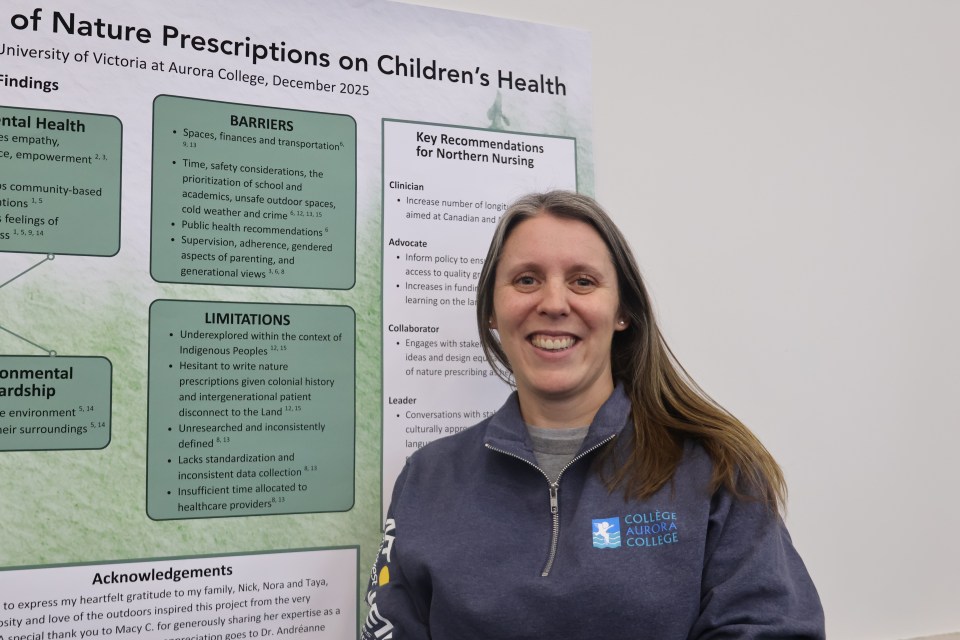 Bridget McLeod. Aastha Sethi/Cabin Radio
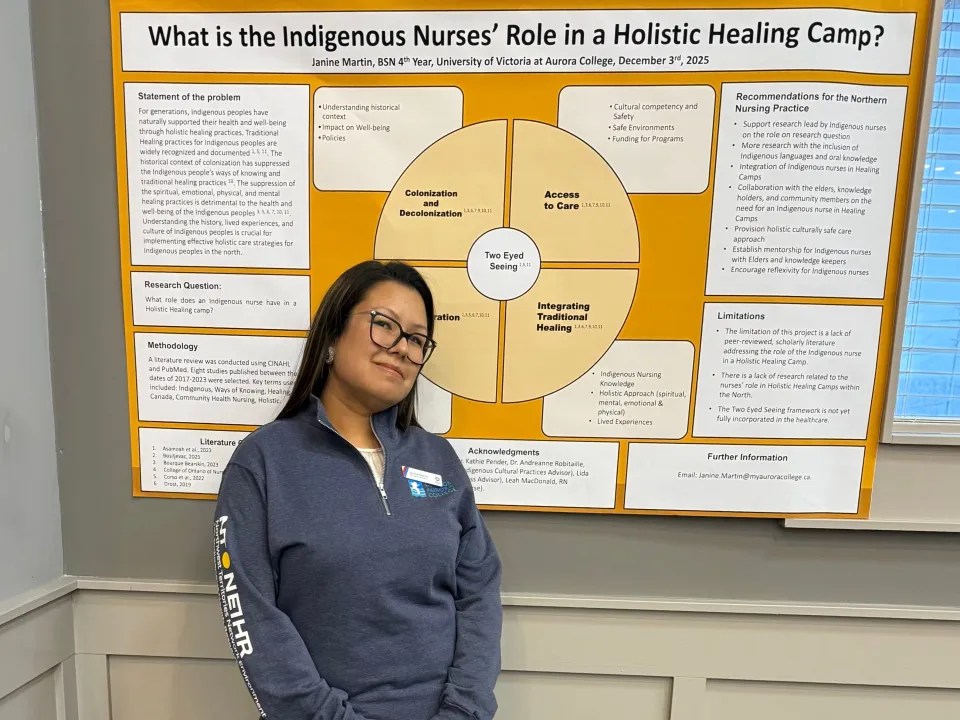 A submitted photo of Janine Martin.
McLeod, who is also a teacher in Yellowknife, said those programs are largely underexplored. At the same time, she added it’s important to consider the colonial history of the North, which restricted people’s connection to the outdoors.
“Children ages five to 12 are spending more time indoors compared to previous generations. They’re spending more time in structured activities, academics, indoor recreational activities and not playing outside as much,” she said, adding that access to green space is also an obstacle.
“I feel like I can sort-of combine my love of education and my love of nursing to advocate for schools to allow their students to be outside more, which they’re doing a great job of already.”
Fort Smith’s Janine Martin said her research explores the role of an Indigenous nurse in a holistic healing camp. She explained that as she approached graduation, she wanted to understand “how can I provide care in-community as a registered nurse?”
Her initial idea was to open a healing camp, but she decided to begin by examining what that role could look like. Martin said there is very little academic work on the subject, so she reviewed existing literature and pulled out key themes to shape her project.
Martin said one of the main themes in her research was two-eyed seeing, which blends western medical practice with traditional healing knowledge in a camp setting.
Advertisement.
Advertisement.
“I had to get creative and try to just find ways. I think I just came from a perspective of: as a nurse, what is going to be my role in the healing camp for clients?” she said.
“There’s a need to help clients in the community, especially the Indigenous populations. And then my past experience also motivated me to do something different and create something different.”
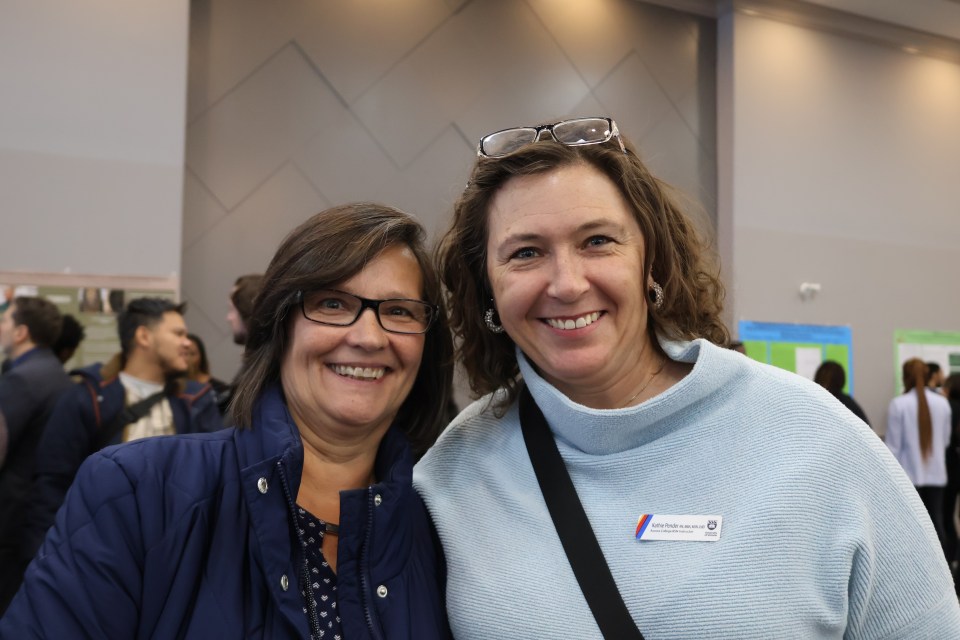 Instructors Karen Brown, left, and Kathie Pender. Aastha Sethi/Cabin Radio
Dr Kathie Pender, an instructor for the college’s bachelor of science degree in nursing, has lived in Yellowknife for almost 20 years. Pender described the program as an “amazing” opportunity for those interested in pursing it.
For the presentations, Pender said students came up with their own topics and worked on what they were truly interested in exploring.
“We really embrace the students and we really let them be individual … It’s the best job in the world, and I get to do some fabulous things with some fabulous students so I am very, very lucky,” she said.
“Whatever the student is interested in is what they can do. I really encourage them to harness what they’re interested in.
“If they’re including their culture, their background – we have students from all over the place and so, if they want to do that, they can do that.”
Related Articles