
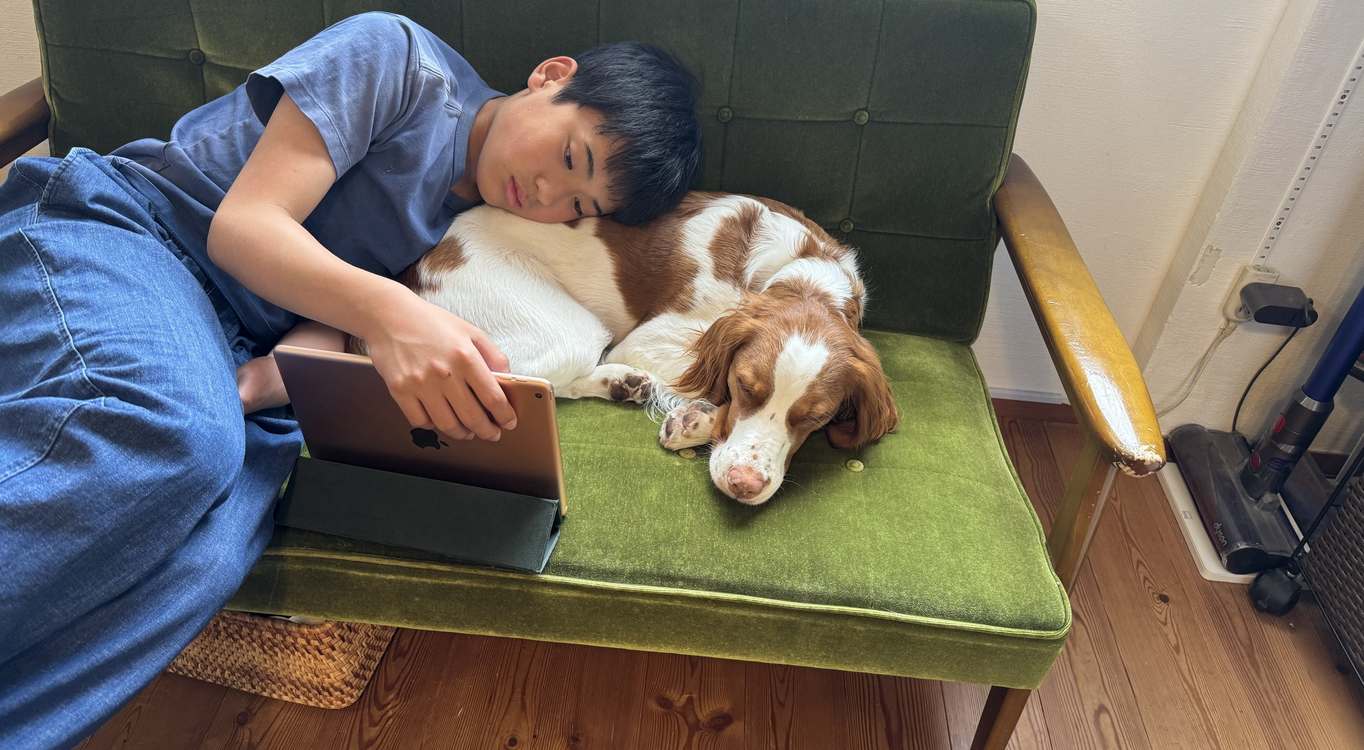
 – credit, Ai Tsujimura SWNS
Family dogs boost kids’ mental health by changing microbes that live in their bodies, according to a new study.
Researchers found that the pets prompt changes in the human microbiome, the collection of all microorganisms, including bacteria, fungi and viruses, that inhabit the human body.
Hundreds of studies have shown directly and circumstantially that this community of microbes play a crucial role in health, immunity, digestion, fertility, and emotional wellbeing.
The composition of a person’s microbiome is unique and can change based on factors such as diet, medication, and environmental exposures.
Other studies have shown dog owners have differences in their gut microbiomes, including greater microbial diversity, compared to non-dog owners.
Described in a new paper, lead author Professor Takefumi Kikusui, of Azabu University in Japan and his team found that young people who grow up with a dog from a young age and continue to have dogs later in life score higher on measures of companionship and social support.
These effects, he says, may be mediated through symbiosis with microorganisms.
In the new study, published in the journal iScience, the research team set out to explore whether some of the beneficial effects of dogs on adolescent mental health might be tied to these differences in the microbiome.
“Adolescent children who keep dogs exhibit higher mental well-being, and we also found that dog ownership alters the gut microbiota,” said Professor Kikusui “Since the gut microbiota influences behavior through the gut-brain axis, we conducted this experiment.”
The Japanese team found that whether someone owned a dog at age 13 predicted their mental health and behavioral scores. Social problems were “significantly” lower in adolescents with a dog at home compared to those without a dog.
They then looked at microbiome samples collected from the mouth.
After sequencing the microbes, the researchers found similar species diversity and richness between the two groups of teens. But the microbiome composition showed differences, suggesting that owning a dog shifted the abundances of specific oral bacteria.
They hypothesized that some of the bacteria might correlate with the teenagers’ psychological scores.
To put the theory to the test, the researchers treated lab mice with microbiota from dog-owning teens to see whether and how it affected their social behavior. Mice with the dog-owning microbiome spent more time sniffing their cage mates.
The animals also showed a more social approach toward a trapped cage-mate—a behavior test standardly used to test prosocial behavior in mice.
ALSO CHECK OUT: Probiotics Enhances Cognitive Abilities Through the Gut: A Key to Aging Brain Health
“The most interesting finding from this study is that bacteria promoting pro-sociality, or empathy, were discovered in the microbiomes of adolescent children who keep dogs,” said Kikusui.
“The implication is that the benefits of dog ownership include providing a sense of security through interaction, but I believe it also holds value in its potential to alter the symbiotic microbial community.”
MORE MICROBIOME RESEARCH: A Daycare Rewilded its Yard and the Children Became Healthier: Now the Whole Nation Is Doing it
Kikusui said the results suggest that a family dog can change the microbiome in ways that support mental health, empathy, and prosocial behavior.
“The benefits of living with dogs are likely the result of tens of thousands of years of human-canine coexistence.”
SHARE This Great Reason To Go Adopt A Dog With Your Friends…