
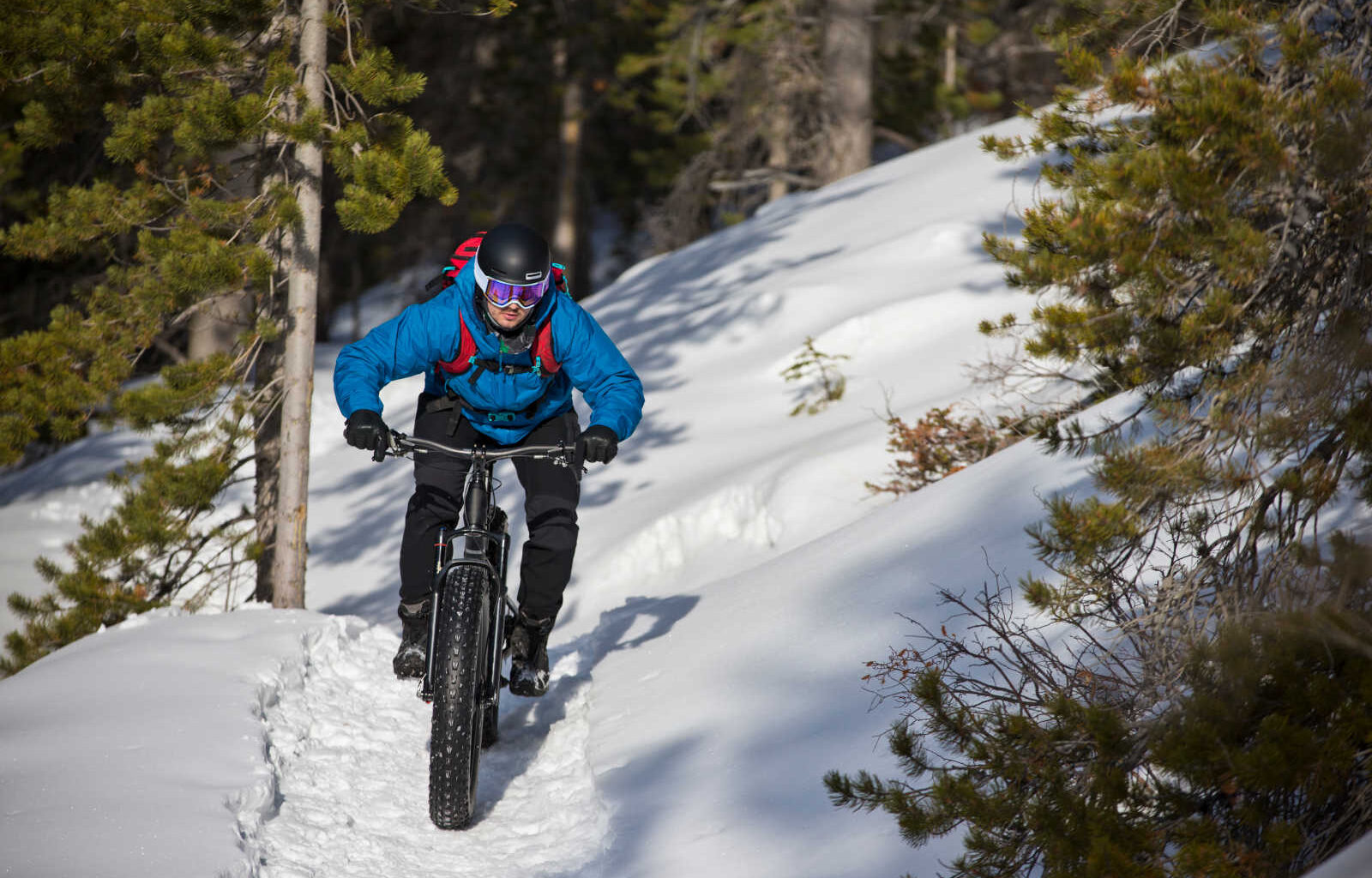
There’s no one trick to staying warm while riding outside in a Canadian winter. But there are lots of small tricks.
Together, these add up. Call it marginal gains. That term may usually refer to skinny pro roadies looking to get up mountains fractions of a second faster. But the same approach, chasing the cumulative effect of independently small improvements, can help you keep riding outside all winter in comfort, or relative comfort.
Marginal warmth gains
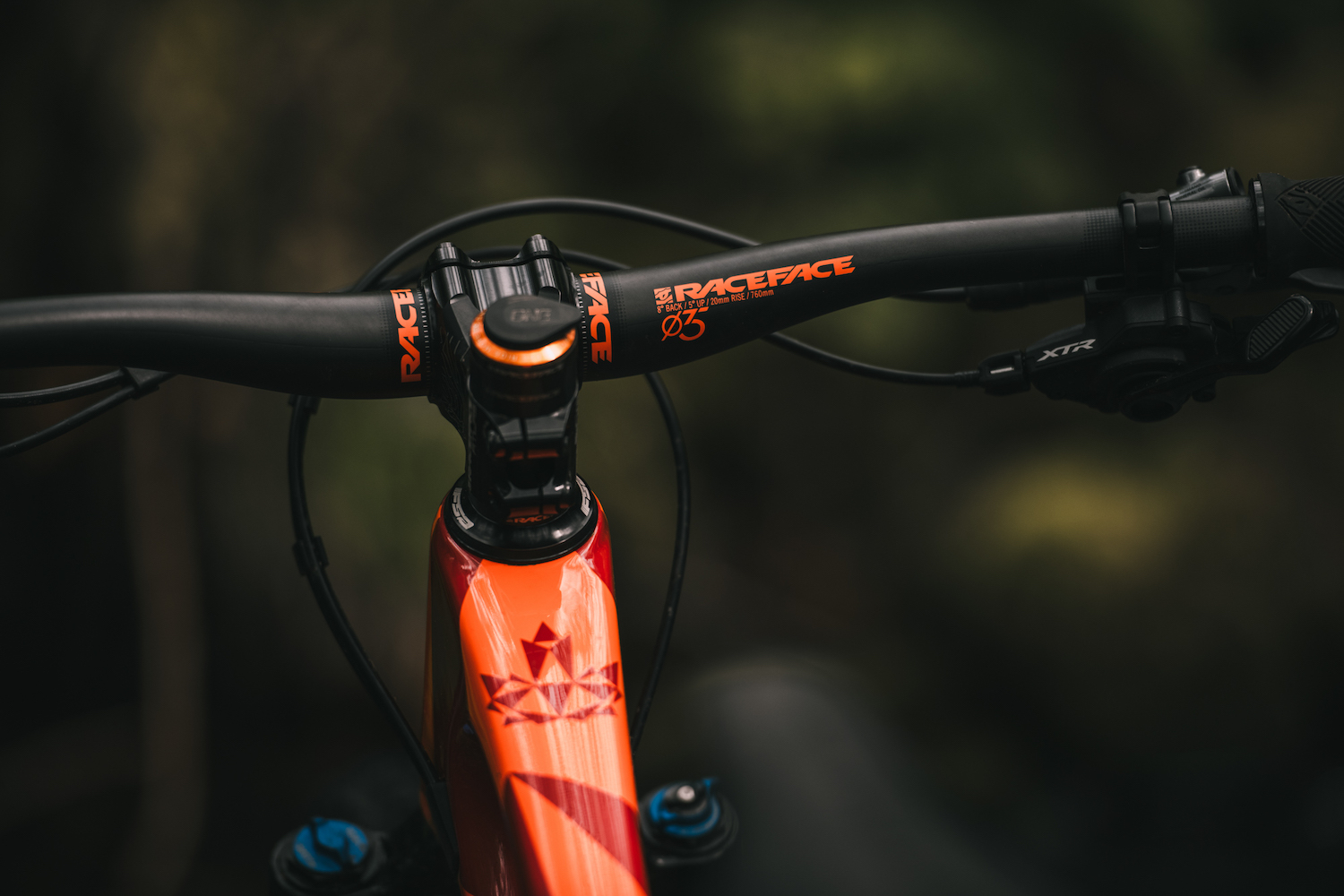 Race Face carbon bars. Photo: Margus Riga
Carbon fibre bars (and brake levers)
Citing the benefits of carbon fibre bars usually includes lighter weight and improved stiffness. But, come winter, there’s a fringe benefit that becomes a central selling feature: they’re warmer. Or, at least, they don’t transfer the cold through the grips to your hands the same way alloy bars do.
If you want to get into really marginal gains, carbon (or any non-metal composite) lever blades make a surprising impact on warmth. Especially for that lonely braking finger floating out there on its own away from the warmth of its friends. It’s hard to have any brake modulation with a frozen finger so, while we called this marginal, it can be pretty important if you’re riding frozen trails.
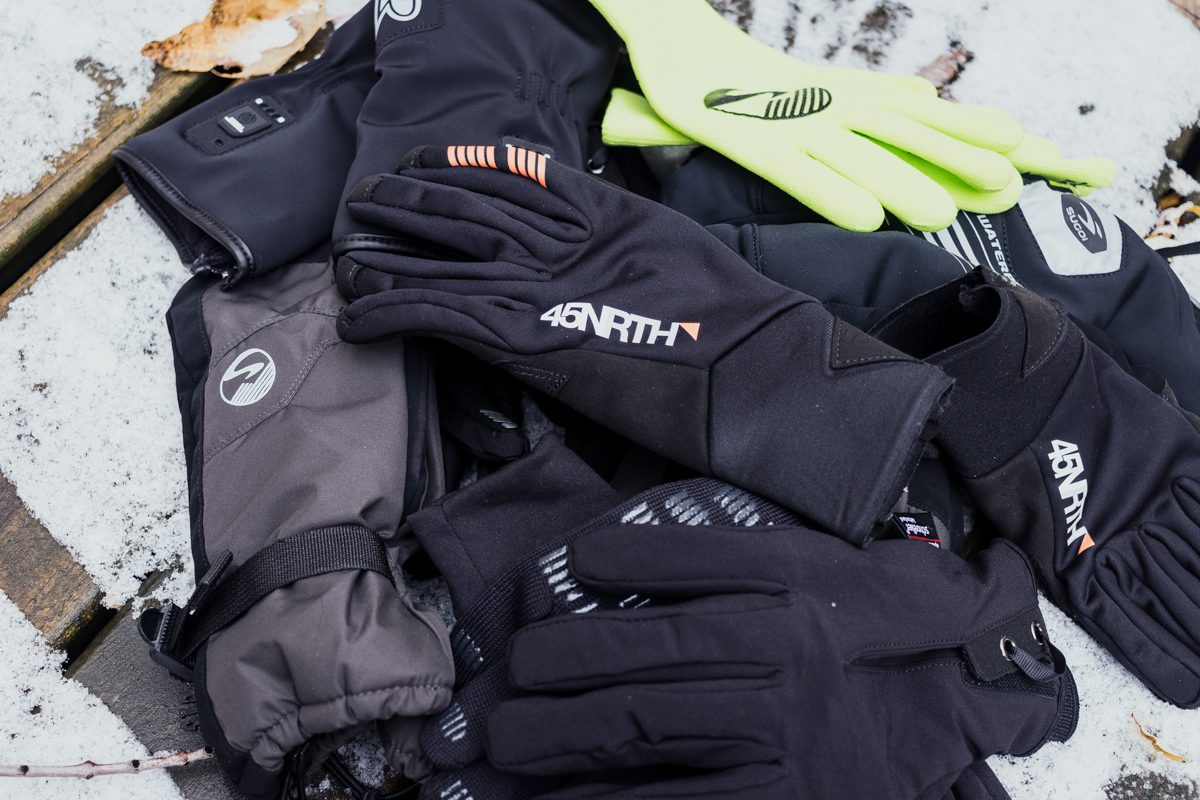 Image: Matt Stetson
Heat-focused hand-ware
We all know that, on the coldest days, mitts are warmer than fingered gloves. But it’s hard to grab a brake lever with mittens on.
There are a few different styles of gloves designed to maximize heat on the bike on frosty days. Which one works best for you will depend what kind of riding you’re doing. The general idea is the same: keeping fingers together is warmer than separating them. Two finger “lobster” gloves, pogies that go over the bars, mitts with one index finger for braking: all are different approaches depending how much control you need (road cruising vs fat biking on trails) and how often – or how quickly – you need to be able to take your hands off the bars.
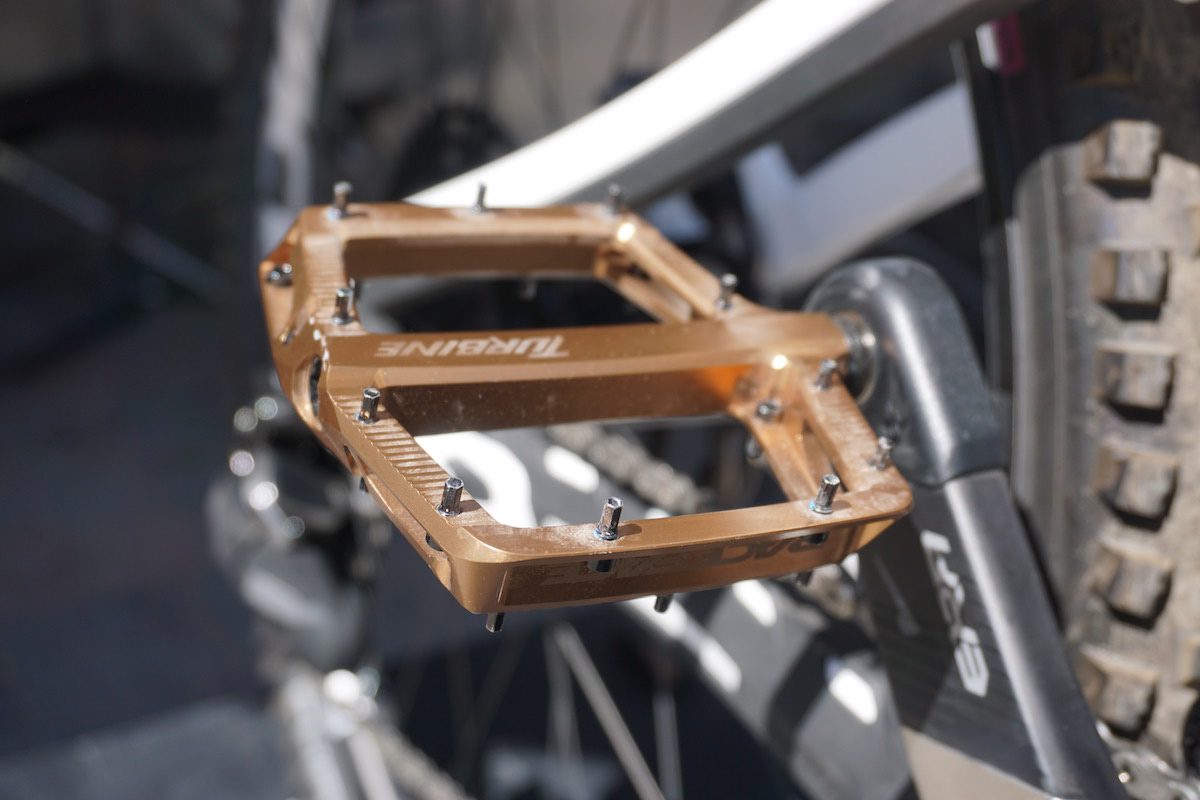
Flat pedals win medals… and winter
Flat pedals aren’t just more fun than clipless, they’re also warmer. The cleat – and screws required to keep the cleat in place, act like an access port in winter, letting the cold stab deep into the core of even the warmest shoe. There’s not much less fun than feeling like you’re pedalling with an ice cube underfoot.
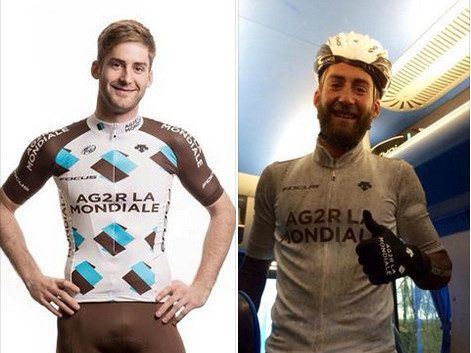 Pro moves: A non-bearded and bearded Hugo Houle for the 2015 Spring Classics. Photo: Ag2r-La Mondiale
Beards, etc..
This is one gain that I have can’t offer any experiential backing for. But I still have the image of a half-bearded face from an Edmonton Journal feature on winter commuting seared into my memory, decades later. My 14-year-old self never had access to the natural solution, I did learn ways to tuck a scarf, or anything else I could get to cover my face, into a jersey so that it wouldn’t fly loose. That EJ story may be lost to the time pre-internet archives, but the lesson remains. Cover your face by any means necessary.
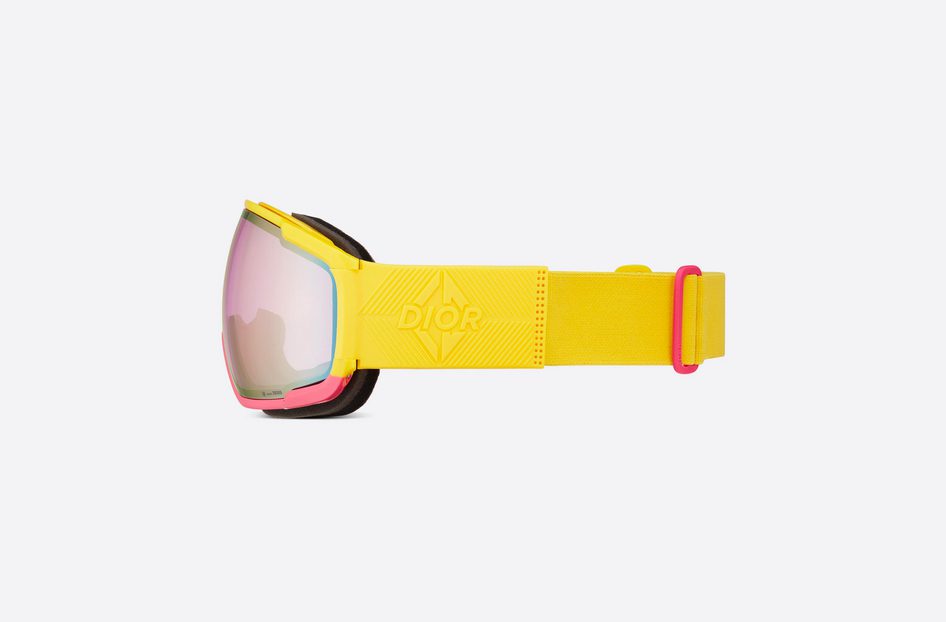 You don’t have to go as bougie as this Dior / POC collab. But why not?
Goggles
This is a lesson that, while obvious to some, I learned by accident. Living on Vancouver Island allows the weird possibility of skiing and riding bikes in the same day. When, after a day on the slopes, winter followed me down the mountain to an annual New Year’s Eve ride on Quadra Island, I pulled the ski goggles back out of my bag. It started as a joke, fending off thick, wet snowflakes at sea level. But the goggles were arguably the only reason I made it through that year’s epic ride. The reasons are clear: they keeps snow and wind out of your eyes and effectively close off the channels that quite intentionally allow the cold northern winds to travel directly into your helmet (which is nice in summer, less so in winter).
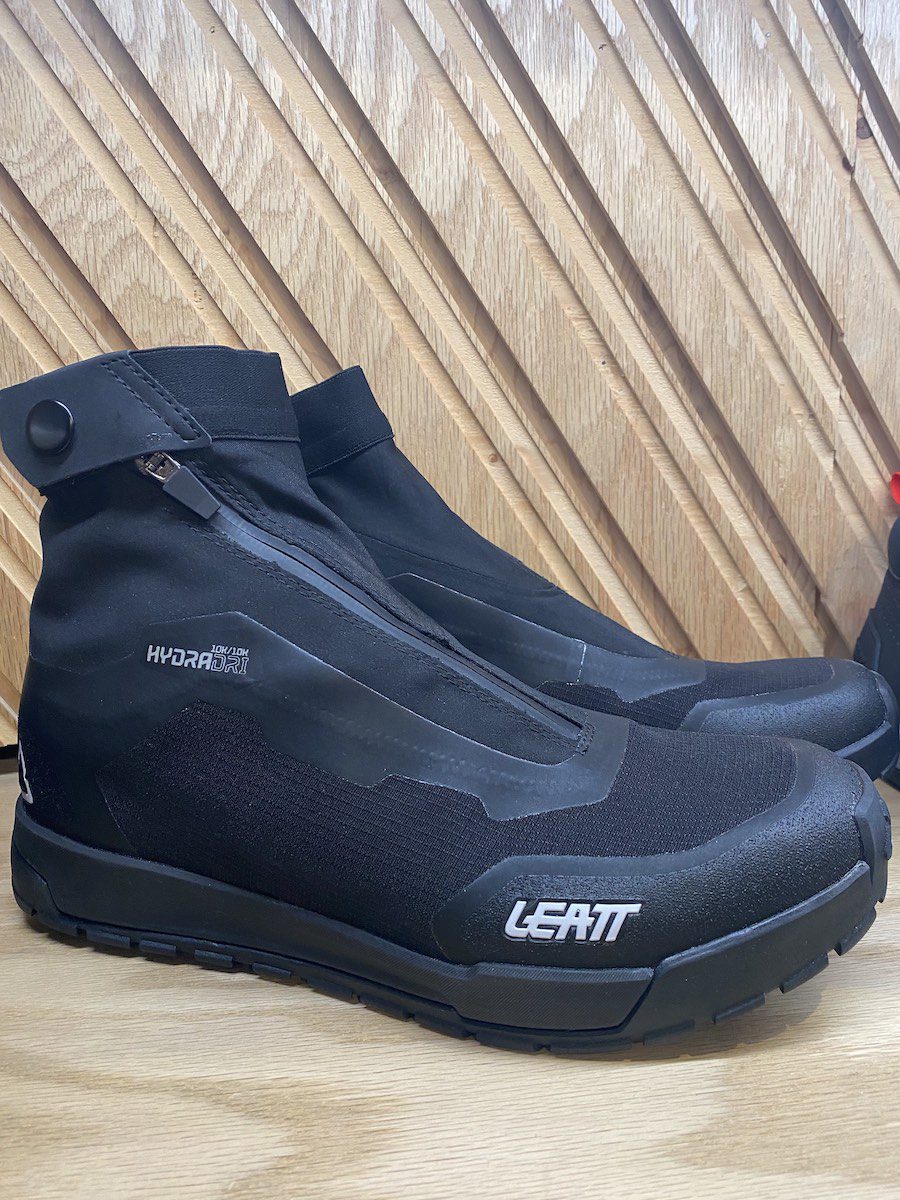
Waterproof boots
This one covers winter and the melty/wet shoulder season. The only thing colder than being cold is being wet and cold. Those days when it’s just warm enough for snow to melt, or not quite warm enough for rain to be snow, can feel colder than the deepest February freeze after rolling through just one puddle. Waterproof boots – whether clipless or flat – make a world of difference in preventing your feet from feeling like solid bricks of ice. They’re not cheap but, if you’re riding regularly, they’ll have paid themselves off in just a few rides.