
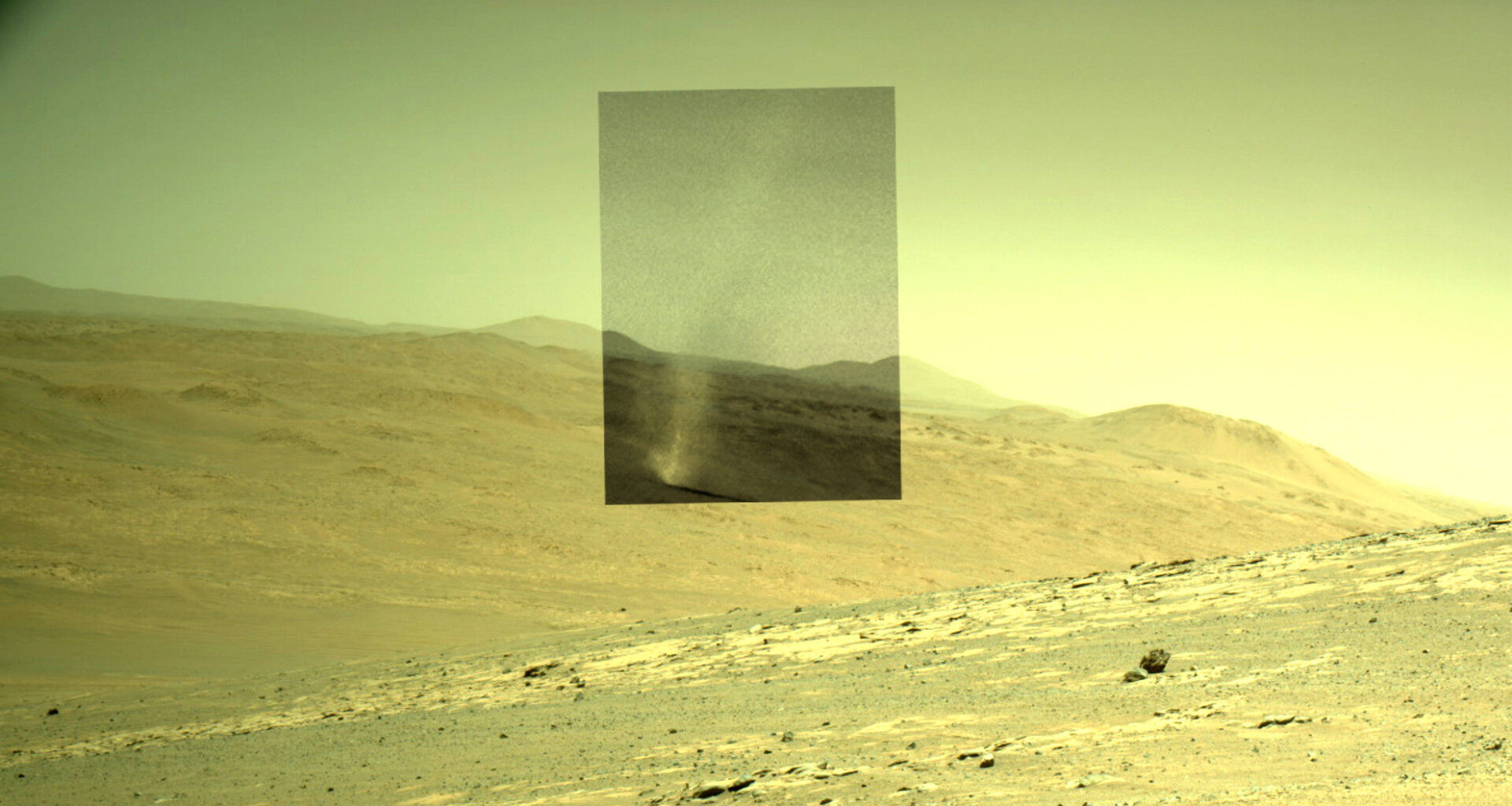
According to NASA, they would be on the scale of the spark generated between your hand and a metal doorknob after walking across the carpet in socks. Thus it would be very unlikely for them to be picked up in imagery.
However, besides its numerous cameras, Perseverance also has a microphone, which is installed as part of the SuperCam instrument, located on the rover’s head.
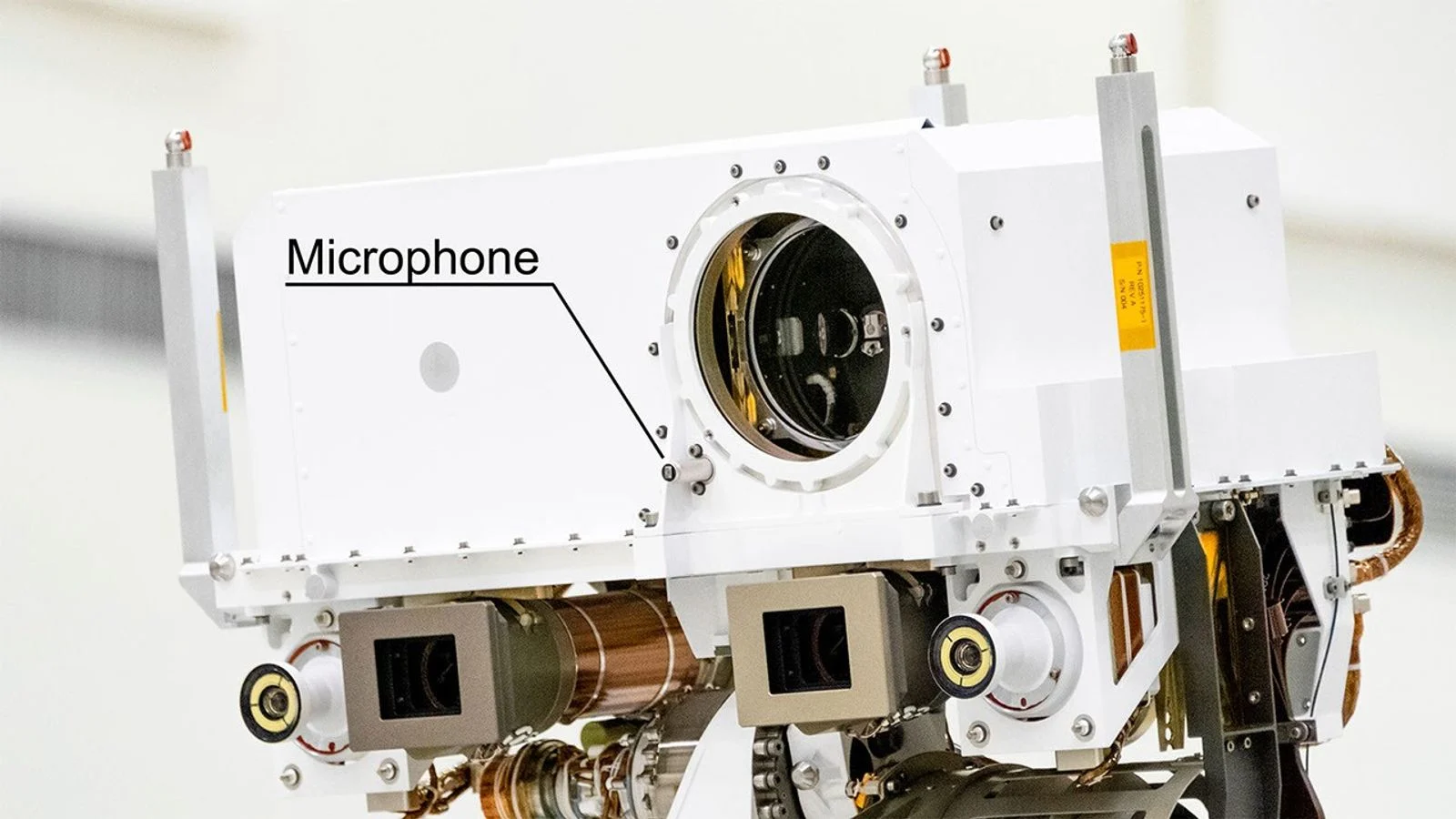
The SuperCam microphone, located on the mast of the Perseverance rover. (NASA/JPL-Caltech)
The microphone’s primary function is to listen as the SuperCam zaps target rocks with a laser. It has also recorded some other novel sounds, such as the whirring of Ingenuity’s rotors during one of the drone’s many flights, as well as the first audio of Martian winds and dust devils swirling past.
Now, the SuperCam microphone has also revealed evidence of these triboelectric discharges, as it detected tiny crackles of thunder originating from equally tiny sparks of lightning.
Listen below: Perseverance’s SuperCam mic picks up evidence of lightning on Mars
In the audio recording embedded above, Perseverance picked up the sounds of wind as a dust devil swept past it on October 12, 2024 (Sol 1,296 of the mission). From 9-10 seconds in the sample, though, three distinct electric crackles can be heard, just as the leading wall of the dust devil passes the microphone.
“We got some good ones where you can clearly hear the ‘snap’ sound of the spark,” coauthor Ralph Lorenz, a Perseverance scientist at the Johns Hopkins Applied Physics Lab, told NASA. “In the Sol 215 dust devil recording, you can hear not only the electrical sound, but also the wall of the dust devil moving over the rover. And in the Sol 1,296 dust devil, you hear all that plus some of the particles impacting the microphone.”