
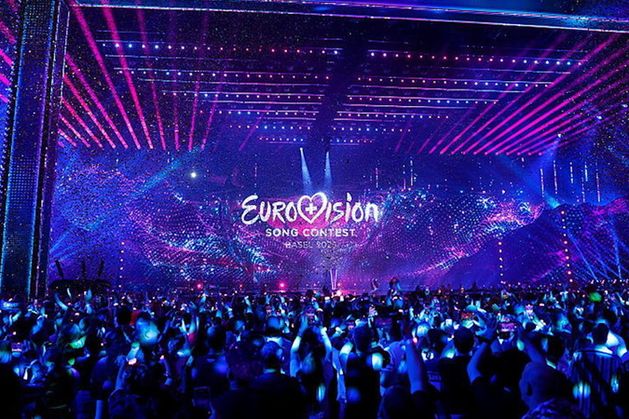
Ireland pulls out of Eurovision over Israel inclusion as BBC defends support and Iceland to decide next weekIreland should ‘take a year off [from Eurovision]… return stronger, and hopefully be in the top five for a change’ – former member of Israeli Eurovision delegation
It comes after Ireland, The Netherlands, Spain and Slovenia pulled out of the singing competition following the European Broadcasting Union (EBU) general assembly in Geneva on Thursday, which reportedly saw a majority of members vote against a proposal to hold a vote to ban Israel from competing.
Members were asked to vote on changes which included new rules to deter countries organising campaigns for their acts, following concerns around the number of public votes Israel received in 2025, but STV claims no vote took place on the specific participation of Israeli broadcaster KAN.
An STV statement read: “All Nordic public service companies, NRK in Norway, YLE in Finland, DR in Denmark and RUV in Iceland voted yes to the proposals, which were supported by a majority of EBU members.
“The new rules mean, among other things, that governments refrain from campaigns, fewer votes per participant and that professional jury panels are once again introduced in the semi-finals. Technical security is also being strengthened to avoid vote fraud.
“This – combined with the result of the vote – is in line with the conditions that SVT has set for participating in Eurovision: A broad European support and a competition that is as apolitical as possible.
“We are also reassured that security is taken very seriously by the EBU as well as the Austrian host ORF. Therefore, SVT will participate in Eurovision next year.
“At the same time, it is important to have an ongoing dialogue within the EBU about how the competition can be further developed, which means that the new rules should be evaluated after the competition in May.”
It came after Eurovision winner Charlie McGettigan commended RTÉ for boycotting the contest, over Israel’s involvement.
Speaking about RTÉ’s boycott, McGettigan said: “I am happy that RTÉ has decided to take a stand on this particular issue. And they did consider it several months ago and they decided to stick to their guns. We are registering our protest with Eurovision if Israel is taking part. I am happy that they have done this. And I have been on this issue quite a bit for the last number of years.”
McGettigan, who won for Ireland in 1994 along with Paul Harrington with their song Rock ‘n’ Roll Kids, was one of several Eurovision winners and artists to sign a petition calling for Israel’s expulsion from the contest earlier this year.
RTÉ has said the boycott relates to the 2026 contest. It is understood the broadcaster will review its stance on participation next year.
“Who knows where we will be this time next year perhaps regarding injustices being carried out, perhaps action will have been taken,” McGettigan said.
“A year is a long time. I don’t think we are gone forever. I hope not. I love Eurovision as much as anyone and have been watching it since the 1960s when it was in black and white. I am a fan and I think it is a lovely celebration of cultures around Europe and Australia. But it is a small sacrifice to make when you consider 70,000 deaths.”
Former Eurovision presenter Cynthia Ní Mhurchú also applauded the decision.
“I welcome it with a heavy heart,” the MEP said in a statement.
Also today, a former member of the Israeli Eurovision delegation said Ireland should “take a year off [from Eurovision]… return stronger, and hopefully be in the top five for a change”.
Speaking after it was confirmed that RTÉ would not participate or air the 2026 Eurovision Song Contest while Israel will be competing, former head of press Alon Amir also said “nobody really cares” in Israel about countries withdrawing from Eurovision.
Broadcasters from Ireland, The Netherlands, Spain and Slovenia had stated in recent months that they would not take part in the contest if Israel was involved, because of its conduct in its war in Gaza, which has left 70,000 Palestinians dead.
They confirmed that decision on Thursday evening. It remains to be seen how many more will follow.
Ireland, which has won the competition seven times will now not compete.
The national broadcaster of Iceland, which has never won the competition, said it would decide next week on whether to take part, having previously opposed Israel’s continued inclusion.
When asked whether Ireland would be missed from the contest, Mr Amir told RTÉ Radio 1’s Morning Ireland: “You haven’t sent a decent song in 25 years.”
“Come on, take a year off. Think about it and return stronger, and hopefully be in the top five for a change. We miss the good Irish song,” he added.
He said Israel is “happy” to participate in the Eurovision Song Contest, and “nobody really cares” about Ireland, Slovenia, the Netherlands, and Spain withdrawing.
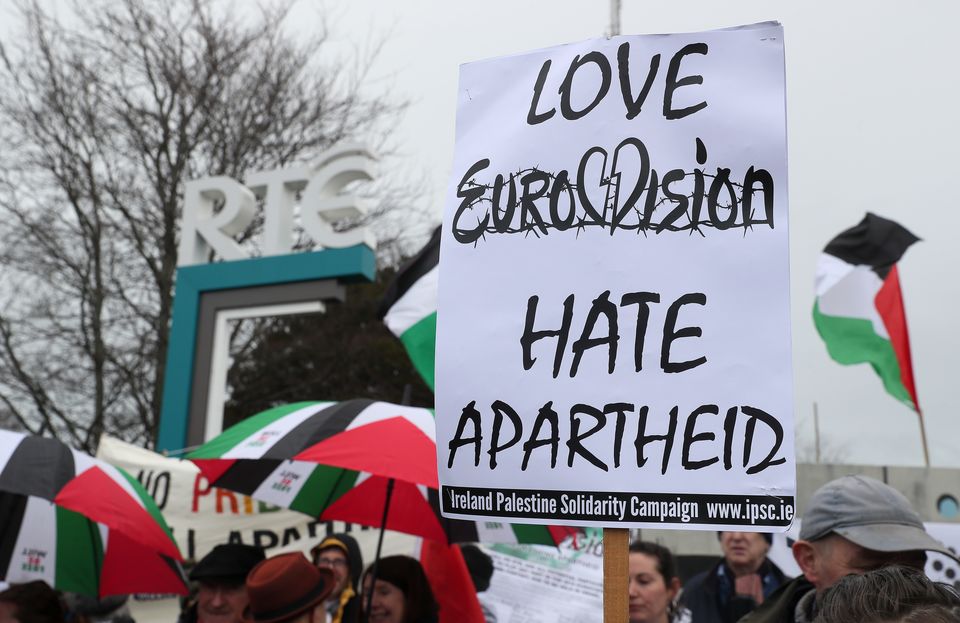
A number of countries have announced they will not be taking part in Eurovision 2026 (Brian Lawless/PA)
“We’re happy that we’re in the contest. We’re sad to see countries withdrawing. It’s your decision if you want to act like that. The contest is a competition between the broadcasters, not the countries. There’s a big difference.
“What’s happening in Gaza, it’s okay to criticise the Israeli government. We do that all the time. The vast majority of Israelis do not want Netanyahu. We don’t want this kind of Government.
“It’s fine to criticise the Government, but Eurovision is a different thing. It’s the broadcaster, not the country. We need to separate between the two things.
“Countries are allowed to take a year off. Where it’s very sad it’s happening, it’s their prerogative. That’s fine, okay, it’s your decision.
“We see that the countries that are withdrawing, it’s aligned with the statement of the governments. So let’s think about that for a second. It’s the Irish government and the president of Slovenia, the Spanish one.
“Take a year off. Think about it, the contest will be different.”
Mr Amir added he’s “really sorry for the fans”.
“I’m really sorry we came to that, we expected that, we knew from about last week that we would be in the contest.
“The EBU said and released a statement saying that about 35 countries would take part in next year’s edition. We understood that Israel would be in and four or five other countries would be out.
“We are seeing countries returning to Eurovision – Moldova, Romania, Bulgaria. I think the EBU is working very hard to have two semi-finals, and I believe Canada will be joining the contest this year.”
At a pivotal meeting in Geneva, Switzerland, on Thursday evening, delegation members met to discuss a raft of new voting rules that are set to be introduced next year, after controversy surrounding the voting process earlier this year.
Delegations were asked to consider the rule changes and decide “if they are sufficient to meet their concerns without having a vote on participation”.
In a statement on Thursday evening, the European Broadcasting Union (EBU) said that members had “shown clear support for reforms to reinforce trust and protect neutrality of Eurovision Song Contest allowing all members to participate”.
RTÉ director general Kevin Bakhurst was in Geneva for the meeting and shortly afterwards RTÉ issued a statement confirming it would not take part in the song contest.
Unions at RTÉ, including Siptu and the National Union of Journalists, had urged management to stand by their position.
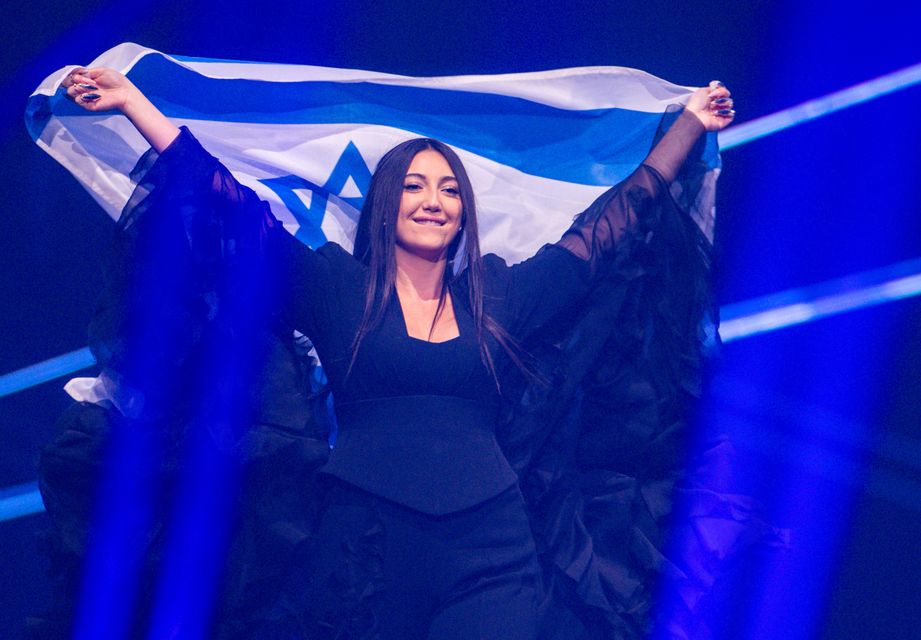
Israel’s Yuval Raphael on stage with the national flag during a rehearsal at the Eurovision 2025 song contest in Basel. Photo: Getty
Rules
President of the management board of Slovenian national broadcaster, RTV, Natalija Gorscak, told the BBC the Eurovision “needs to continue with the same principle” after excluding Russia.
“I think it’s obvious. If we excluded Russia, one week after they attacked Ukraine, I think the same rules should be applied also to Israel,” she said.
“Any aggressor, and we are talking about aggressor, should not be a part of the Eurovision Song Contest.
“Once we decided this, we need to continue with the same principle,” she added.
However, the director of Eurovision, Martin Green, has denied that the content is in “crisis”.
“It’s no way in crisis. We’ve got 35 members or so going to join us next year. Now, I understand the four or five who might not come,” he told Reuters.
“That’s their choice. I completely respect that. I very much hope they’ll be back with us in 2027. Eurovision was born from the ashes of the Second World War.
“It was designed to bring us together, and it will hit bumps in the road, and we have a complicated world, but we hope it’s a temporary situation, and we’ll move forward,” he added.
Contest
Britain’s BBC, one of the so-called Big Five competitors, defended their decision to remain in the contest.
A BBC spokesperson said: “We support the collective decision made by members of the EBU.
“This is about enforcing the rules of the EBU and being inclusive.”
Participating members were asked to vote on changes which included new rules to deter countries organising campaigns for their acts following concerns around the number of public votes Israel received in 2025.
According to the BBC, which attended the summit on Thursday, agreeing to the rule changes meant agreeing not to proceed with a vote on whether Israel could compete.
Another of the Big Five financial contributors, who automatically qualify for the Grand Final, Spain, announced on Thursday evening they would withdraw from the contest, as did the Netherlands and Slovenia.
Iceland broadcaster RUV said its board would discuss whether it would participate at a meeting next Wednesday after previously agreeing to a motion to recommend Israel be expelled from the contest.
In a statement, Dutch broadcaster Avrotros said that “participation under the current circumstances is incompatible with the public values that are essential to us”.
Slovenia was among countries that had warned they would not take part in the contest if Israel did. “Our message is: we will not participate in the ESC if Israel is there. On behalf of the 20,000 children who died in Gaza,” said broadcaster RTV.
The Spanish broadcaster RTVE said it would not broadcast the contest, or the semi-finals. It remains to be seen if more countries will follow suit.
Israel’s president Isaac Herzog thanked his country’s supporters.
“I am pleased that Israel will once again participate in the Eurovision Song Contest and I hope that the competition will remain one that champions culture, music, friendship between nations, and cross-border cultural understanding,” he said.
Germany, a major Eurovision backer, had said it would not take part if Israel was barred.
Before the decision, Israeli public broadcaster KAN said it was preparing for next year’s contest.
Israel’s 2025 entrant, Yuval Raphael, was at the Nova music festival, one of the targets of the October 7, 2023 Hamas attack on Israel that triggered the Gaza war, in which more than 70,000 Palestinians have been killed. Some 1,200 Israelis were killed and 250 kidnapped in the surprise attack by militants.
During the European Broadcasting Union’s assembly meeting, member delegations were asked to vote in a secret ballot regarding whether they thought the new voting rules were sufficient in ensuring the neutrality of the contest.
The EBU said in a statement “A large majority of Members agreed that there was no need for a further vote on participation and that the Eurovision Song Contest 2026 should proceed as planned, with the additional safeguards in place.”
Russia was banned from Eurovision after its full-scale invasion of Ukraine in 2022 but Israel has continued to compete for the past couple of years despite disputes.
Pro-Palestinian protesters demonstrated against Israel’s inclusion near a free concert in the centre of Basel, Switzerland, when the 2025 competition took place.
This year after the song contest, pressure on the EBU intensified following controversy over the voting procedure.
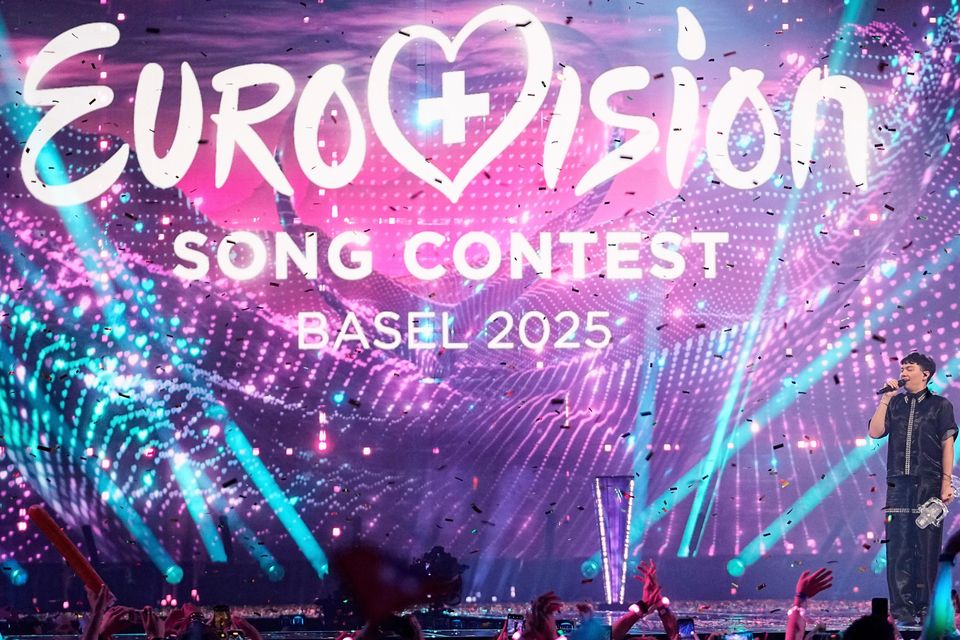
This year’s winner in Basel, Switzerland, was Austria’s JJ (Martin Meissner/AP)
2026 contest
The 2026 contest will be held in Vienna after a narrow victory by Austria’s act, JJ, with Wasted Love, beat Israeli singer Yuval Raphael, who was runner-up after receiving the largest number of votes from the public combined with the jury votes.
Israel was ranked joint 14th by the national juries but jumped to the top of the leader-board when it received the largest number of public votes.
After the contest, several broadcasters including RTÉ, called for an audit into the voting system.
An investigation by Spotlight EBU (a collaborative network by the EBU for fact-checking) found that the Israeli government had used “cross-platform advertising and used state social media accounts” to encourage the public to vote for them.
As a result of this controversy, the EBU announced a raft of changes to the voting rules. These include decreasing the number of votes an individual can make off one device.
Other changes to the rules include the return of professional juries to the semi-finals and the inclusion of younger jury members. All members will have to sign a declaration to confirm they will vote ‘independently and impartially, and will not co-ordinate with other jurors before the contest’.
There will also be enhanced technical safeguards to detect coordinated voting activity.
The organisers of Eurovision have continually insisted that the contest is apolitical but in the past few years, Eurovision has become embroiled in controversy regarding Israel’s participation in the contest.
There have been protests, demonstrations and calls for the expulsion of Israel from the contest.
Ireland has won the contest a record seven times, equalled only by Sweden, and several previous Irish winners and competitors had called for Ireland to pull out while Israel was included.