
Updated December 5, 2025 09:54AM
There was a time when a pro cycling career wouldn’t even begin until your early 20s. But nowadays if you are not clocking up big success by then, teams are already moving on.
It’s a recent phenomenon, but one that has thoroughly transformed the rider development pipeline in less than a decade.
It’s all down to the likes of Remco Evenepoel. He became cycling’s world junior champion in 2018 in both time trial and road race and was snapped up by the Deceuninck Quick-Step team at just 18 years of age.
Tadej Pogačar then compounded things, putting the spotlight on young talent when he finished third overall in the Vuelta at 20 and won his first Tour at 21.
Since then, Paul Seixas joined the WorldTour at 18 and has excelled. So too Matthew Brennan, who also made his paid debut at that age. Ditto for US champion Quinn Simmons, Juan Ayuso and Cian Uijtdebroeks.
Riders such as these have sparked off a near-frenzy amongst pro teams, heightening a push to find the next huge star, and encouraging squads to chase riders who are still in the junior ranks.
It’s understandable: pro teams too can have FOMO.
And yet while signing young has led to some successes, it has also resulted in collateral damage. That’s why, according to three influential people within the sport, something needs to change.
Adam Hansen is the president of the Professional Riders’ Association CPA. He has long felt there is a danger that young riders could be damaged and face career burnout. The drive to identify the next Pogačar or Evenepoel is all well and good if the talents identified can swim, not sink.
But for every cycling star, there are others who struggle with the workload, flounder with the pressure, and who never quite reach their potential.
A WorldTour tactic where teams sign many in the hope that one or two will make it is dangerous.
“We do believe there should be something put in place to protect riders,” Hansen told Velo recently. “Because a lot of the WorldTour teams are getting guys that are too young and they’re burning out too fast. That’s because there’s too much pressure put on them.”
When big talents don’t deliver on full potential
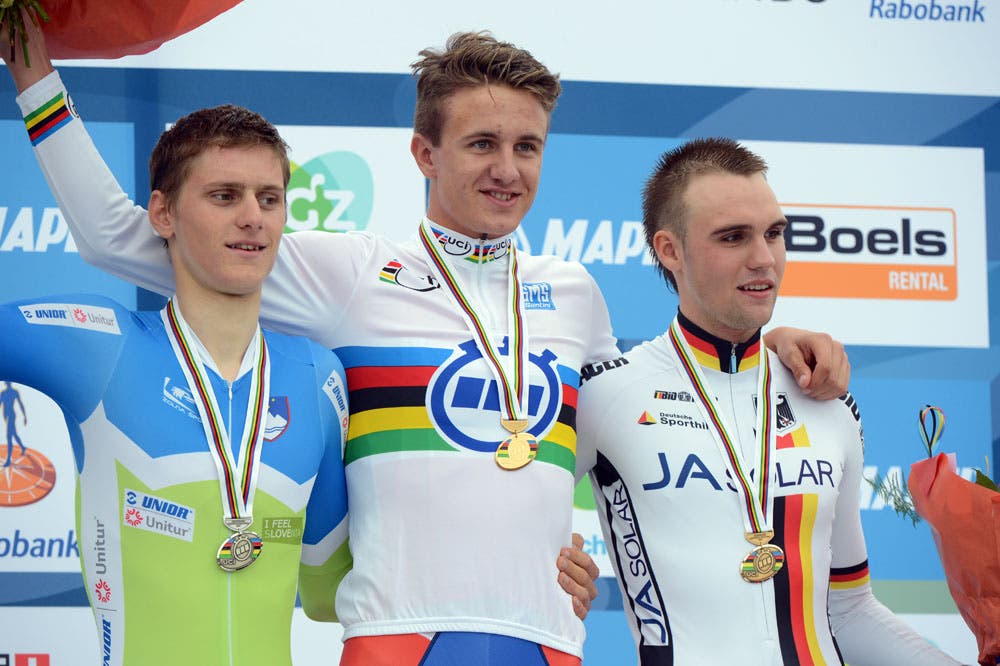 Norway’s Oscar Svendsen was the 2012 men’s world junior time trial champion. (Photo: Graham Watson | www.grahamwatson.com)
Examples of riders not progressing despite huge early promise is not new to the sport. Several decades ago, Jean François Bernard was hyped as the new Bernard Hinault, and as a future winner of the Tour. Winning three stages, and briefly leading the 1987 race was as close as he would get.
Roy Knickman faced similar pressure as the so-called next Greg LeMond. The New Yorker briefly raced as a pro with the La Vie Claire team, winning stages in the 1987 Critérium du Dauphiné and Tour de Suisse, but his European career then fizzled out.
A little more recently the Norwegian Oskar Svendsen made headlines with the supposed best VO2 Max ever recorded, a staggering 97.5ml/kg/min. He won the 2012 junior worlds time trial, yet walked away from the sport at 20.
The Australian Campbell Flakemore became world under 23 champion in 2014 yet quit the sport one year later.
The problem is not a new one, but the push to find ‘em young, sign ‘em young by WorldTour teams is ratcheting up the pressure.
Some riders can manage and fully deliver on their potential. Many others will not.
“I see riders who are retiring very prematurely,” said Jens Raes, an agent with the big Wasserman company.
“There are a lot of them that suddenly disappear. There are riders that I was following in the past but in the end I didn’t start working with. And then one or two years later, you suddenly see a news article about someone who was a big talent, one of the next prodigies, and they are announcing their retirement at the age of 21. It’s a shame.
“That is something that we should avoid. It is the consequence of the war for talent, that you see a lot of riders who can’t cope with the stress, who have too big expectations being put on them.”
Are the under 23 ranks becoming devalued?
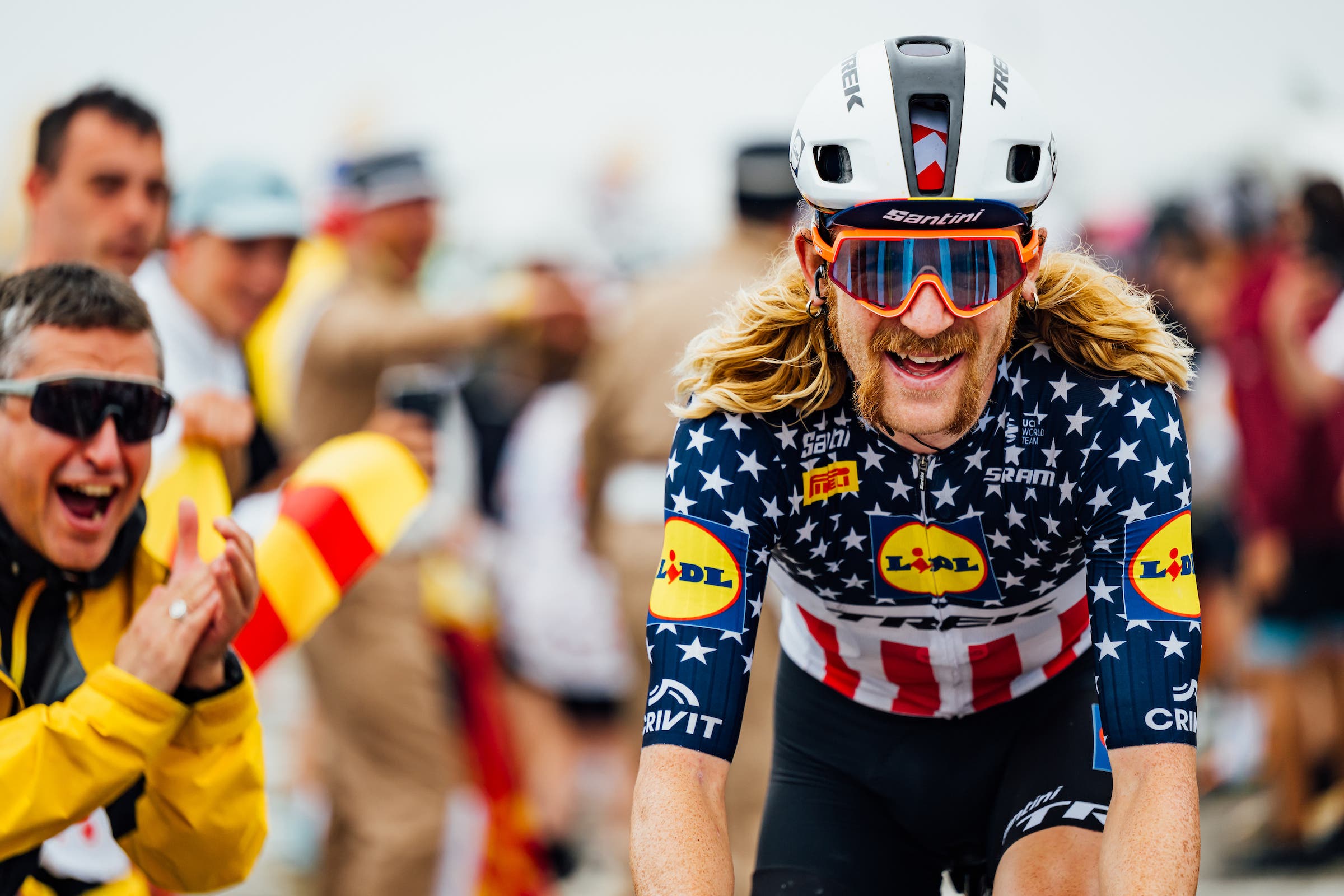 Quinn Simmons is one of those who went straight to WorldTour from the junior ranks. (Photo: Chris Auld)
Both he and Hansen say that the issue has become more serious in recent years.
Raes notes that riders turning pro soon after leaving the junior ranks was previously very rare. Ten or 15 years ago, he says, the custom was for them to do two or three years at under 23 level.
However even for those who still opt to take this route, he thinks the recognition of results achieved in such races has taken a knock.
“I spoke with team managers or DSs from WorldTour teams, who said, ‘yeah, but let’s be honest. A big race at under 23 level – the result doesn’t give a good impression of the riders, because most of their peers are already professional.’
“It’s a shame that teams don’t consider a third or fourth year under 23 rider as much as they used to. They say, ‘ah, but all your peers are already professional, and the competition is weaker than before.’ That’s a shame, especially for those riders.”
Hansen cites another reason why the situation as more pressing than it used to be. ‘If there had been limitations years ago, it would not have affected the structure of cycling,” he said. “That’s because there were very few riders at the age of, say, 23 doing the Tour de France. Whereas today it’s really more common.”
“I think there should have been something done many years ago to avoid what’s happening today. But I understand it was really unforeseen.
“So I’m not blaming the past, but it’s something that definitely needs to be implemented.”
The ones who did succeed
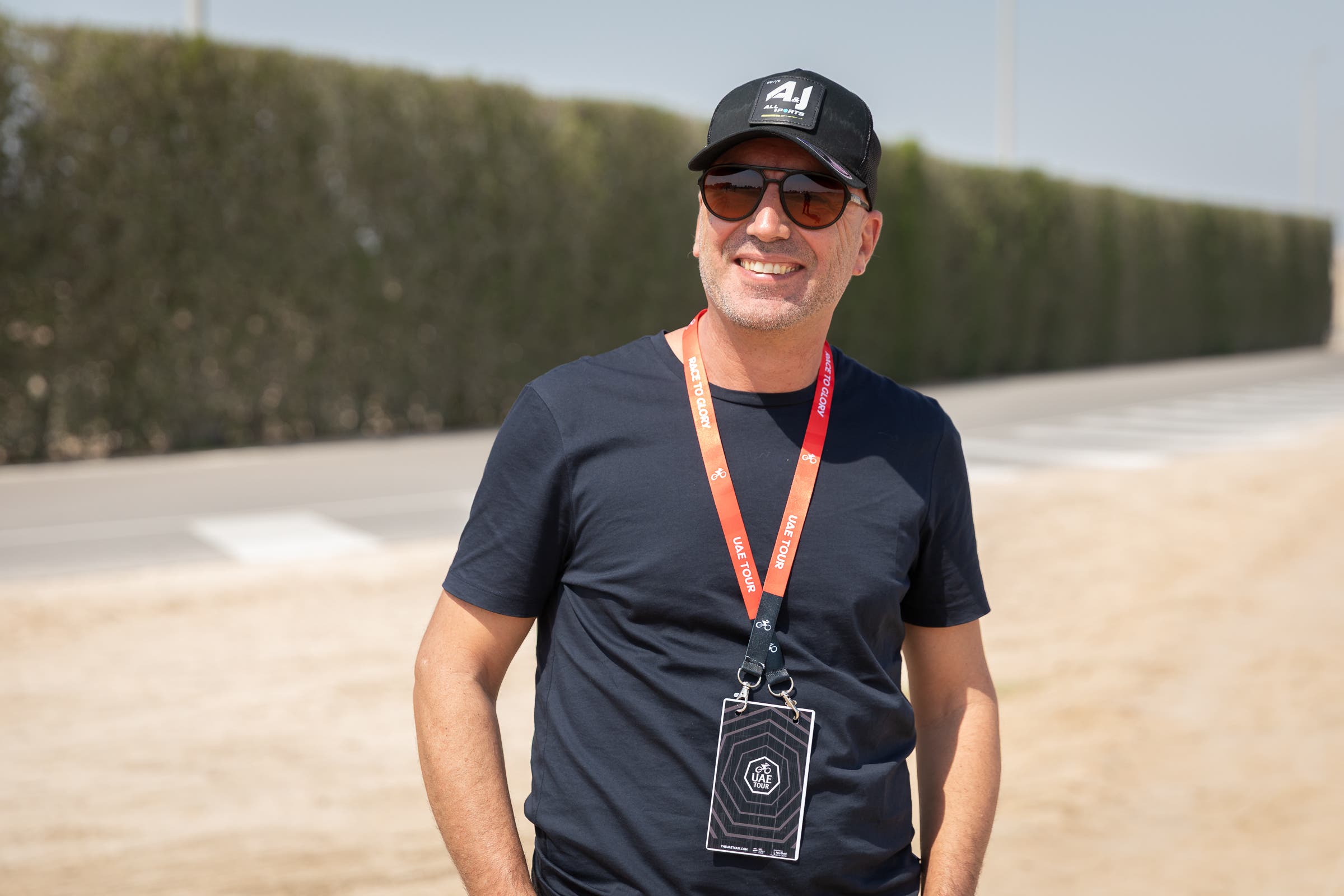 Alex Carera is agent to many pro riders, including Tadej Pogačar and Isaac Del Toro (Photo: Shane Stokes/Velo)
Alex Carera has been Pogačar’s agent for many years. The Italian struck lucky with the Slovenian, and also with Isaac del Toro, who seems destined for huge success.
Yet as talented as those rides are, they didn’t debut with UAE Team Emirates until they were 20 years of age. Their success since likely underlines the value of biding their time.
While Carera can understand the benefits of signing talented riders early, he also recognises the concerns.
“With young riders, I agree that after two years in junior category, if you have not taken a really special result, you need to wait one year minimum in a development team before passing directly to a WorldTour team,” he told Velo
“You can pass directly to a Pro Continental team, for example. It is not the same system as in the MBA with the draft, but you give the opportunity also for the small teams to take the young talents.”
Fortunately for some other riders, things worked out fine despite turning pro even younger.
“Evenepoel is a perfect example,” Hansen said. “He was super young, but he’s good enough to take the steps he did. He didn’t burn out, and he went through the process to be WorldTour in a very good way.
“We don’t want to stop young riders that are able to do that. But we need something at the younger age to identify that these riders are ready and which riders are not.”
What happens next?
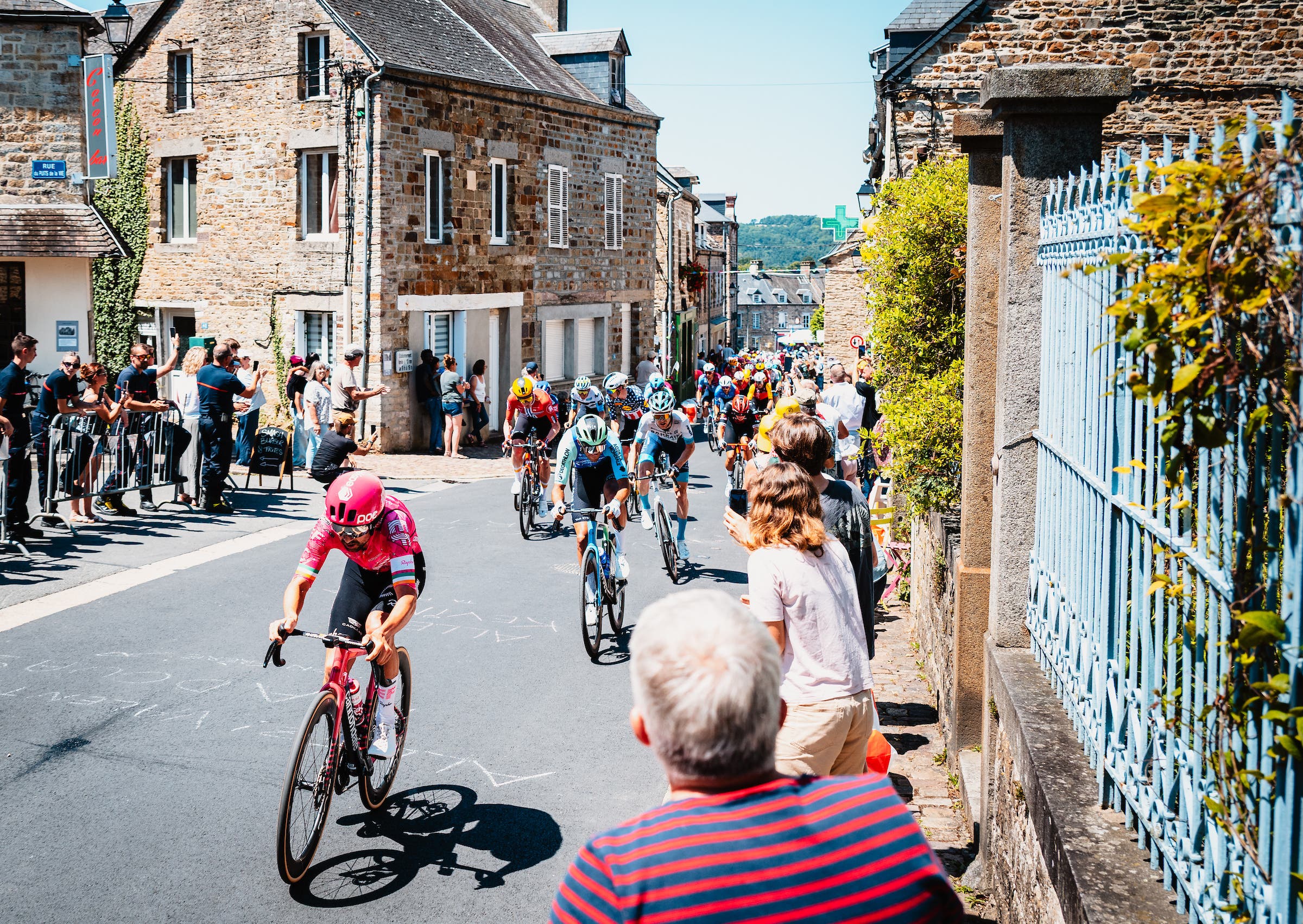 Many want to be part of the peloton but there’s a risk in turning pro too soon. (Photo: Gruber Images)
Having influential agents like Carera and Raes on board with the idea of safeguarding young riders is a boost for the CPA. Hansen suggests other agents also feel the same way. The CPA is now working on a proposal to present to the UCI, to the safety group SafeR and the Professional Cycling Council.
The actual details of what that might look like will take some time to thrash out.
Hansen believes it will likely take two more sitting of the CPA’s working group to fine-tune their proposal.
It’s not as easy as it seems; both Raes and Hansen accept there are some complications.
The latter points to the question of where riders might go if they opt to delay their WorldTour debut. He said that a WorldTour team may reach an agreement with someone to spend one or two years with a development team before taking up their contract.
“The problem is that at some races such as the Tour of Austria, continental teams compete against World Tour teams,” he said. “This is a bit of a problem, because technically with some of these contract deals, they’ll also be paying the riders during the development.
“But if they’re paying them and they’re on different teams [in the same race – ed.], this is against the UCI regulations. So we have to work out the proper way of doing it. And it’s got to be done right. Because, on the other hand, the last thing we don’t want to do is hold riders back.”
Raes identifies a different issue, acknowledging that some countries have national legislation which would take precedence.
“As soon as someone can sign a professional contract or a labor contract, you cannot say, ‘ah, but you’re not allowed to become a professional rider,’ because that’s a question of free movement.
“So I think the [national] legal framework complicates things for the UCI to create a general rule on this. That’s a bit of a challenge.”
But what about the UCI itself: could it impose its own limitations, telling riders they can’t do a grand tour until a certain age?
“Well, when you apply for a license, you agree with the regulations,” Raes said. “So that’s always possible, I guess.”
‘Don’t skip steps in the process’
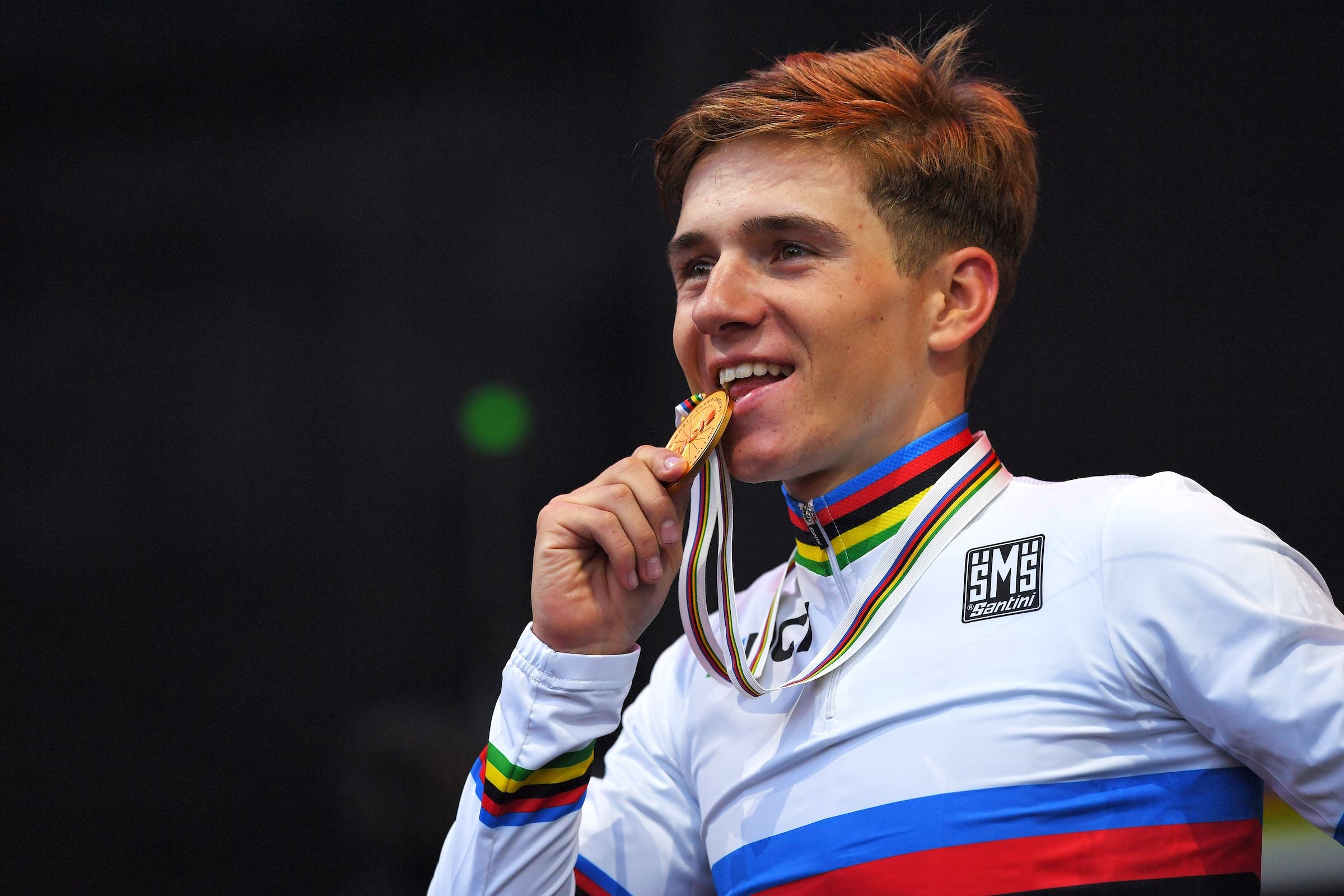 Remco Evenepoel became double world champion at just 18 years of age, leading to an early pro contract. But other riders have found the transition to be difficult (Photo: Tim de Waele/Getty Images)
Whether or not that would be one workaround remains to be seen. It’s encouraging that this discussion is taking place, because the risk to some young riders is otherwise clear.
Raes, like Carera, emphasizes the need to have good working relations with his riders, and to really get to know them as people.
They need understanding, particularly at a young age. And so too careful guidance.
“We need to warn and be very cautious with young riders on this topic,” Raes said. “Because you can push the watts, but that doesn’t mean that you are ready to become a professional.”
He said the big picture has to be kept in mind.
“In my opinion, the best years for a rider aren’t the years at 19 or 20. If you want to have a long and lasting career, it’s to your own benefit that you don’t skip steps in the process.
“That is what I tell my riders every time – please don’t skip steps in the process. It’s not next year that it [going WorldTour] needs to happen. It needs to happen when you can compete with the best riders in the world.”
Agents stand to make more money when their riders sign big contracts. It’s therefore reassuring to hear an agent advising caution and recommending riders hold back if needed in order to really deliver on their potential.
“The aim,” Raes said, “is that at 24, 25, 26 you can compete with the best riders in on in the world. So let’s make a plan to succeed with that goal.”