
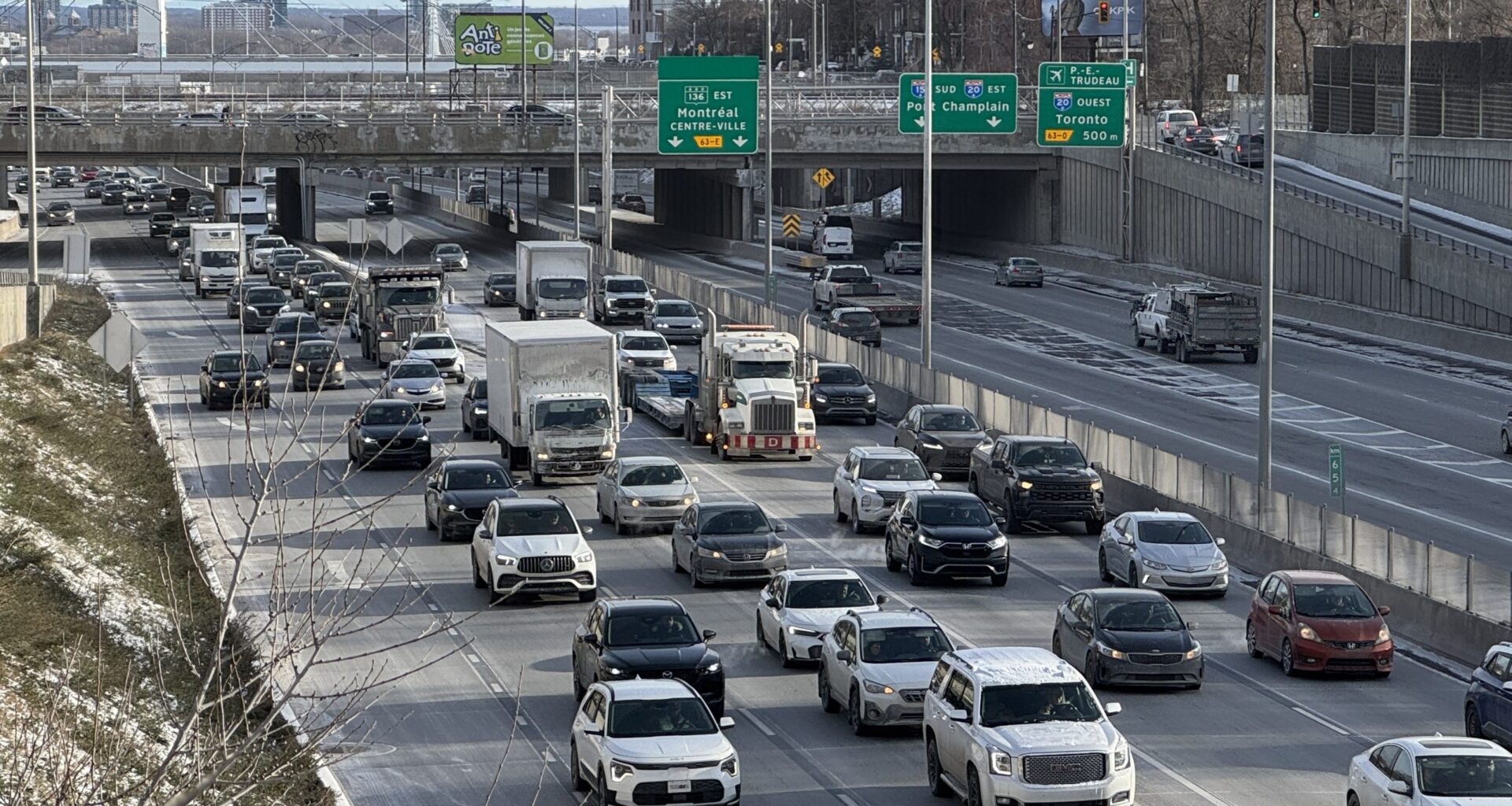
A recent INRIX analysis reveals that Montreal experiences the worst traffic congestion in the country. According to the study, people who drive in the city lose an average of 63 hours annually during peak travel periods.
INRIX, which evaluates congestion patterns in over 1,300 urban areas worldwide, ranks Montreal 28th on the global list.
“I am always stuck in traffic and I really travel a lot, so I’m always stuck in traffic and it’s killing me,” said a Montrealer to CityNews while waiting at a red light in her car.
“The problem, I think, lies in coordination,” says CAA-Quebec Foundation director, André Durocher.
“When you have no coordination and everybody’s sort of pulling the blanket on their side, you end up in situations that are unfortunately problematic for a lot of people,” he added, referring to those involved in the city’s public works.
The top three most congested cities internationally are Istanbul, Mexico City, and Chicago.
Toronto and Vancouver follow Montreal within Canada’s congestion standings. Drivers in Toronto lose 59 hours a year, placing the city 34th worldwide, while those in Vancouver spend 46 hours in traffic, earning it the 79th spot.
Compared with last year’s results, Montreal’s time wasted in rush-hour traffic has climbed by 9 per cent. Toronto recorded a smaller rise of 3 per cent, and Vancouver saw a 6 per cent increase.
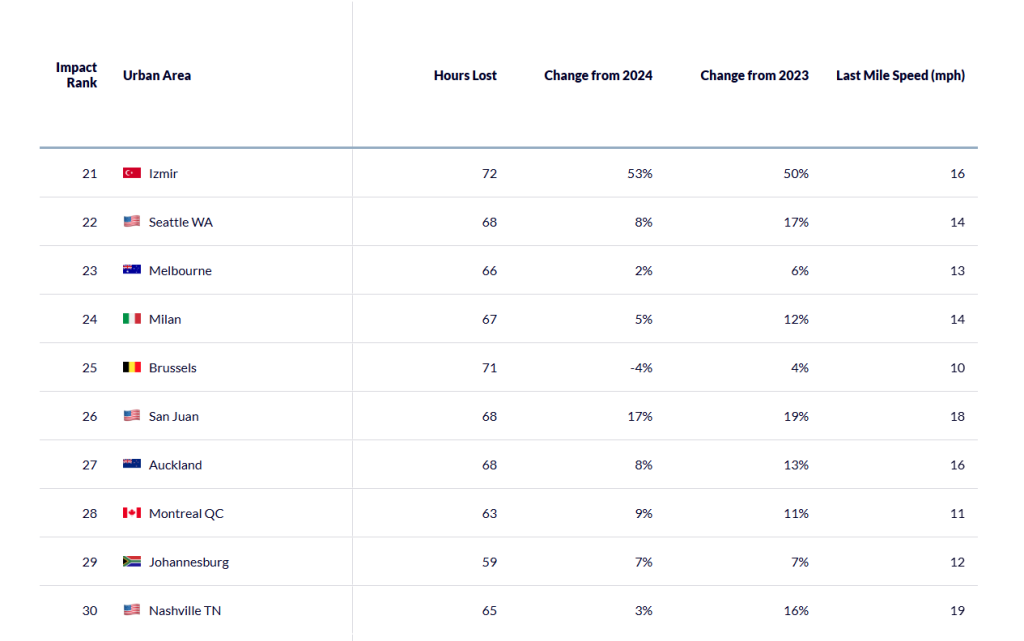 Part of the INRIX 2025 report, showing Montreal’s ranking compared to other cities across the globe in terms of hours lost in congestion by drivers each year and the increase or decrease of congestion compared to the two previous years. (Courtesy: INRIX)
“I’m an old Montrealer, I live out of town now and I feel that it’s getting worse,” said a man, on the side of the road in his car close to downtown Montreal, while nodding in agreement after hearing the new data from this year’s report.
Road experts like Durocher say the nine per cent climb can be attributed to Montreal’s recent difficulties with public transportation, or lack thereof as transit users found themselves forced to use their cars during the multiple closures of bus and metro services for weeks on end.
“To try to reduce traffic we encourage people to take public transportation,” Durocher began to explain. “As we saw in the past couple of months or weeks, we saw situations where there were strikes, there’s only service between such time and such a time, and it sort of ends up being a vicious circle, people are saying okay why should I bother not using my car, because then I’ll be stuck.”
On top of the recurring STM strikes that Durocher says have been wreaking havoc on transportation this past year in Montreal, he adds that the city’s infamous orange construction cones and constant road work during peak traffic hours are also strong contributors to the increase.
“I’m always appalled when I see situations, for example, when people are doing work sometimes at seven or eight o’clock in the morning or at three or four PM,”
For its global comparisons, INRIX measures the time required to travel between downtown areas, or major employment hubs, and surrounding neighborhoods.
On the world stage, Istanbul drivers faced 118 hours of delays in 2025. Motorists in Mexico City encountered 112 hours, and those in Chicago experienced 108 hours of congestion.
The report also notes that traffic problems come with substantial financial and environmental costs, including extra fuel consumption, slower delivery times for goods, and the broader impacts associated with prolonged delays.