
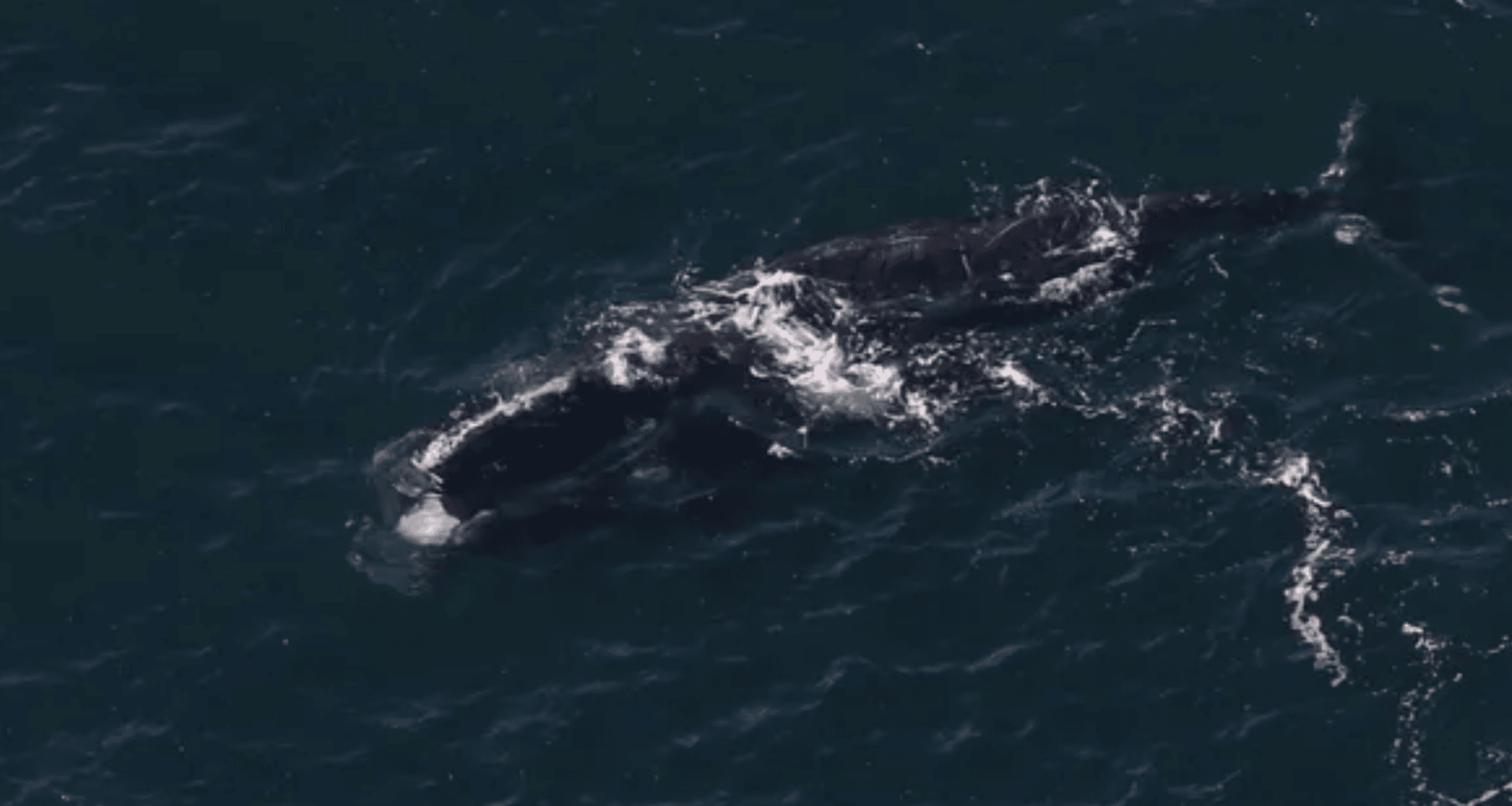
In an extraordinary and rare display of marine movement, a critically endangered North Atlantic right whale has stunned scientists with its 3,000-mile journey. Spotted initially off Ireland in July 2024, the whale was later found near Boston in November 2025. This remarkable sighting, reported by CBS News, reveals fascinating insights about the species’ migration patterns and the unexpected connections between European and North American waters.
A 3,000-Mile Journey That Defied Expectations
The discovery of a North Atlantic right whale traveling from the coasts of Ireland to Boston has captivated researchers and conservationists alike. Last year, in July 2024, scientists observed the whale in Donegal Bay off Ireland’s northern coast—a significant first, as it was the first recorded sighting of a right whale in Irish waters in over a century. The finding immediately caught the attention of marine biologists, as sightings of these critically endangered creatures are rare enough, let alone one on a journey across the Atlantic.
But the story didn’t end there. On November 19, 2025, the same whale was spotted about 23 miles east of Boston, a distance of more than 3,000 miles. The sighting sent shockwaves through the scientific community, as few right whales are known to travel between the North American and European waters.
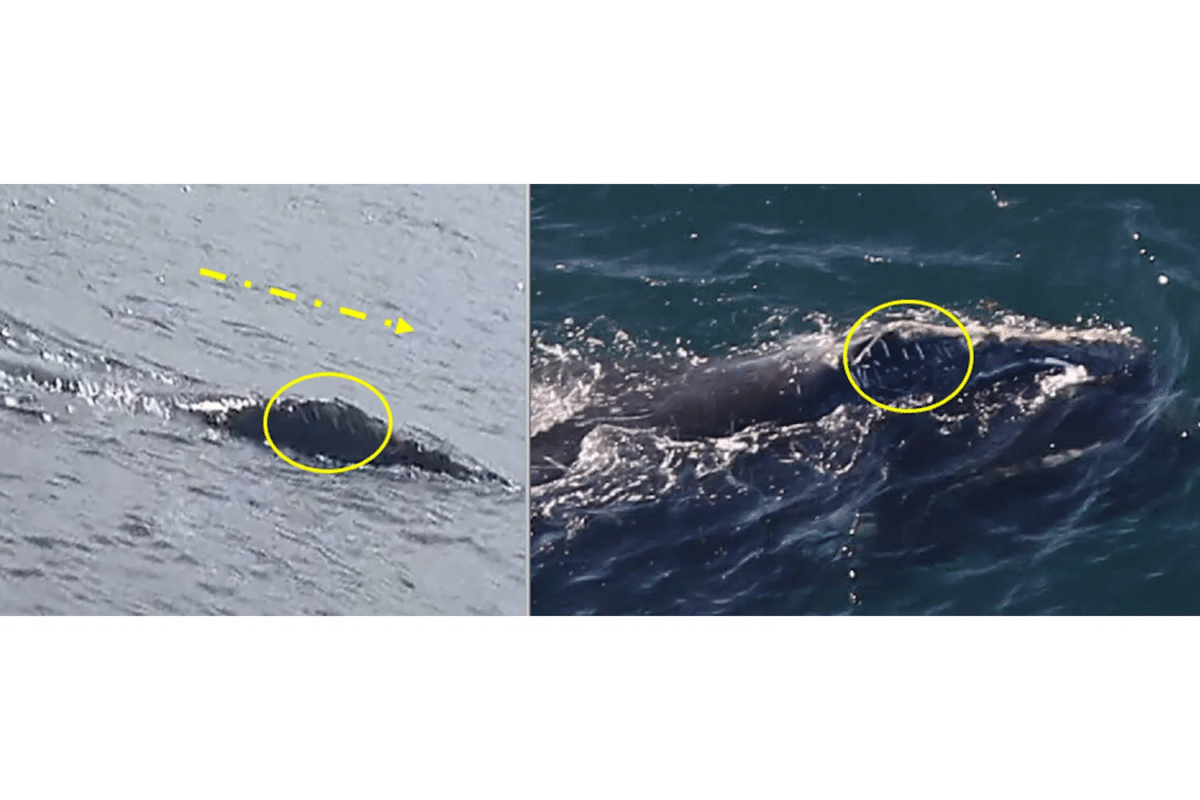 Unique scarring on the right side of the whale’s head is one of several features that helped researchers in the New England Aquarium’s Anderson Cabot Center for Ocean Life match photos from the Ireland sighting (left) with images captured by the Center for Coastal Studies off Boston (right). Credit: Naomi D’arcy and Center for Coastal Studies, taken under NOAA permit 25740-03
Unexpected Connections Between Two Continents
As reported by CBS News he first clue that these sightings were connected came when scientists noticed the whale’s distinctive scarring patterns. Ian Schosberg, a researcher with the Center for Coastal Studies, was part of the team that identified the whale in Boston. At first, he didn’t realize the significance of the sighting.
“The next day, when the Aquarium’s catalog team sent over a potential match, I was shocked,” Schosberg said in a statement. “I remembered the Irish whale sighting from July 2024 and how we’d tried to match that to a known individual in the catalog without success.”
This sighting has become a critical example of how researchers are increasingly able to identify individual whales by their unique markings. These scarring patterns can reveal essential data about a whale’s life, movements, and survival. It is a stark reminder of the importance of cataloging marine life, especially for species like the North Atlantic right whale, which is critically endangered with only around 384 individuals left in the world.
The Mystery of Migration
Despite the scientific breakthrough in identifying the whale, the journey itself remains a mystery. Why would a right whale make such a long migration, crossing the eastern North Atlantic, an area far from its typical habitats? Researchers speculate that the whale was likely in search of a more favorable environment or food sources, which is not uncommon for marine species that traverse vast oceanic regions. However, this remains one of the most pressing questions for marine biologists.
“What makes this even more intriguing is the possibility that this whale could have encountered environmental changes that led it to venture so far from its usual range,” says Padraig Whooley from the Irish Whale & Dolphin Group. “But where else would one expect to find a right whale with Irish connections if not off Boston?”