

No doubt the overall state of British tennis at the professional level is in better shape at the end of 2025 compared with the days when Andy Murray was effectively the sole flagbearer on tour. Jack Draper and Emma Raducanu lead a total of six singles players with top-100 rankings, while there is increased depth on the second tier of players pushing for a regular spot at the world’s biggest tournaments.
It has also been clear for some time that the future is bright on the female side. The teenage trio of Mimi Xu, 18, Mika Stojsavljevic, 16, and Hannah Klugman, 16, have pushed each other along on their transition from the junior circuit, while there are several other girls showing promise.
This is why there is some growing puzzlement within the British game about a worrying deficiency of strong-performing boys. Concerns that have slowly built up in recent years are well warranted at the end of a season during which only two boys representing this nation won a singles match across the four junior grand-slam tournaments.
Even this week there is another bad sign in the fact that not one British boy is contesting either the main or qualifying draw of the Orange Bowl, a prestigious under-18 tournament in Florida previously won by the likes of Roger Federer, John McEnroe and Bjorn Borg. In the concurrent girls’ event, there are two British players in the main draw and two in qualifying.

Murray with his parents at the 2004 Wimbledon junior event. This year only two British boys have won a singles match across the four junior grand-slam tournaments
ANDREW PARSONS/PA
While it is reasonable to some degree to theorise that a particularly good crop of girls are making the boys look worse, there has been little to shout about for the LTA on the boys’ side this year other than the run of Oliver Bonding, 18, to the US Open quarter-finals. It has led Leon Smith, the LTA’s head of men’s tennis and Great Britain Davis Cup captain, to acknowledge recently that a curious shortfall is being investigated.
“That is definitely one of the areas we are leaning into,” Smith said. “We’ve actually got a really good crop of players for now and the coming years. Underneath that there has been less of a flow of talent from the boys. There are a number of reasons behind that and that is something we are looking at closer.”
It is a retreat from the LTA’s bullishness 2½ years ago. There was clearly great excitement when Henry Searle became the first British winner of the Wimbledon boys’ singles since Stanley Matthews Jr — son of the legendary footballer — in 1962.
“We’re pretty strong at the moment at developing a group of boys that could turn professional,” Martin Weston, a national coach at the LTA for men and boys, told the BBC in July 2023.
Searle is still continuing his attempts to reach the upper tiers of professional tennis, albeit with gradual progression. At 19 years old he presently sits at a career-high ranking of No361, which puts him about 100 places short of grand-slam qualifying. To put this into context, there are 11 players aged 20 and under who are ahead of him in the world.
The outlook beyond Searle, however, is grim as it stands. Bonding, who is only just starting his full-time professional phase, is the next British player aged 21 and under at No854. Again, in comparison with others, France has 13 players in this age group ranked above Bonding, while the Czech Republic has seven.
Chinks of light on the junior circuit are few and far between. Mark Ceban, aged 16 and ranked No58, is on track to be Britain’s sole representative at the Australian Open boys’ singles next month, while there are five boys in the world’s top 300 compared with 12 girls. Benjamin Gusic Wan, 18, was the only British boy besides Bonding to win a junior grand-slam match this year, reaching the second round of Wimbledon, where all eight other home representatives lost in the first round.
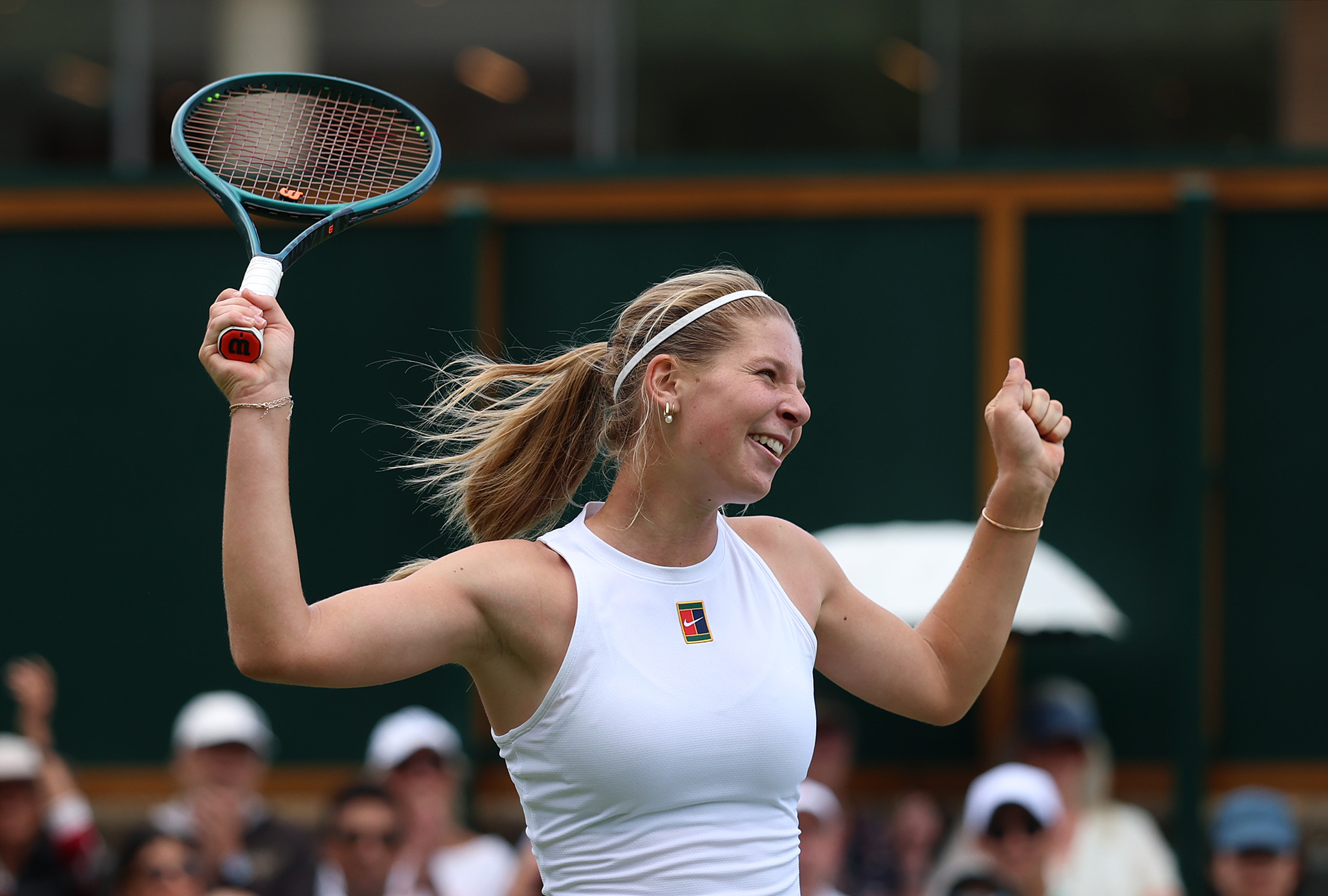
Klugman reached the Wimbledon girls’ quarter-finals in July, after her run to the French Open final
DAN ISTITENE/GETTY IMAGES
Smith and others at the LTA have cited one reason as the “cyclical” nature of tennis development, in which the flow of talent through the pipeline is not always steady. But the discrepancy between British boys and girls is so stark at present that there are clearly other issues to be uncovered.
Conversations with several British coaches in recent weeks have often brought up a disgruntled mention of the Loughborough National Academy. Vast sums of money are being ploughed into this by the LTA at the expense of those on the ground day to day, and there is even an imbalance in the teenagers chosen for selection there at four boys to six girls.
There are also raised eyebrows at critical funding decisions made in the past. Jacob Fearnley, now the British No3 at a world ranking of No71, was overlooked for financial support as a teenager behind players who are now flailing outside the top 400. This does not make for encouragement about some of those who are supposed to have an eye for talent.

Gusic Wan is 81st in the boys’ world rankings
DANIEL KOPATSCH/GETTY IMAGES
Thankfully, Fearnley was not lost to the sport as he instead turned to the American college circuit before rising as a professional. This is a route that the LTA actively supports, although some wonder if it is too easy a fallback for funding mistakes that have been made in the past.
At least there is some hope in the under-12 category. Max Hodkinson, Tomas Gabor and Cameron Rae helped Britain end a 12-year wait for a boys’ Winter Cup team title in February before winning a first-ever Summer Cup in August. But the LTA is still planning some much needed tweaks to improve the situation in the years above.
“We have talented boys progressing through different stages of the pathway, and just this year won Tennis Europe’s Summer and Winter Cups for boys under 12,” Michael Bourne, the LTA’s performance director, said. “However, we are obviously keen to have a strong cohort of boys and girls at every single age group, so we are working on several approaches to enable a consistent number of both boys and girls to come through at each stage of the junior pathway.
“We’re also aware that the growth and maturation of boys and girls progresses at different speeds, which creates different tennis development requirements. So we are continually looking at improving how our player pathway accommodates different development timelines for boys and girls, including later developing players.
“This year we’ve had more men ranked in the top 200 than at any point since 1976 [ten in October], so it is clear that British boys coming through the system can develop and grow into top players, but we want to ensure this continues consistently into the future.”