
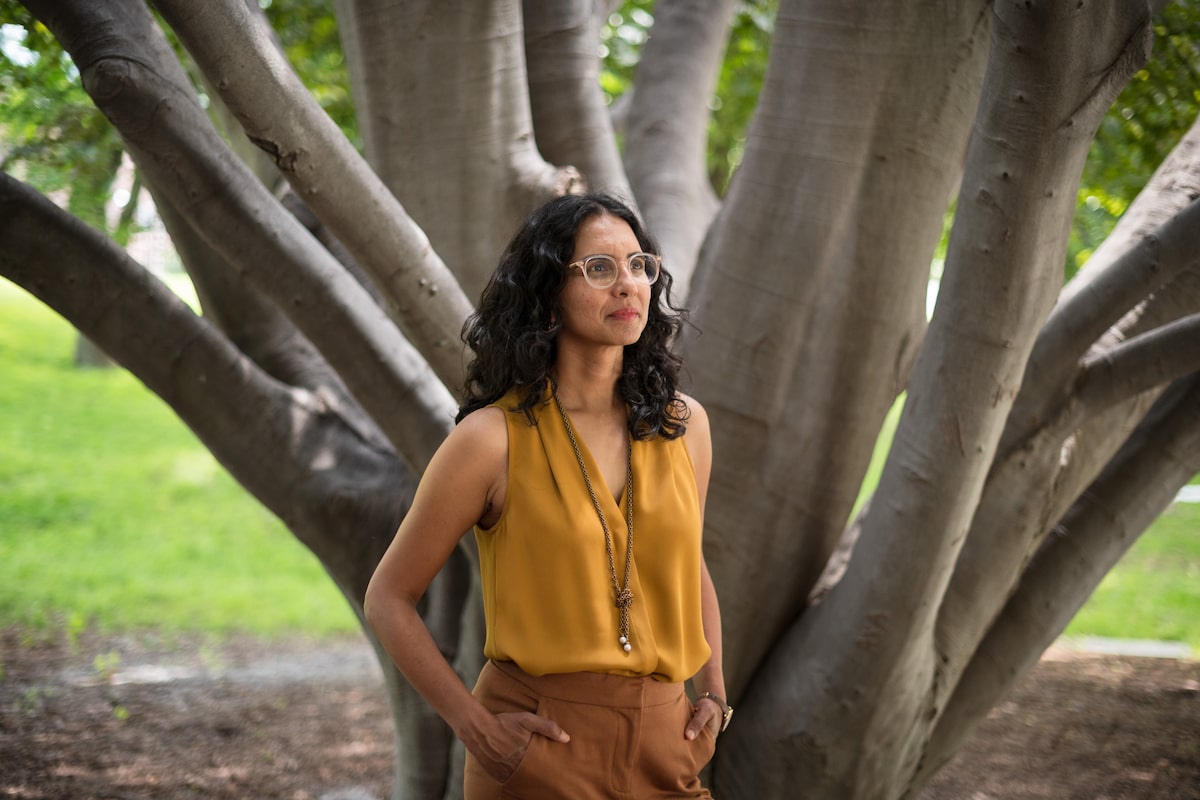
Family physician and scientist Dr. Tara Kiran in Toronto, in June, 2023.Tijana Martin/The Globe and Mail
More Canadians say they have a family doctor or nurse practitioner now than three years ago, according to a major national survey that suggests the country is beginning to turn the corner on the primary-care crisis.
The new results, released Monday, show an estimated 5.9 million Canadians don’t have a primary-care physician or nurse practitioner, an improvement from 2022, when about 6.5 million lacked a regular provider.
“It was really heartening to see that the number has gone down,” said Tara Kiran, a family physician and researcher at St. Michael’s Hospital, part of Unity Health Toronto. “That is, of course, still a huge number and still a big problem, but it is a big improvement from the 6.5 million.”
Dr. Kiran led the new survey as part of OurCare, a project which in 2022 set out to quantify the depths of the primary-care shortage in Canada.
She and her colleagues surveyed more than 9,000 people about their access to family doctors and nurse practitioners. They also hosted panels and round tables nationwide to learn what typical Canadians wanted from the front door to the medical system.
Claims of a doctor shortage oversimplifies the issues with health care
The 2025 iteration of OurCare surveyed more than 16,000 Canadians online about their experiences with primary care. The study highlighted concerns about issues such as being able to see a professional quickly and after-hours availability.
Dr. Kiran’s original work in 2022 helped to inform a new Primary Care Act in Ontario, and their estimate of 6.5 million Canadians without a family doctor became a frequently cited data point in national conversations on the subject.
The modest improvement in the number of respondents who said they had a family doctor or NP likely reflects the concerted efforts of provincial governments to recruit and retain more professionals in primary care, said Amanda Condon, a family doctor in rural Manitoba and head of the family medicine department at the University of Manitoba.
Dr. Condon, an adviser to OurCare, noted that several provinces have overhauled the way they pay family doctors, increased spots in medical schools and residency training programs, and tried to speed up the licensing of internationally trained physicians.
“I think that shift in the way that people are compensated, as well as recruitment, has certainly, I would say, stabilized and grown the workforce that is providing longitudinal practice,” Dr. Condon said.
More than half of Ontario doctors eyeing retirement in the next five years, survey shows
Longitudinal practice is one way that health-policy wonks describe family doctors who provide traditional, cradle-to-grave primary care in an office or clinic.
Although that type of practice is what most people picture when they think of a family doctor, many physicians trained in family medicine in Canada have, in recent decades, rejected traditional office practice in favour of working in places such as emergency rooms, hospitals, sports medicine clinics or addiction medicine clinics.
Enticing those physicians back into longitudinal practice is especially important because, for the first time in about 30 years, growth in the supply of family doctors has fallen behind skyrocketing population growth, according to the Canadian Institute for Health Information.
The number of family doctors per 100,000 people dropped to 119 last year, down from 120 in 2023 and 124 in 2022, CIHI said.
The 2025 OurCare results showed that even those with a family doctor often struggled to see him or her on short notice.
Only 37 per cent said they were able to snag an appointment the same day or the next day, and only 31 per cent said they could see their doctor or someone from their clinic on nights and weekends.
When this hospital couldn’t staff its ER, doctors were asked to name their price
The survey found that most Canadians struggled to get access to their own health records; that people were less likely to have a doctor if they were poor, young or male; and that fewer than one-third of Canadians are satisfied with how the primary-care system is working.
The survey also revealed a divide in who pays out of pocket for certain aspects of primary care. People with a doctor were more likely to pay their provider for services that are not generally covered by the public system, such as filling out insurance forms or writing sick notes.
Of those who said they did not have a doctor or NP and who said they had paid for a primary care service in the last 12 months, just more than 70 per cent said they shelled out for an appointment or consultation.
“It’s more common among people who don’t have a regular clinician that they’re paying out of pocket simply to get care that would otherwise be publicly insured,” said Ruth Lavergne, an associate professor in the department of family medicine at Dalhousie University who holds a Canada Research Chair in primary care. “That’s something I hope we’re paying attention to going forward.”
Dr. Lavergne sat on the working group for the 2025 OurCare survey.