
Updated December 8, 2025 07:42AM
Tadej Pogačar pounds protein like a powerlifter, isn’t afraid of fat, and doesn’t always fuel with as much carbohydrate as you might think.
They’re the main takeaways from a breakdown of Pogačar’s nutrition on a day at the Tour de France.
And while “Mr 7w/kg” is in another physiological orbit, there are some useful principles in his fuel strategy that could help us at home.
Big numbers for a big day
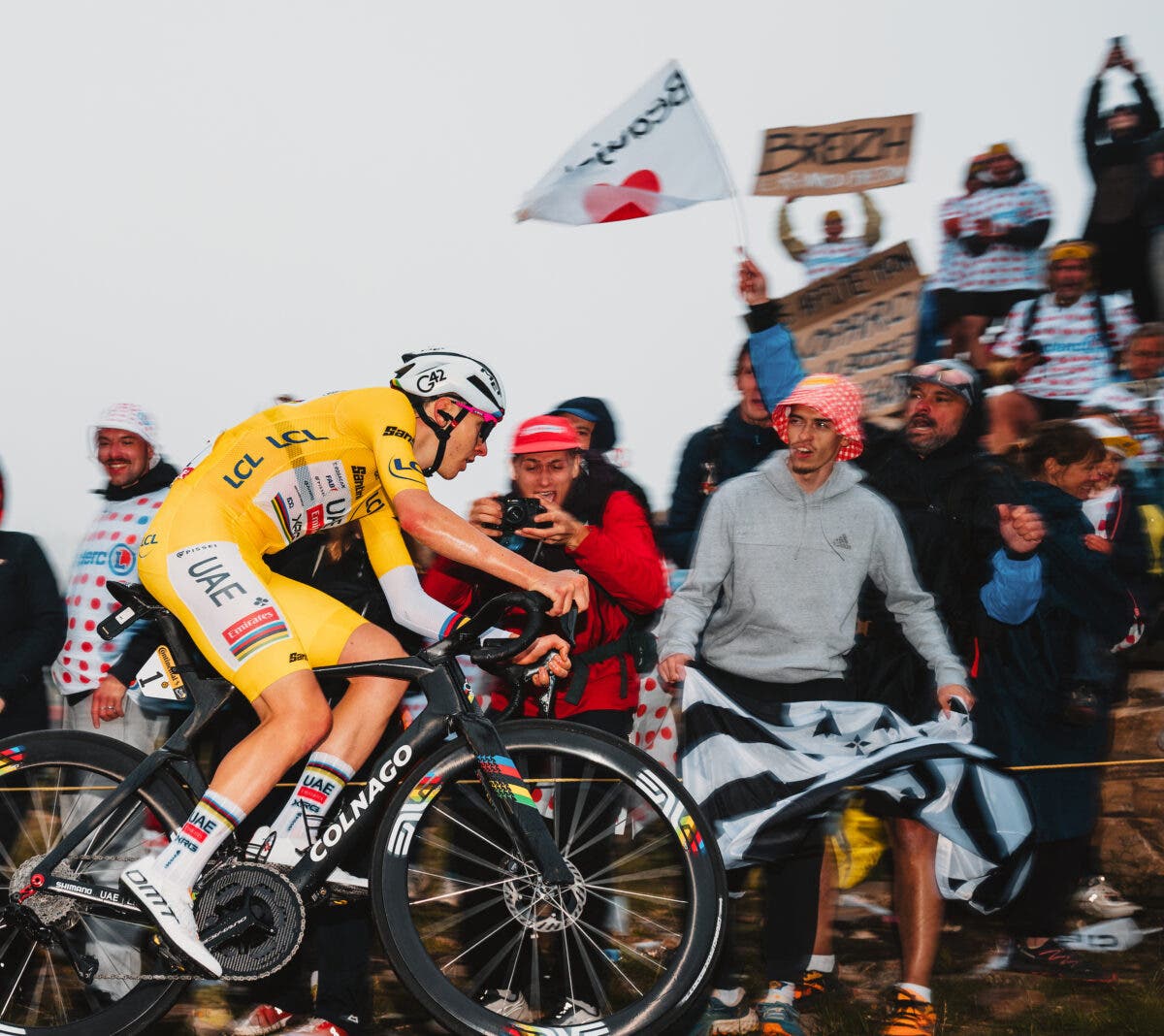 Pogačar and Vingegaard traded attacks in the final kilometers of hte Col de la Loze. (Photo: Gruber Images)
Velon and the Enervit nutrition brand which sponsors UAE Emirates-XRG recently shared on Instagram an intriguing breakdown of Pogačar’s Tour de France menu. Velo confirmed the data came from the UAE Emirates-XRG nutrition team.
The headlines from Pogačar’s 6,000-calorie gut-buster?
A 1,200-calorie breakfast, nearly 5,000 total calories of carbs, and more food in the afternoon than most people eat in a day.
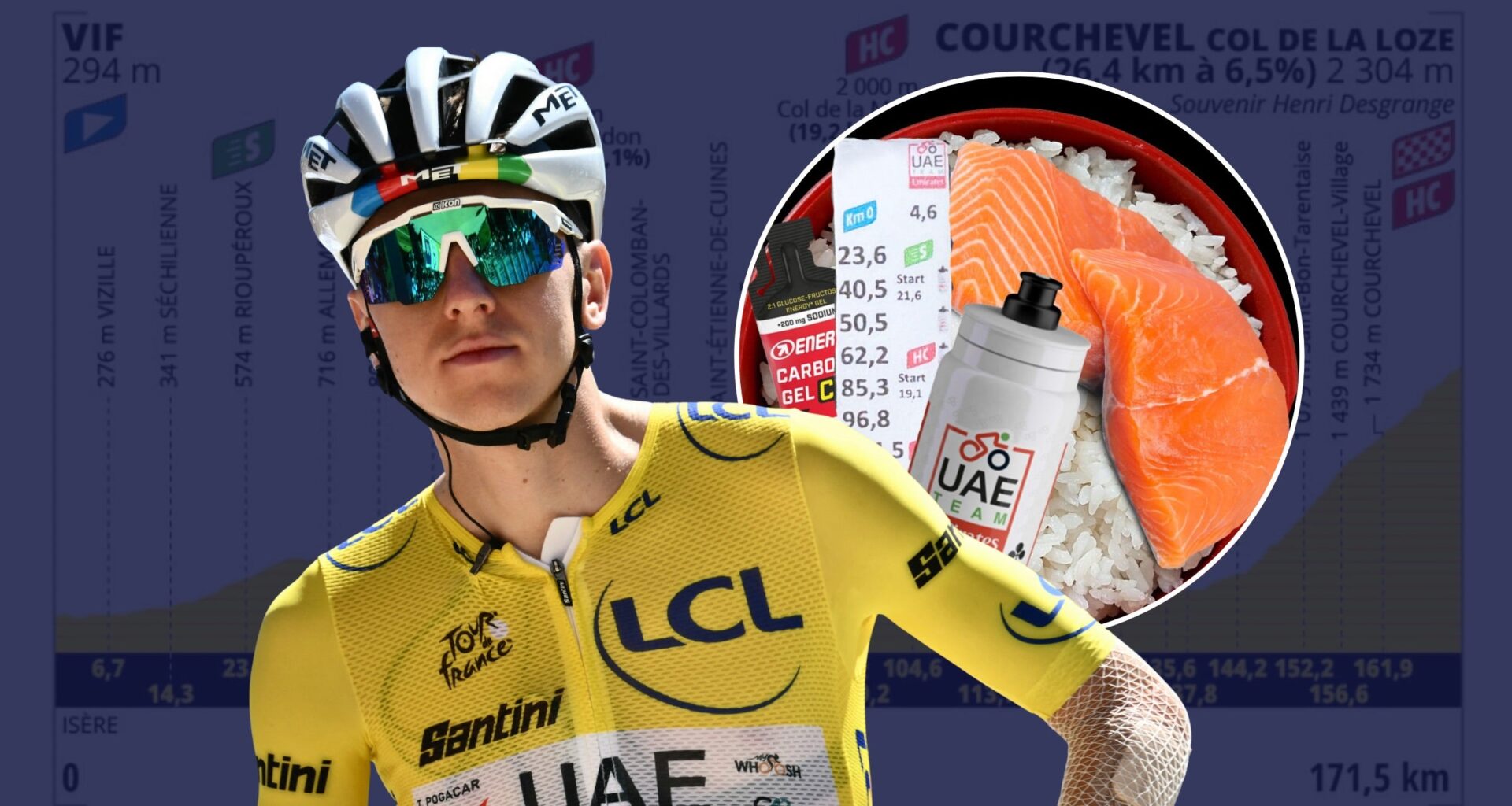
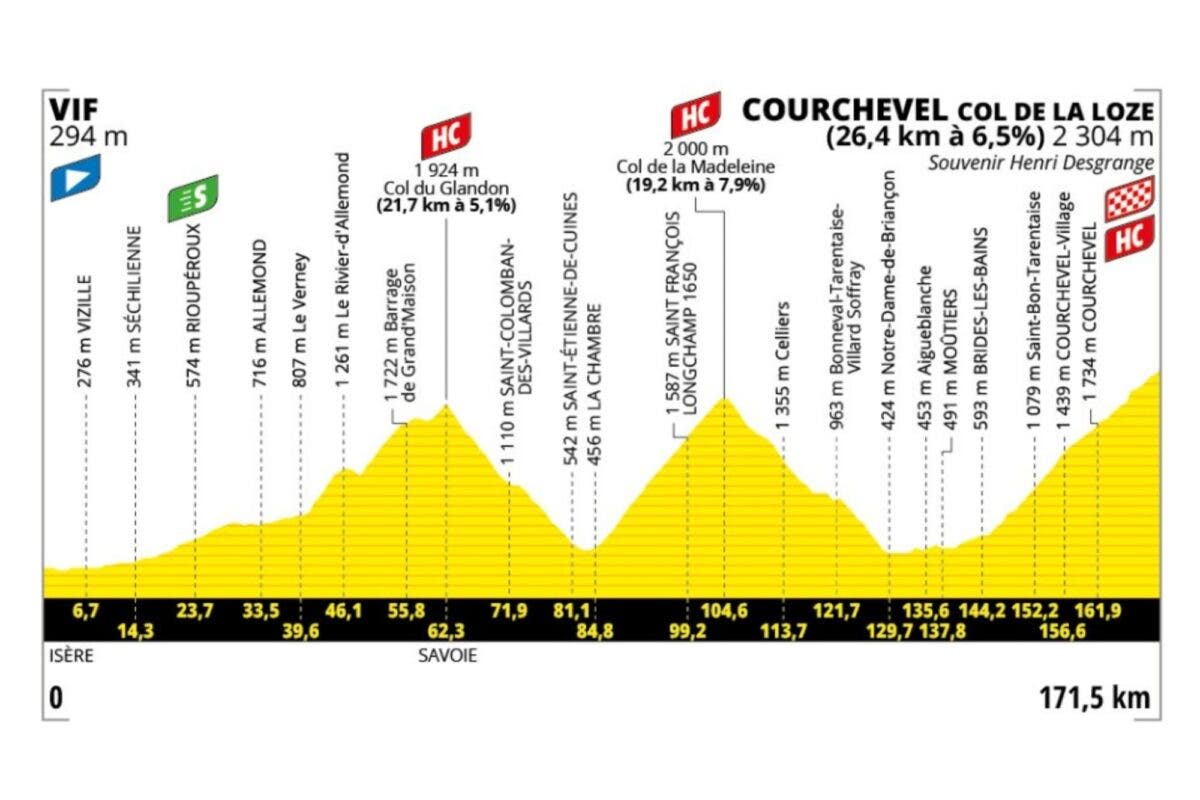
Velon didn’t specify which stage of this year’s Tour the data came from. However, a little sleuthing suggests it was stage 18 up to the Col de la Loze. The original Instagram post by Enervit on July 24 specifies a 5-hour stage spanning 171.5km – exactly the stats of that day’s triple-punch “queen stage” across the roof of the Alps.
It was the day a fast-fading Pogačar beat back a late attack from Jonas Vingegaard to finish second behind Ben O’Connor. It was the final psychological kick Pogi issued to the Dane before he sealed his fourth yellow jersey.
Here’s what fueled Pogačar through his 171.5km, 5,500m+ day, and what we can learn from it.
Pogačar’s Tour de France fuel data, per Velon:
[On mobile? Read chart in landscape – ed.]
Pro cyclists pound protein like powerlifters
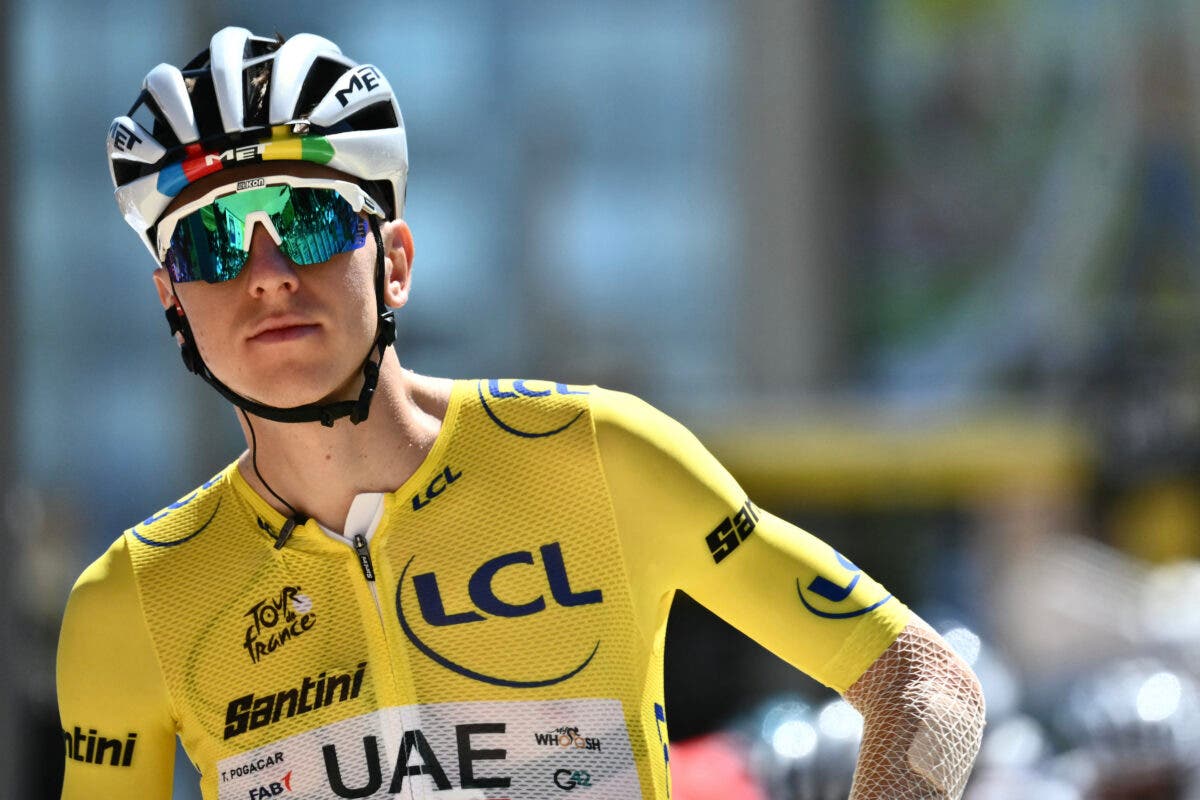 Pogačar is a lean mean protein-machine. (Photo: MARCO BERTORELLO/AFP via Getty Images)
You thought high protein intake was only for powerlifters and biohackers?
Wrong.
High protein is for endurance athletes, too.
Pogačar ate a whopping 150g of protein on the day sampled. For context, that’s the equivalent of more than 600g of salmon, 20 whole eggs, or more than a kilo of tofu. Based on Pogačar’s reported ~67kg Tour de France weight, that’s more around 2.2grams of protein per kilo of bodymass.
Pogačar and his nutritionist are clearly reading the recent studies that show endurance athletes need to pound protein like a gym bro.
While protein recommendations for the general population are as low as 0.8g per kilo of bodyweight, those targets explode to 2g/kg or more for endurance athletes in periods of intensive load.
An important point?
Daily protein intake at the Tour de France doesn’t follow a straight line. And it shouldn’t do for any other endurance athlete.
Velon’s data shows Pogacar ate just 26g of protein before the stage, and a whopper 120g afterward.
Protein intake is kept moderate at breakfast to prioritize fast-digesting, energy-giving carbohydrate. Tram nutritionists recommend just a token dose of protein – perhaps an omlette or yoghurt – to stabilize blood sugars and provide a serve of essential muscle-preserving aminos.
There’s nothing “moderate” in the post-stage protein frenzy however.
Pogačar pounded 120 grams of muscle-building goodness between getting off the bike and getting into bed. That would have been drip-fed through a post-stage shake, a recovery meal on the bus, and another full feed at dinner-time to ensure maximal uptake and enhance recovery.
Eat like Pogačar:
Training very hard? Eat lots of protein to fuel adaptation and growth. That said, Pogačar’s 2g/kg+ at the Tour de France should be considered extreme. If you’re not racing Vingegaard through the Alps, 2g/kg protein per day is probably enough.
Carbohydrate: Not every day is a 120g day
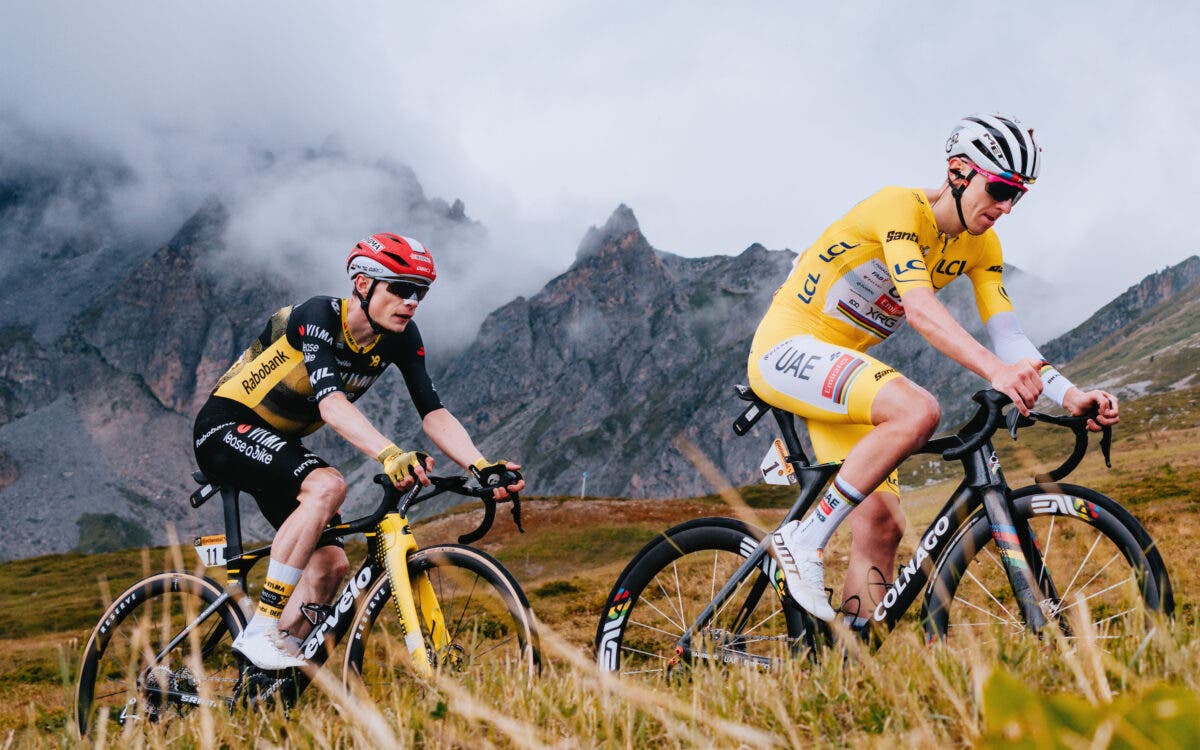 The pro peloton matches carb intake to exercise intensity. (Photo: Gruber Images)
Pogačar fueled the stage with a total of 460g carbohydrate, which works out at 92g per hour.
“Only 92g” I hear you say?
What about “the magic 120” everybody bangs on about?
That’s right, 92g per hour.
Pogačar has spoken of how he’s now able to eat 120g of carbohydrates per hour on the bike, but that doesn’t mean he would do it every day.
As we explored here, teams don’t mindlessly pump their riders with kilos of carbs every day. They have athletes fuel the work required, and nothing more. That means the peloton hits 120g on the most eye-popping races, only.
For example, Pogačar ate 110g per hour when he blew everyone’s doors off and hit his best 20-minute power of the 2025 at Il Lombardia. The 27-year-old likely had even more at Paris-Roubaix.
And when the peloton isn’t pounding the pedals all day, the fueling strategy is toned down accordingly.
 Big mountains need big meals. (Photo: ASO)
Velon didn’t provide a breakdown of what Pogačar ate and when during the stage, but it likely was modulated by the hour.
It would have been gels and carb-drinks galore before and during the HC climbs of the Glandon, Madeleine, and the summit finish on the Col de La Loze. The teeth would have seen welcome relief on the sprawling descents, where carbs would be cut back to match the low metabolic demand.
This strategy keep energy input and output in balance, and helps safeguard against G.I. distress – something that’s key when the body’s defenses are at breaking point in the third week of the Tour.
And just because Pogačar didn’t eat as many carbs as you might expect on the bike, he more than made up for it after the stage.
Pogi ate close to 2,000 calories of carbohydrates that afternoon and evening to boost recovery and re-stock glycogen for another gruesome Alpine stage the next day.
All told, Pogačar ate around 18 grams of carbohydrate per kilo of bodyweight on the day sampled – three times the recommendation for a moderately training amateur.
Eat like Pogačar:
There’s no doubt that more carbohydrates are better for endurance training. But don’t be seduced by super-carb stories of cyclists and triathletes pushing 120 grams per hour, or in some cases, a lot more.
Remember – “fuel the work required.”
Don’t be afraid of fat
 Pogačar’s diet contains a low proportion of fat, but plenty for overall health. (Photo: LOIC VENANCE/AFP via Getty Images )
The one number on Pogačar’s fuel plan that’s not enormous? The total fat.
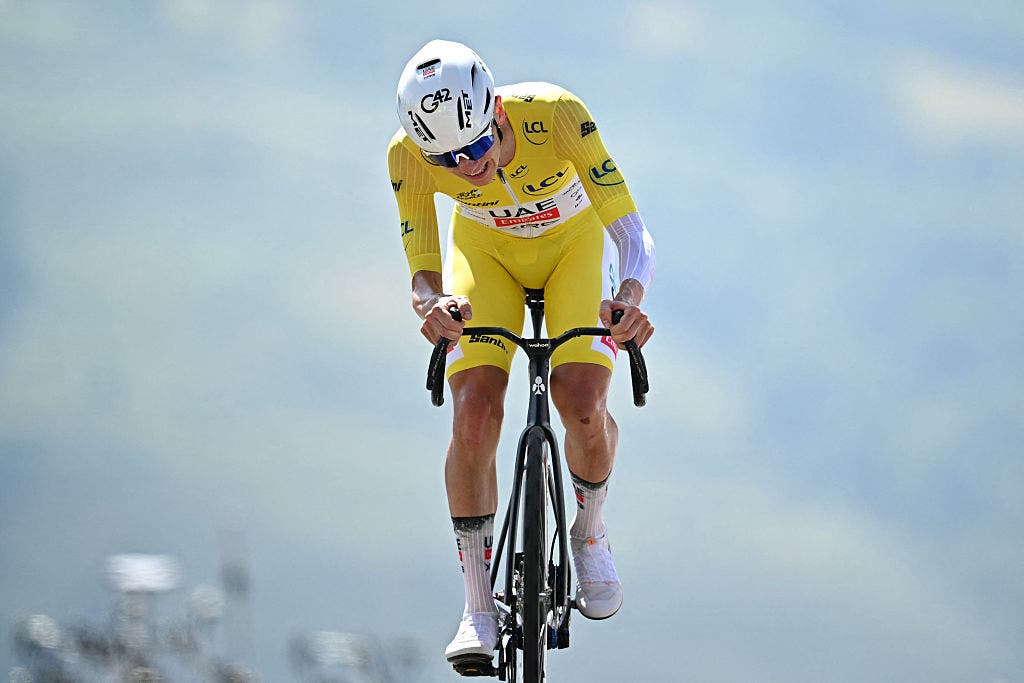
The data from Velon suggests he ate 66 grams of fat for the day, which works out at ~600 calories. That’s 10 percent of his total caloric intake.
Opinions vary, but studies suggest endurance athletes should aim for around 25 percent of their total calorie intake to be from fat.
One gram of fat per kilo of bodyweight is considered the minimum.
So while the proportion of fat in Pogi’s diet is low at ~10 percent, the absolute number is adequate. For the Tour’s 67kg climbing king, 66 grams of fat scrapes the lower benchmark.
And don’t go thinking Pogačar has decided fat is the enemy – sport nutrition moved on from that fad a long time ago. Healthy fats serve an essential role in maintaining hormonal health, maximizing vitamin uptake, and ensuring repair.
Pogačar’s relative fat intake is low purely because he’s so busy crushing carbohydrates.
Deep in the third week of the Tour, carbs and protein take priority to ensure performance and recovery. Healthy fats from nuts, fish, oils, and dairy are served at a maintenance level to keep riders upright without significantly escalating overall caloric intake.
Eat like Pogačar:
Athletes should take two things from Pogačar’s meal plan:
(1) Eat your fats, always!
(2) Pro diets are not normal diets, particularly in the Tour de France. Average Joes should aim for more than 10 percent of their diet to come from fats. You can bet that Pogačar is pounding Insta-friendly avocado toast and almond butter oatmeal right now in the off-season.