
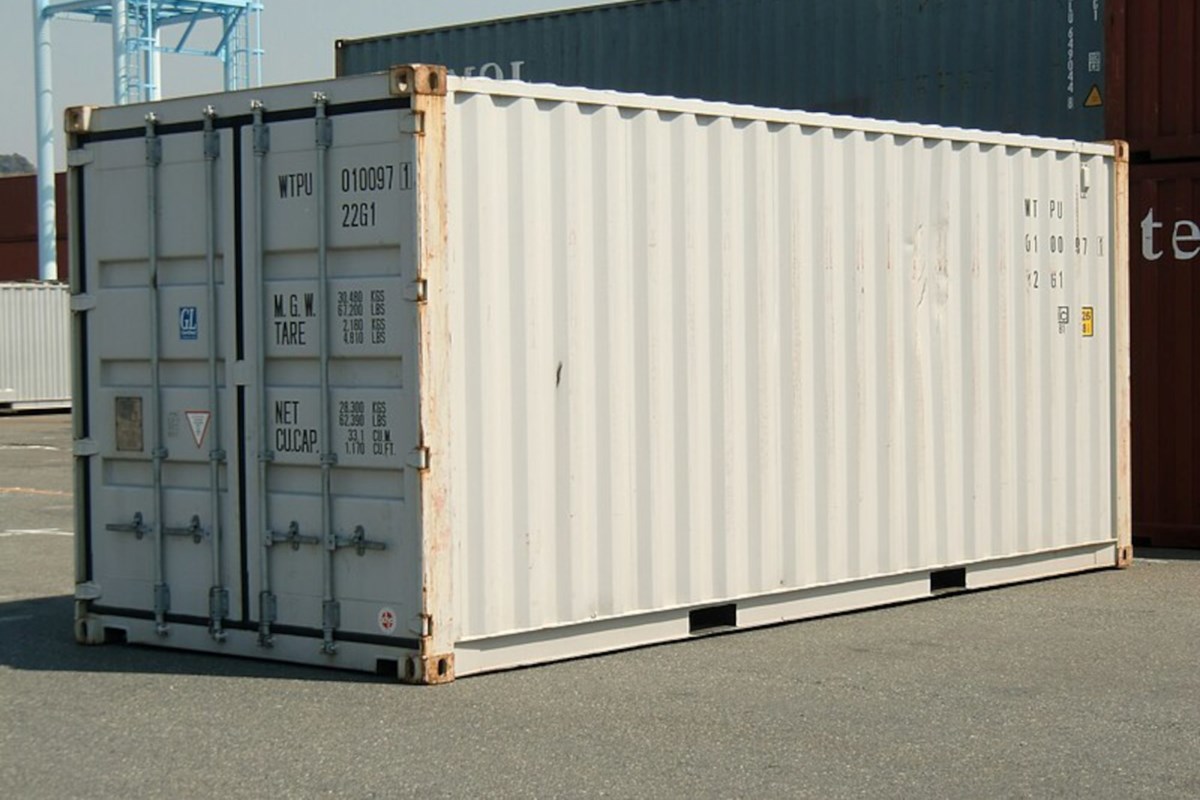
The idea of allowing storage containers on residential lots has been bandied about in council chambers for the past several months, and members appear to have reached a consensus
Months of city council debates appear to have come to a close, with the planning committee of city council unanimously agreeing to allow storage containers to be planted on residential lots.
This agreement echoes a proposal members heard in May, with Monday’s meeting marking the point at which it cleared its public hearing hurdle, the last step before a bylaw is approved.
The city’s zoning bylaw currently limits the use of storage containers, also called sea cans, for agricultural, extractive, transport terminal or warehouse use, in certain light and heavy industrial sites and as temporary uses.
The bylaw amendment as approved on Monday expands use to also allow storage containers to be on rural- and residential-zoned properties, “subject to obtaining a building permit, being located in the rear yard,” and with “adequate screening.” When it comes to rural and residential zones, minimum lot sizes of one acre and a maximum of two containers will be applied.
Shifting from not allowing storage containers on residential lots to allowing them, with conditions, is a good compromise, Ward 5 Coun. Pauline Fortin told Sudbury.com following Monday’s meeting.
Both Fortin and Ward 6 Coun. René Lapierre attended Monday’s meeting in-person (alongside chair and Ward 10 Coun. Fern Cormier), so Sudbury.com asked them about where members landed on the storage container issue.
“It’s allowing it, but with guardrails,” Fortin said.
Residential lots throughout the city already have storage containers, she said, adding that with people already breaking the rules, setting reasonable limitations will help with compliance.
This also helps rural communities in a post-amalgamated City of Greater Sudbury, she said, noting that the same rules that apply in the city core might not be as relevant in outlying communities and rural areas.
City council members who represent rural areas of Greater Sudbury have championed much of the city’s movement toward increased storage container allowances, whose latest round of conversations were spurred by a motion of Ward 2 Coun. Eric Benoit earlier this year.

Ward 4 Coun. Pauline Fortin, pictured at a budget meeting last week, expressed support for increased zoning allowances for storage containers, particularly on residential properties, which cleared the public hearing hurdle during Monday’s planning committee meeting of city council. Tyler Clarke / Sudbury.com
“I’ve gotten calls from residents, and they’re saying the cost of building sheds and pre-fabricated sheds is more expensive than shipping containers,” Lapierre said, adding that with the new rules in place, these affordable options are open to residents while keeping property standards high.
The draft bylaw, he said, is “a pretty good starting point to allow that in rural areas,” as well as clear up ambiguities when it comes to commercial and industrial properties, he said. “Now we have the same standard process for all of them, for everyone to be equitable across the board.”
“To deny everything all the time is not growth in the city,” Lapierre said. “We want to see growth, we want to see us mature, and I think this is a good step to try and get the services the residents want.”
The end result will be evaluated by city bylaw to determine whether any changes should be made in the future, he said, clarifying that, as with all bylaw operations, they are complaints driven.
Even in cases where storage containers are allowed in municipal zoning, they’re subject to the same building permit requirements as other structures, “to address life safety concerns including proper ventilation, structural safety, explosion protection, adequate access and egress, proper anchorage, snow loading and other matters,” according to a past report by city senior planner Stephanie Poirier.
With the planning committee having reached an agreement during Monday’s meeting, which included a public hearing no members of the public spoke at, a bylaw is being drafted for city council members to vote on at a future meeting.
Although the vote of city council members as a whole includes more members (13, if everyone shows up) than were present at Monday’s meeting, with six city council members present on Monday (including two members who aren’t part of the planning committee) and none expressing opposition to the plan, it appears likely to be ratified.
Tyler Clarke covers city hall and political affairs for Sudbury.com.