
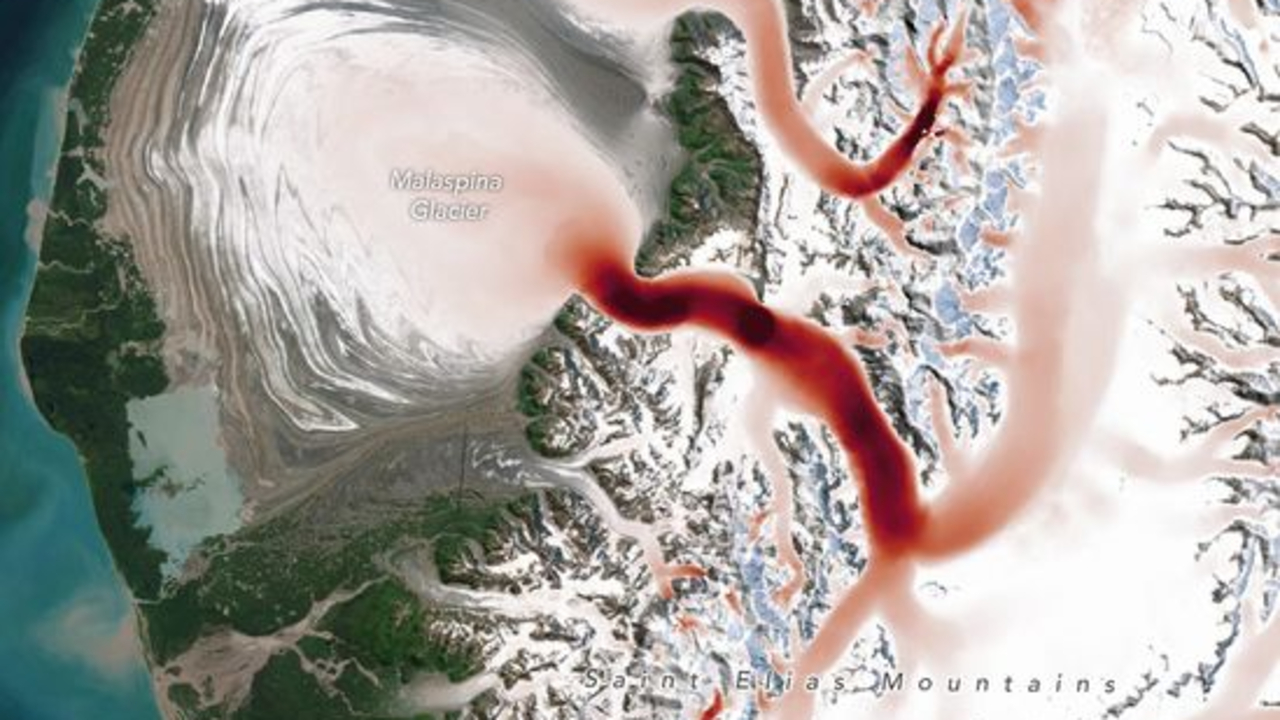
Researchers at NASA’s Jet Propulsion Laboratory (JPL) have mapped the seasonal pulses from glaciers around the world. With this new mapping, they can uncover how glaciers respond to seasonal warming.
Observing The Seasonal Pulses Of Glaciers Using Satellites
The new research on seasonal pulses in glaciers worldwide relies on data collected by optical and radar satellites between 2014 and 2022. Chad Greene and Alex Gardner are the glaciologists responsible for this new study, and their analysis was published in November 2025.
To some, glaciers might seem static, but they actually move throughout the year. This motion changes depending on the season, speeding up in the spring and slowing down in winter.
Around the world, glaciers move in various patterns, and the research by Chad Greene and Alex Gardner aims to prove this point. Some key factors taken into consideration in this research are glacier speed and crevasse fields, which can be tracked using an algorithm developed at NASA JPL.
By tracking these factors, the researchers are able to map glacier flow at high resolution globally to observe how the glaciers react during summer and winter. One of the glaciers considered in this research was the Malaspina Glacier in southern Alaska.
By observing this glacier, the researcher discovered that the glacier moved faster in spring. However, other glaciers in regions like Europe and Russia moved faster in summer or early fall.
Why Study Seasonal Pulses Of Glaciers?
Chad Greene, one of the glaciologists responsible for this study, says its purpose is to “check the health of Earth’s glaciers.” This can be checked through the response of these glaciers to seasonal warming throughout the year.
In turn, this will enable researchers to anticipate how the glaciers will respond to climate change. Greene says after measuring the pulse of Earth’s glaciers, the next step of this research will be to closely observe their temperature.