
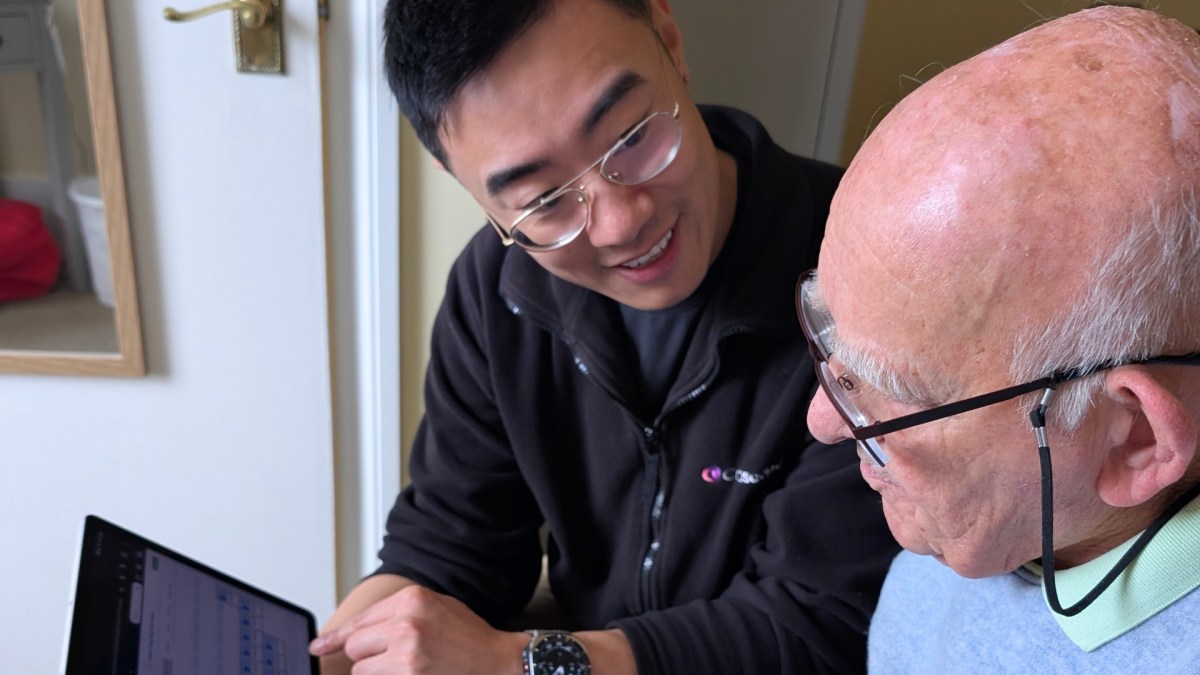
Kehan Zhou, 34, is a serial founder and the chief executive of Camascope, the social care technology company, which he joined in 2023. Before that, he worked in investment banking, leaving first to try his hand at professional dancing in Los Angeles, before shifting to entrepreneurship. He founded two companies, including Terrascope, an AI-driven real estate programme.
The London-based Camascope, set up in 2015, helps staff digitise and manage medication records in nursing homes, mental health facilities and pharmacies. Zhou stayed in a care home for a week last December in an effort to better understand the medical staff using the app and the patients. This year, the company hit annual recurring revenue of £4 million.
I came in as chief executive but feel like a founder
Going to Camascope was an experience almost like founding a company. [The founders and I] are trying to pursue the trend of digitisation in social care in the UK. My founder experiences were really helpful, and I think one of them is about staying close to your customers.
I asked my team if I could stay in a care home
My first year and a half at Camascope was really about stabilising the company, understanding infrastructure, hiring, raising funding. I didn’t need to stay too close on the product side because we had great founders who understand the subject matter more than I do. I relied on them much more.
I’ve been to many care homes. When you go to one for a day trip, they can prepare well. You’re seeing a very different world, slightly different than reality.
So I told my team I wanted a longer stay and that I would love to see our app in action to understand where there was room for improvement. I went to a very well-run, well-provisioned care home called Nyton House.
• Inside the AI care home: the smart tech making old people safer
I was put on the spot
I stayed for five days but not the weekend because they had no beds for me any more; I would be taking away valuable resources. If I was paying, it would have been around £1,500.
I’m a light sleeper and a big eater. The beds in care homes are very uncomfortable because they are designed to go all the way vertical, and the food was great but I never felt like I got enough.
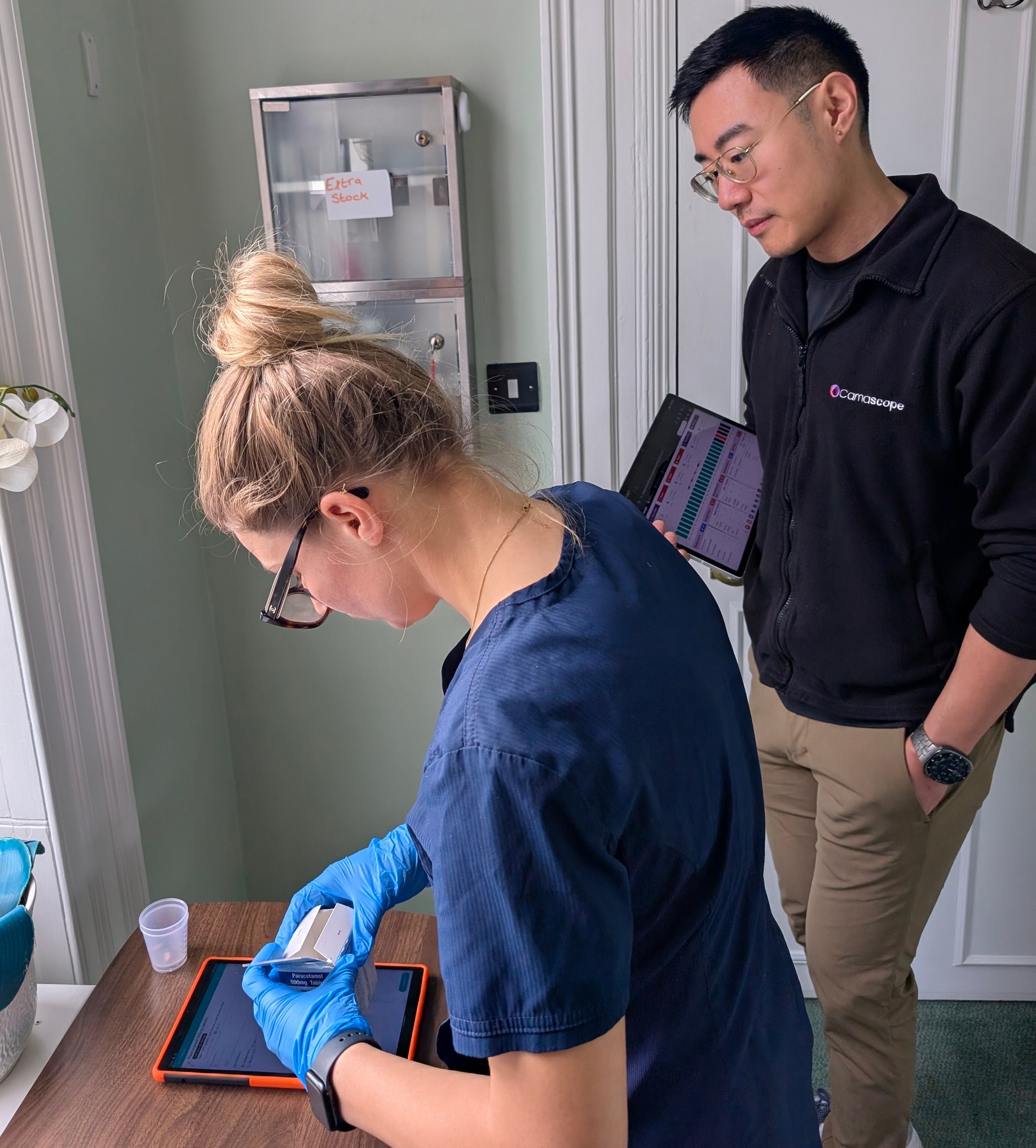
A nurse in Nyton House gave Zhou an important lesson in designing technology for care givers
It is a shock when you first go there. [As a guest] you don’t fit in. You have to make yourself useful and non-intrusive and be trusted. But the care givers were not shy. The first night I was there, they grabbed me and told me to give a manager a walk-through of the app. I was put on the spot to do induction training.
Our users were struggling with the app
I walked into a nursing station, and a nurse was shaking a laptop. I said, “What’s going on — you’re frustrated with the program?” She said, “No, no, it just shows no battery and I’m trying to charge, and the owner told me to shake it to help it charge faster.”
That’s an example I pass on to my team, because that’s what you must have in mind when you’re designing the Camascope app for care givers. Don’t think about someone who is fluent on TikTok, able to navigate all complex apps; you have to bring it to the basics.
One thing I didn’t realise was how much [staff] turnover there is in a care setting. A lot of care givers are only working maybe one, two shifts a week. They might not even have been there when we were onboarding people on the app. I realised it was not easy for them to pick up and use immediately.
• Care homes made me want to shout, so I redesigned them
I could see how important the workflow was in care homes
As soon as I arrived, one staff member gave her notice. I had time to speak with her; it turned out she was being promoted to lead a small team of care givers.
Her method is very rigorous and very strict. The reason she was very strict was that about three years ago, she went through a coroner’s court [inquiry, where a death was] due to medication. She was cleared and recognised now how important the process [of managing and recording medication] was.
I also had a full circle moment
I also spoke with a resident called Michael. He is 94 years old, a very nice man and well-spoken. It turned out he used to work for IBM as one of the first British engineers to work on mainframe computers.
He has been a technologist his whole life and I was showing him our app. He appreciated why the structure makes sense. It felt like a full circle moment — people from different generations, passionate about technology. It felt very empowering for me and very validating because what we do is not easy. It’s one of the few software businesses out there that has to be online 24/7. If it is not, people are going to be very upset and people actually will be in danger.
Following my visit, we made significant changes to the app
Previously, we had assumed that staff went resident by resident with medication. In general that is the workflow, but sometimes they might want to have a view of all the medication that is due right now. We added a button that allows people to see that.
They are also now able to filter down by medication that a manager is required to witness, so they don’t need to go grab their manager many times.
It allows a more intuitive view that’s closer to the actual workflow in the care home, rather than the imagined workflow of an app.
Kehan Zhou was talking to Niamh Curran, reporter at the Times Entrepreneurs Network