
CHARLOTTE, N.C. — Two of the most powerful figures in NASCAR took the stand on Tuesday as an antitrust lawsuit trial continued and Plaintiffs continued presenting its case.
23XI Racing and Front Row Motorsports filed an antitrust lawsuit against NASCAR and CEO Jim France in October 2024, alleging that they used anti-competitive acts to maintain an illegal monopoly. This lawsuit alleged that the Defendants in this case also enriched the France family.
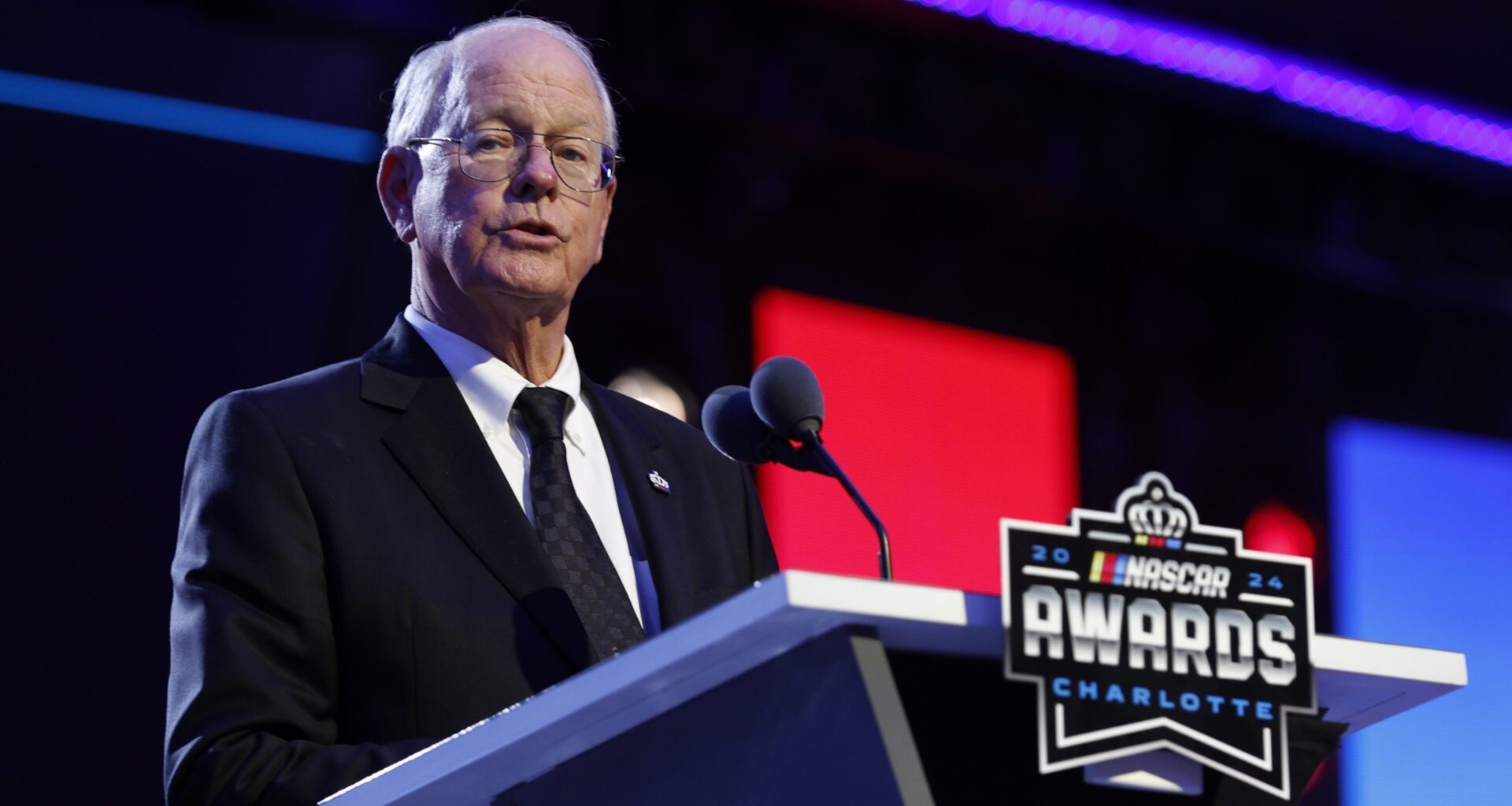
NASCAR Commissioner Steve Phelps and France both took the stand on Tuesday to discuss the charter agreement negotiations, their respective salaries, the concept of permanent charters, and many messages that became public during the discovery process.
France only spent just under two hours on the stage due to time constraints. He will return to start Wednesday as Plaintiffs finish presenting their case. Phelps, for comparison, spent approximately four hours fielding questions.
Steve Phelps’ testimony
Increased revenue
Phelps took the stand first for direct examination by Plaintiffs’ attorney Jeffrey Kessler. It was during this session that Phelps provided NASCAR’s reason for turning down the teams’ request for $720 million ($20 million per car), which they said they needed to cover their costs.
According to Phelps, this amount of money would have bankrupted NASCAR. Phelps said that NASCAR would have ceased to exist. He also testified that it was an incorrect characterization to say that the teams did not get any of their four pillars (permanent charters, a seat at the table/governance, 33% of future revenue, and a larger share of NASCAR revenue).
Phelps called the Owners’ Advisory Council a better option than the three strikes rule, which NASCAR removed from the 2025 Charter Agreement. He called the three strikes rule more a veto, and said that the only strike they received was when fall Charlotte switched to the Roval. He indicated that the OAC was more collaborative.
The Superstar Racing Experience
A sizable part of the Plaintiffs’ case has focused on the Superstar Racing Experience, or SRX for short. This series only existed for three years as a variety of drivers competed in identical cars, yet it drew the ire of multiple NASCAR executives.
Phelps, in particular, said in unsealed text messages that they “need to put a knife in this trash series” while discussing SRX with Steve O’Donnell and Scott Prime. He then testified on Dec. 9 that he became concerned about this series from the moment he heard about it because “it looked like NASCAR.”
The NASCAR Commissioner said that the colors, liveries, and sponsors of the series looked like NASCAR.
You know what’s better than three wide on dirt?
Four wide on dirt. 😉 pic.twitter.com/19VysDW5b0
— Superstar Racing Experience (@SRXracing) January 11, 2024
He further discussed messages from him saying that SRX was an “FU to us” while clarifying that he referenced the team owners who competed in the series. This included Hamlin and Justin Marks.
While Phelps, O’Donnell, and NASCAR had concerns about SRX becoming a competitor as LIV Golf did to the PGA Tour, they could not ultimately do anything about the upstart series. Phelps said that NASCAR’s lawyers looked at the series and determined that it did not cross the line.
Cost Caps
NASCAR and team financials have become a key part of this antitrust lawsuit. Legal teams have discussed profits, losses, revenue splits, and salaries while looking at the different angles of this case.
A fitting example of this is the concept of cost caps. Multiple NASCAR executives spoke about implementing a cost cap of $16-18 million to help teams become more profitable. Multiple also said that Team Penske and Hendrick Motorsports were among the teams who pushed back against this idea.
Phelps, as he testified, is a big supporter of cost caps. He said that in his opinion, “no greater thing” would create enterprise value for teams than a cost cap. He added that the cost cap “is an unbelievable opportunity” and that values would soar.
Asked by Kessler, Phelps confirmed that NASCAR has the power to just tell teams they are implementing a cost cap. The three strikes rule is gone, so teams don’t have veto power. However, Phelps insisted that NASCAR would not do this.
Permanent charters
Multiple witnesses have explained a desire to have permanent charters. This includes Heather Gibbs, Richard Childress, Bob Jenkins, and Michael Jordan. Other witnesses have explained from NASCAR’s point of view why these are not possible.
Phelps also weighed in on the discussion on Tuesday. He said that his feeling about the permanent charters is “I know it’s something the teams desired.”
Evidence shown during the trial pointed to this knowledge. Kessler showed evidence that Phelps told Rick Hendrick “We wish we could give you permanent charters, but Mr. France does not want that.”
What does Phelps want? He provided some sense during his time on the stand. He said that he believes they “can build a better mousetrap” after being asked about whether the 2016 charters were intended to be permanent.
He did not provide further details about what this mousetrap would be, but he said he wanted to work on that prospect.
A disagreement
Phelps spent approximately four hours on the stand while facing Plaintiffs’ direct examination and Defendants’ cross-examination. He made multiple comments that prompted reactions from those sitting in the courtroom.
One particular statement focused on the charter negotiations. Phelps called the pillar of increased revenue the “single most important thing” to the teams. Upon hearing this statement, 23XI Racing co-owner Denny Hamlin shook his head multiple times to show he disagreed.
This statement about money is not the only comment that prompted a reaction from Hamlin. Speaking about the Gen 7 car, Phelps said he believed it was the safest car in all of motorsports.
He then testified that he was really happy with the initial results of the Next Gen car, minus “some little hits.” This comment made Hamlin, Michael Jordan, and Front Row Motorsports owner Bob Jenkins laugh loudly. It prompted Kessler to ask if Kurt Busch had his career end because of a concussion, to which Phelps replied, “Yes.”
One funny moment, Jeffrey Kessler keeps calling North Wilkesboro “Wilkesberry.” This tripped up Phelps, who also referred to the track as “North Wilkesberry”.
— John Newby (@JohnNewby_) December 9, 2025
Jim France’s testimony
France only spent part of the afternoon on the witness stand. This only provided enough time for Kessler to do his direct examination. NASCAR’s cross-examination will not happen until Wednesday morning.
Permanent charters
Unlike with other witnesses, Kessler didn’t start the examination with any introductions or questions about France’s backstory. Instead, he just dove straight into a lingering question about permanent charters.
France, a relatively quiet individual, acknowledged that he said no to permanent charters. He did not provide any further details about his decision.
Kessler brought up permanent charters later in the direct examination. He showed letters from Heather Gibbs, Joe Gibbs, Roger Penske, and Rick Hendrick in which they all listed charter lengths as a top priority for their teams. Multiple owners specifically mentioned permanent or “evergreen” charters.
The ownership structure
France is the CEO of NASCAR, earning a salary of about $3.5 million. He is also the chairman of the board, and his family trust owns the majority stake of the company.
As testimony revealed, France’s side of the family trust owns over 54% of the company. Lesa France Kennedy’s side of the family trust owns 45.3% of the company. When it comes to voting power, however, the two sides have equal power.
Past messages from NASCAR executives
Many pieces of evidence shown during the first eight days of trial have featured NASCAR executives talking about France. He has been referred to as a “brick wall” during conversations about permanent charters.
Some messages from NASCAR President Steve O’Donnell also appeared on the monitors in the courthouse during France’s time on the witness stand.
This includes a document from October 2021, before O’Donnell’s promotion. He said France had delivered an over-arching message about upcoming charter negotiations: “We are in a competition, we are going to win.”
O’Donnell’s text about France “swearing every other word” while reading a letter from Heather Gibbs did not appear on the screens, but the NASCAR CEO faced questions about it. France said that he did not know why O’Donnell wrote this about him, nor did he think he had read this particular letter out loud.