
Formula One is wrapped up for 2025. We have a new world champion, two fallen title contenders, and a collective sigh of relief through the paddock. After 24 races and many, many thousands of miles flown, it’s time to go home.
The sport will embark on one of its shortest winter breaks yet, with the overhaul of the regulations for 2026 bringing forward testing and car launches to January. The countdown to the season opener in Australia on Mar. 8 is well and truly on.
But there are still a few loose ends to tie up following Abu Dhabi, so let’s get into your questions from our post-race mailbag.
Editor’s note: Questions have been lightly edited for clarity and brevity.
Great race. Appointment television. Great season. My question: what part of Oscar Piastri’s racecraft needs improving the most to get his first world championship? — Jim F.
It speaks volumes about Piastri’s season that there’s no one clear, obvious answer for this. He led the world championship longer than either Norris or Verstappen, and fell just 13 points shy in the final standings. Had a few things gone differently and his dip toward the end of the year not been quite so sharp, we’d be talking about him, not Norris, as a deserving first-time champion.
From 2024 into 2025, the answer to this question was clear: qualifying.
Piastri was routinely beaten by Norris over a single lap, losing their season head-to-head 20-4. Over the winter, he was deliberate in his preparations, especially in the simulator, working to extract that final tenth of a second and seek that added comfort to maximize the car on a single lap.
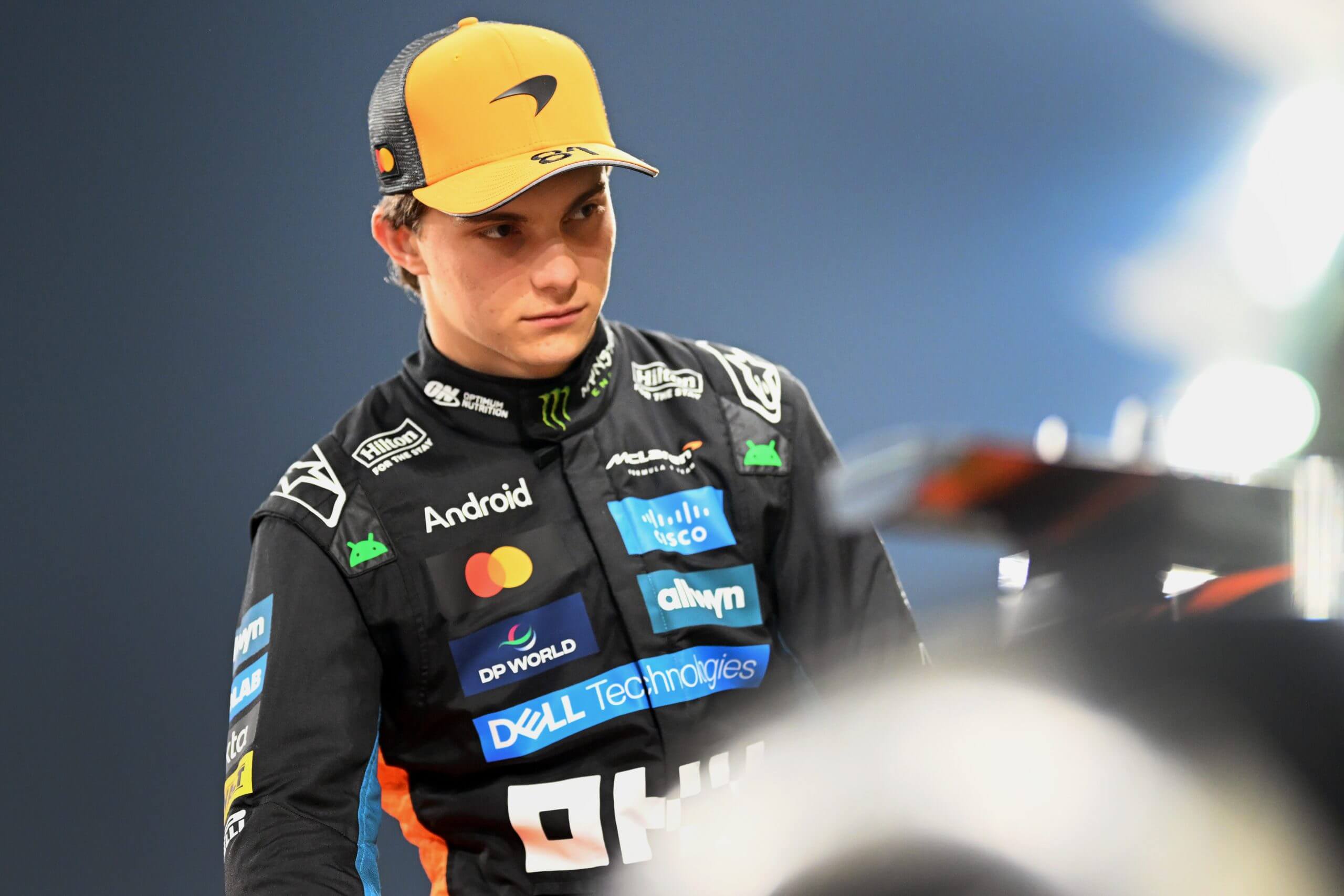
Oscar Piastri finished 13 points behind champion Lando Norris. (Clive Mason / Getty Images)
The progress was noticeable, especially in the early part of the year when Norris struggled more in qualifying. The final head-to-head between them was 13-11 to Norris, who has always been a strong qualifier, and the average gap was a mere 0.033 seconds in Norris’ favor. If Piastri can take another step with his one-lap pace next year, it may be enough to swing momentum more firmly in his favor at McLaren.
The main weak area that emerged for Piastri late in the season was quite specific: his confidence on low-grip circuits. He struggled massively in Austin and Mexico, the latter being the site of a dominant Norris win. McLaren team principal Andrea Stella said a trend had been spotted where Piastri was more confident on high-grip tracks than Norris — Qatar being an excellent example — but that swung the other way when the asphalt didn’t offer as much grip.
If Piastri can work on that area, it would only further his impressive ability as a true all-rounder. He’s quick, holds his nerve in battle, and has a composure the rest of the grid would surely envy. One of the standout quotes for me this year is Stella saying there is “no noise” in Piastri’s head, perfectly summing up why the Australian is so good.
This was only year three for Piastri in F1. It’s slightly scary to think how much better he still could become.
Luke Smith
Jenson Button was the first driver to use DRS in a race. Abu Dhabi was the last race to use this technology. Do we know who was the last driver to activate DRS? — Walter H.
Kimi Antonelli was the last driver to press the Drag Reduction System (DRS) button, while chasing down Red Bull’s Yuki Tsunoda. The Mercedes rookie was just four years old when Jenson Button became the first person to use DRS in 2011, the season the controversial system was introduced.
DRS was introduced to facilitate closer racing and help with overtaking. Essentially, the rear wing’s flap opens, and drag reduces while speed increases. It was only allowed in certain parts of the track, and drivers needed to be within a second of the car in front of them to activate it. But following closely has become difficult at times, like at Qatar.
Next season’s new regulation set will bring changes. The active aerodynamics are expected to help reduce drag but retain downforce in the corners. Given that the active aero will use the same flaps as DRS, Manual Override Mode will be introduced instead, which will rely on electric power deployment. Here’s an explainer on the tech details and how it’s different from IndyCar’s push-to-pass.
I’m looking forward to seeing how this pans out. Considering the battery involvement, it’ll become a key part of strategy assessments.
Madeline Coleman
With this being the end of DRS and that style of regulations and racing, and every race in recent years accused of being a boring one-lap event followed by many laps of procession, what could be different with the next set of rules? — Craig R.
The focus on the championship in Abu Dhabi did pull attention away from the numerous eras that came to an end on Sunday, including this generation of cars. Rest in peace, ground effect. You will not be missed (by the drivers, at least).
It’s all change for 2026 as we welcome slightly smaller, lighter cars, active aerodynamics and greater electrical energy, which should make for a very different racing product. Lap times are going to dip, but they’ll inevitably lift again in time as the teams develop their cars and power units.
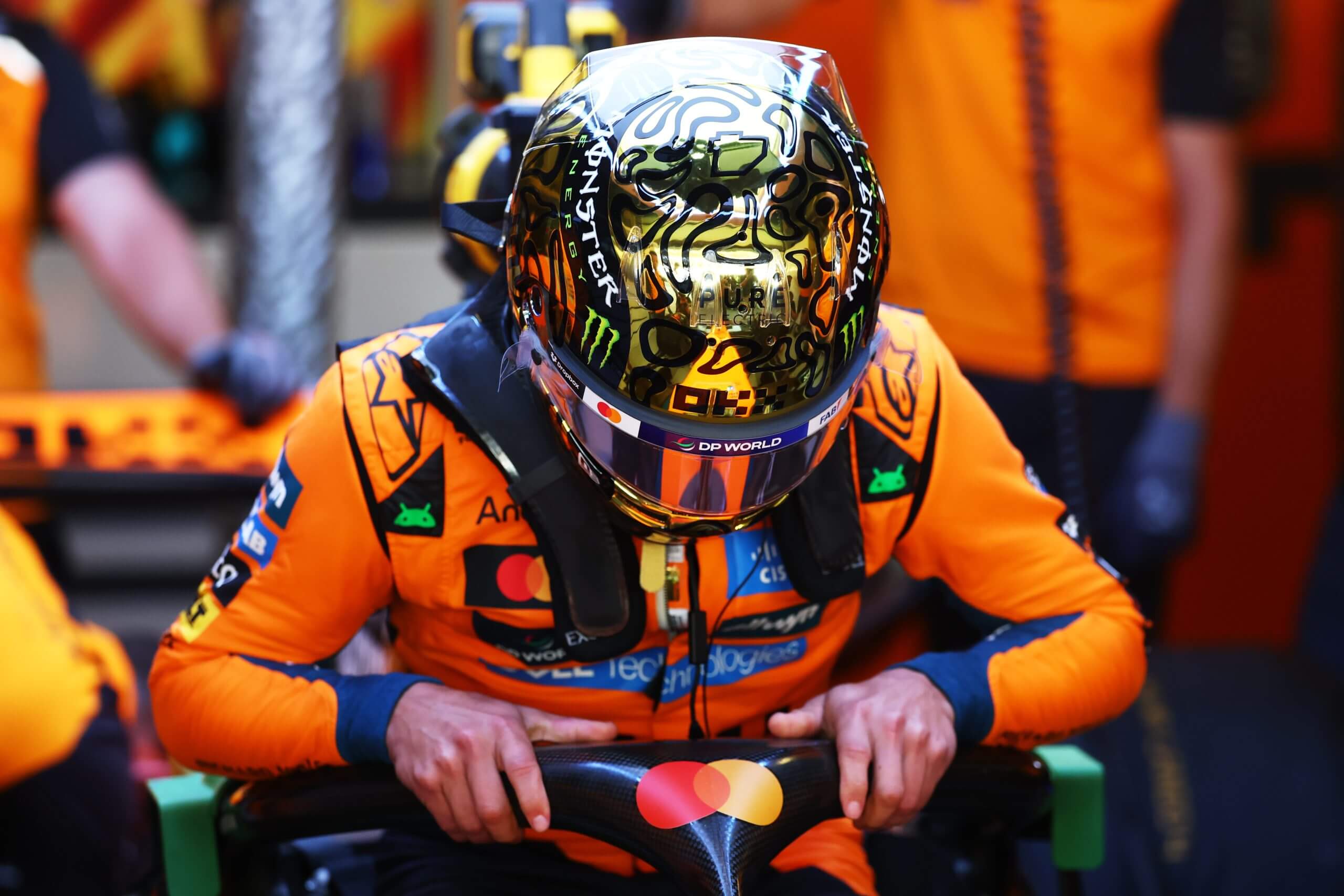
Lando Norris prepares to drive during testing at Abu Dhabi. (Clive Rose / Getty Images)
The expectation is that we will get a very different racing product in 2026. That emphasis on electrical energy from the power unit may sound a bit boring, yet it could be critical to how the cars battle wheel-to-wheel. The battery boost is already a handy tool for drivers when attacking and defending, but that now being more powerful now means they’re likely to use it in a wider variety of places.
F1 teams are full of intelligent people. There will, inevitably, be one optimal way to deploy the battery over a single lap, bringing most of the teams in line. In races, though, that’ll be very different. Drivers will now have a chance to be more tactical about where they use the battery boost, as well as work out how to best recharge it.
George Russell told reporters in Brazil that overtakes could happen in more “obscure” corners than under this rule set.
There are reasons to think F1’s racing product should improve next year. I don’t think the minimal changes to the car dimensions will make enough of an impact in reality for tracks like Monaco, even if they do go in the right direction. But we’re likely to see quite a different style of racing, which will be refreshing.
Luke Smith
It’s been so long. What was Max’s driver number? — Ninder B.
This is a little complicated with rule changes potentially coming next season.
A proposal was made at the November F1 Commission meeting to allow drivers to change their driver numbers during their careers. The current rules dictate that these choices are permanent. It’ll be up to the World Motor Sport Council, which decides on rules and regulations, to make the final decision later this week.
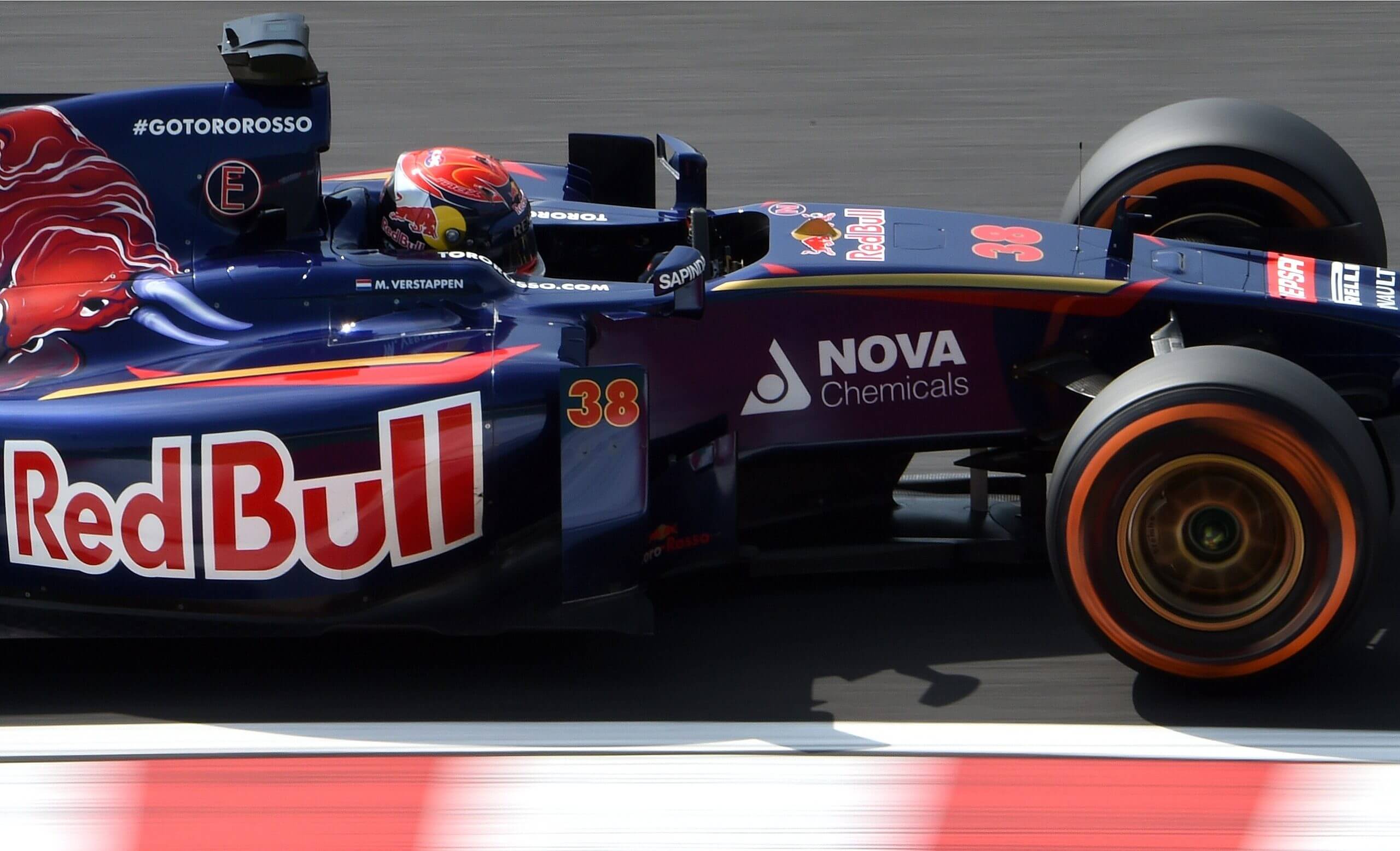
Max Verstappen used the number 33 before becoming world champion. (Toru Yamanaka / AFP via Getty Images)
At the moment, the only driver who can change his number — and will — is Norris, who has decided to take number 1 next year. It’s a number reserved for the reigning world champion, something Verstappen has held onto for four consecutive years. But it’s not required for title winners to change their numbers. Lewis Hamilton didn’t, sticking with his iconic number 44.
Verstappen’s race number under the current rules is 33. But it’s not definite he’ll stick with it if the permitted proposal goes through.
He was asked in Las Vegas last month if he’d return to 33 or consider switching to 3, which was long used by Daniel Ricciardo, who has since retired. The Dutchman said at the time, “I’m considering a lot of options at the moment.”
Madeline Coleman