
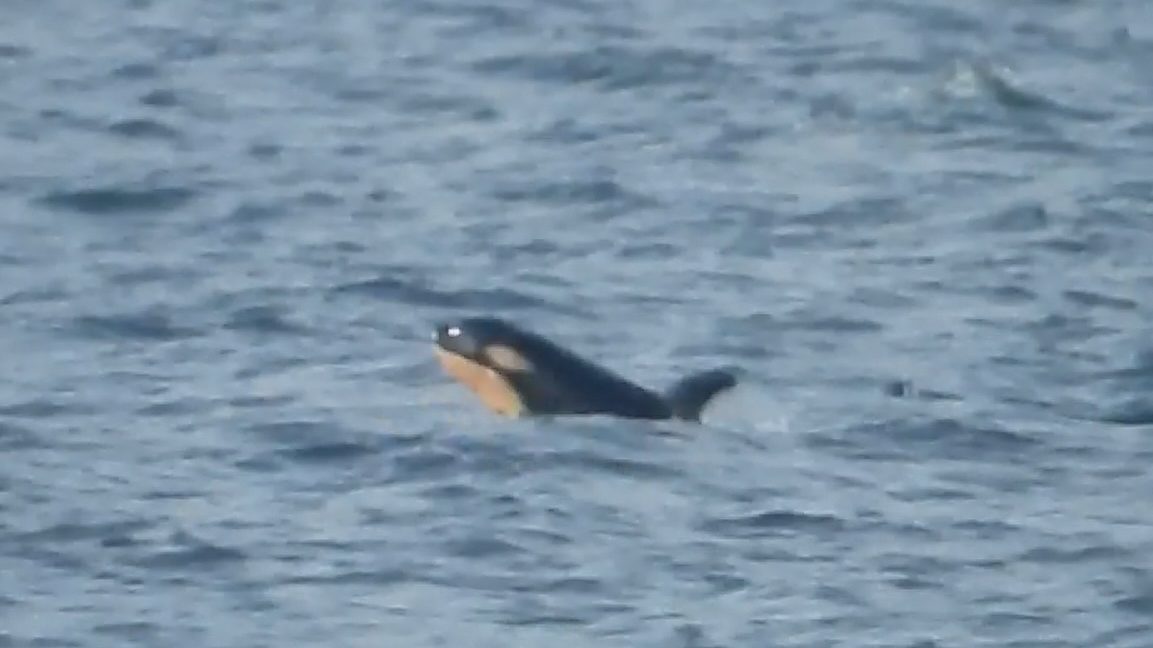
A new orca calf is believed to have been born into one of the three critically endangered southern resident killer whale (SRKW) pods.
The orca calf was spotted in the Puget Sound in Washington on Tuesday afternoon by the non-profit group Orca Conservancy.
The group was observing K-pod off Shoreline, Washington, when they spotted a “very small and very orange calf amongst the K14s with the K12s.”
“From our perspective on shore, the calf appears to look robust and energetic,” said Orca Conservancy in a social media post.
“We observed it surfacing often on its own and zipping around the large group of Ks.”
The non-profit says it’s still reviewing its footage but it looked like the calf was sticking close to an orca identified as a K36, or Yoda.
However, there’s still a long road ahead before the orca calf is officially added to the population. Orca Conservancy is sending its findings to the Washington-based Center For Whale Research (CWR), which will then assign the calf its own alphanumeric ID, like K47.
“Per their protocol, CWR will also confirm the calf’s maternity after it has been observed in three separate encounters,” said Orca Conservancy.
“We are very excited about this discovery, since this this is the first calf born into K-Pod since K45 Prosper in 2022,” said the non-profit group.
Critically endangered species
Southern resident killer whales are a type of orca that are on the brink of extinction. The most recent census estimates their population is at 74 individuals across all three pods – K-pod, J-pod and L-pod.
The most recent word of a calf being born came in September, when researchers with the Center for Whale Research spotted a new calf in J-pod.
Hopes were dashed just weeks later, however, when researchers announced the new calf, dubbed J64, was missing and presumed dead.
The biggest threats to SRKWs include a decline in their main food source – chinook salmon – and increasing urbanization in their habitat, such as pollution and noise from large vessels like cruise ships, tankers and freighters.
While the species’ population is dwindling, the orcas remain active across the Pacific Northwest.
Last month, a rare “superpod” formed south of Victoria, a term that describes when orcas from all three pods meet and intermingle.
READ MORE: All southern resident killer whales gathered into ‘superpod’ south of Vancouver Island