

Listen to this article
Estimated 4 minutes
The audio version of this article is generated by text-to-speech, a technology based on artificial intelligence.
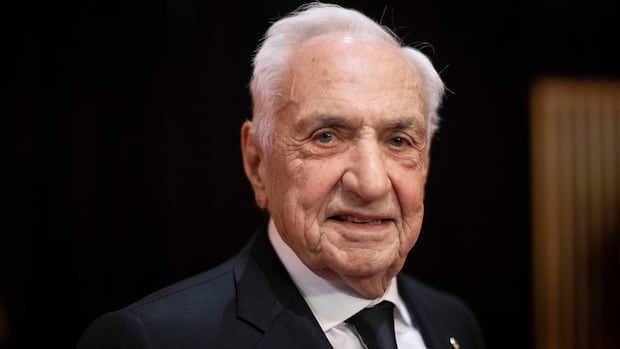
Internationally-renowned architect Frank Gehry died on Friday, Dec. 5, at age 96.
The Canadian-born architect had a distinctly unconventional and daring style. He designed some of the most recognizable buildings of the last half-century, from Toronto’s Art Gallery of Ontario to the Guggenheim Museum Bilbao in Spain and the Walt Disney Concert Hall in Los Angeles.
Today on Commotion, architect and designer Lukasz Kos as well as architecture critic Alex Bozikovic join host Elamin Abdelmahmoud to talk about Gehry’s improbable path to global stardom, how his love of the arts showed up in buildings that were works of art on their own, and what the next generation of architects will learn from him.
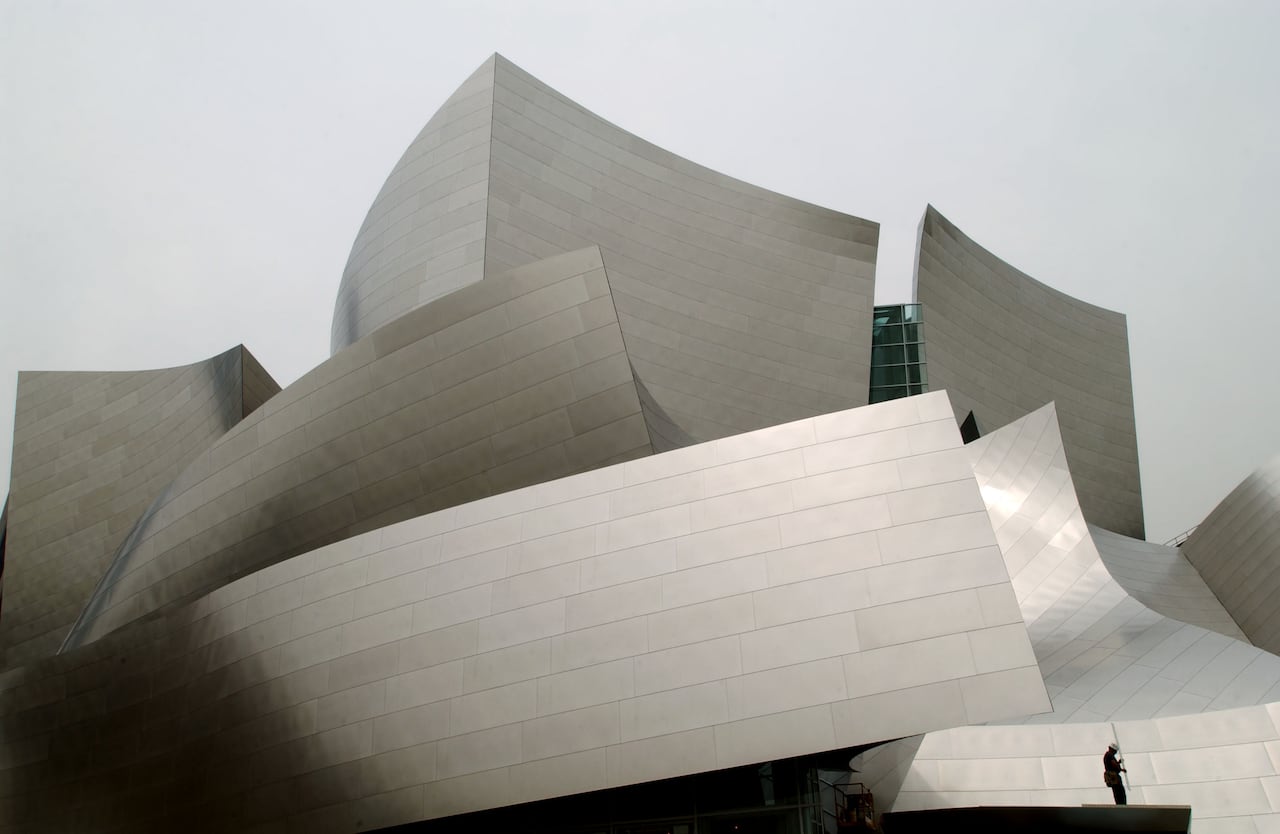 The Walt Disney Concert Hall in Los Angeles, California. (David McNew/Getty Images)
We’ve included some highlights below, edited for length and clarity. For the full discussion, listen and follow Commotion with Elamin Abdelmahmoud on your favourite podcast player.
LISTEN | Today’s episode on CBC Listen:
Commotion with Elamin Abdelmahmoud24:59How Frank Gehry’s love of art showed up in the buildings he created, and S2 of For The Culture
Elamin: What, for you, is Frank Gehry’s legacy? As you reflect on it from that personal place, but also as we think about architecture right now?
Lukasz: I’ll leave the cultural influence to Alex, but personally, I think the atmosphere and the energy in that studio, it was an education. It was the education of a lifetime. I carry those lessons to this day in my own practice…. I think Gehry generated a massive amount of architects that went out into the world, and are doing their own thing, and taking those lessons. He attracted amazing architects from around the world. So, you’re in a place where you’ve got, like, the top one per cent of the one per cent of the one per cent grinding it out, working extra hours — working those 80 to 100-hour work weeks not because we had to, but because we wanted to. It was such a creative, positive atmosphere. I can’t describe it in words. The schooling, and the education, and the interaction with all the people…. I’m actually speechless just talking about it, honestly. So that was the legacy for me, was just the schooling of those architects that came out of that studio and went on to do great things themselves.
Elamin: Alex, I think it goes without saying that the moment we’re in now is a bit of a different time than the time when Frank Gehry was creating all these iconic buildings…. What is Frank Gehry’s lesson, you think, for this moment that we’re in right now?
Alex: It is a different moment…. He, along with some other people, was able to help put architecture in the front of the cultural conversation. And it is not these days, particularly in Canada. And I think when we look at the impact that he had as a Canadian, as an architect, we should really try and figure out how we can bring some of that energy back, right? Particularly, I think, in public buildings. And that’s just not how it works these days.
It’s not a good moment for architecture. Our private sector folks and governments are just not willing to let architects be ambitious, or even to use their talents to make beautiful things, to make special things. We don’t value that today. And I think we need to see what Gehry taught us, which is that architecture can move people, it can change places, and that’s worth some time, and some energy, and some investment because it makes our lives better.
You can listen to the full discussion from today’s show on CBC Listen or on our podcast, Commotion with Elamin Abdelmahmoud, available wherever you get your podcasts.
Panel produced by Jess Low.