
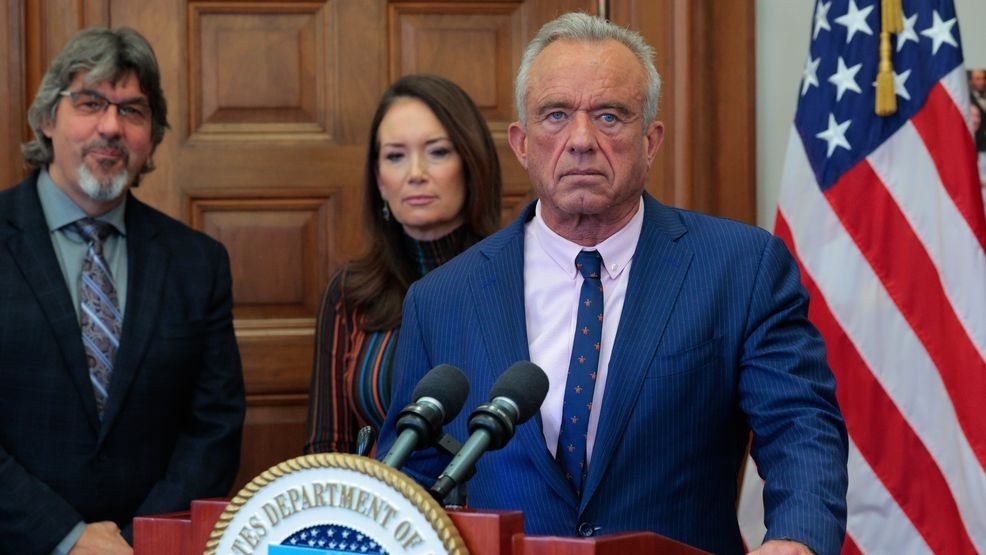
WASHINGTON (TNND) — The medical community is still reeling after a federal advisory panel voted to end the automatic Hepatitis B vaccine at birth, a recommendation that has been in place for more than 30 years. Most of the public-health debate has centered on safety, timing, and the science. But there’s another layer sitting underneath all of this: the economics. And then there’s the equally significant question of how states will respond, now that the long-standing national playbook has been disrupted.
The Financial Reality
First, let’s talk numbers. According to Fortune Business Insights, the overall U.S. Hepatitis B vaccine market was valued at $2.60 billion in 2023, with projections showing a 4.3% compound annual growth rate in the years ahead. That figure covers every age group, not just newborns.
So, how big is the birth-dose segment? The U.S. saw roughly 3.6 million births in 2024, and historically, 70-80% of infants receive the Hepatitis B shot within the first 24 hours, according to published immunization uptake data. That works out to about 2.8 to 3 million doses annually.
On the financial side, the CDC’s vaccine price list shows pediatric Hep B doses ranging from $17 to $29, depending on whether they’re purchased publicly or privately.
Add that together and the money tied specifically to the birth dose lands somewhere between $50 million and $100 million per year.
And importantly, insurers aren’t backing away. AHIP, the major insurance-industry association, told the Associated Press that insurance coverage for the birth dose will not change, even after this federal vote. Translation: unless hospitals or state health departments actively stop offering the shot, manufacturers still have a functioning infant market.
A New Problem Emerges: A Fragmented National Vaccine Map
The money story is only half of the equation. The other half is what happens when states and medical groups ignore the new federal guidance.
For decades, the Advisory Committee on Immunization Practices (ACIP) issued recommendations, the CDC adopted them, and states almost universally followed. That chain of authority has now been disrupted.
Several states are openly signaling they will not fall in line with the Kennedy-appointed panel’s vote to end the birth-dose recommendation.
Colorado’s Department of Public Health and Environment said it will stick with the American Academy of Pediatrics (AAP) schedule, not the new ACIP guidance.
The AAP itself announced it does not recognize the panel’s change and will continue recommending the universal birth dose for all newborns.
And Colorado isn’t alone, reporting from Wired shows a growing list of states preparing to either maintain the old standard or chart their own path entirely.
This creates a dramatic shift: for the first time in modern U.S. public-health history, newborn vaccine policy may splinter into 50 different state-level systems.