
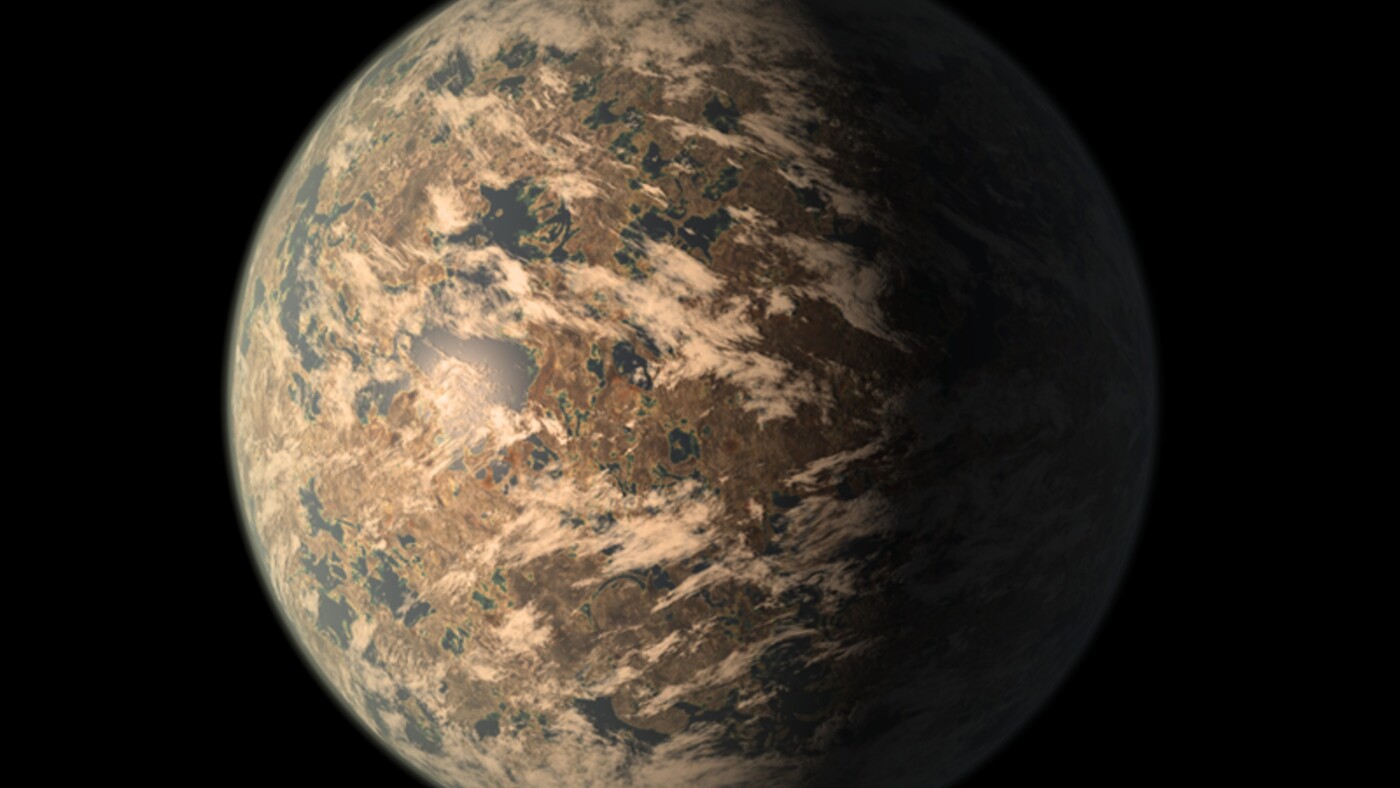
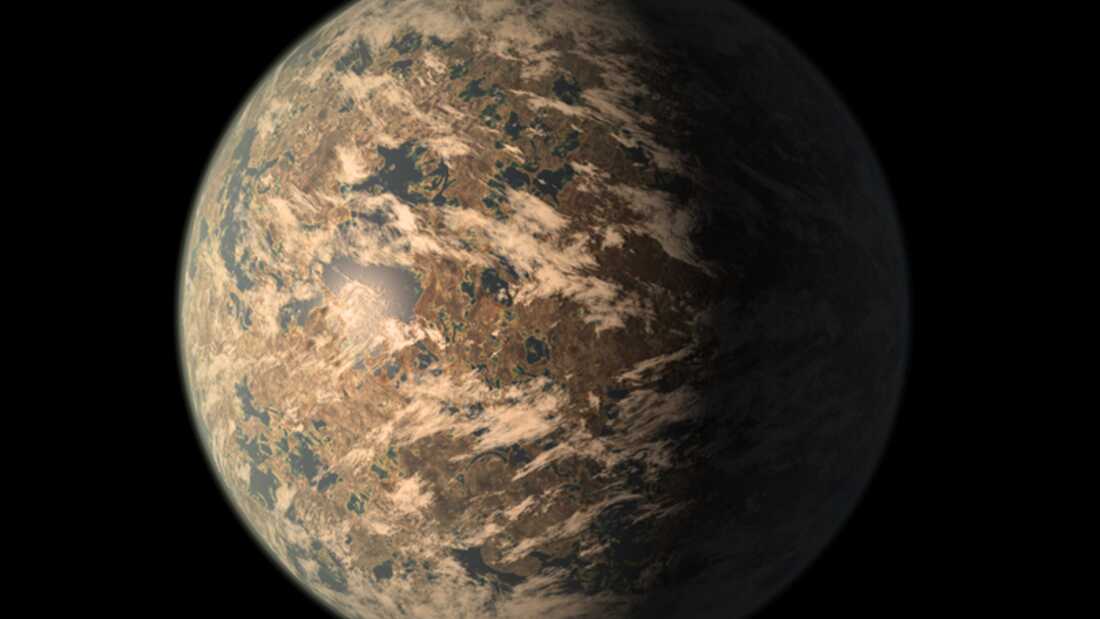
Artist’s impression of TRAPPIST-1e planet, as of 2018
NASA/JPL-Caltech
hide caption
toggle caption
NASA/JPL-Caltech
Want to be a top notch candidate for hosting alien life?
Then there’s a few key requirements you should be aware of: Ideally, you’re a large object like a moon or a planet; scientists suspect you also have an atmosphere and water; plus, you should orbit your star from a nice mid-range distance — in the “Goldilocks Zone” of habitability.
Until recently, you would be competing against TRAPPIST-1 e. It’s a planet outside of our solar system. TRAPPIST-1 e is also only 40 light years away, rocky and the same size as Earth, which prompted researchers to investigate whether it also has an atmosphere — and the potential for alien life. A team of researchers has been investigating TRAPPIST-1 e to learn more about its potential. Their answers, recently published in the Astrophysical Journal Letters, say a lot not just about this exoplanet, but about how scientists should refocus their hunt for alien life.
Interested in more space science? Email us your question at shortwave@npr.org.
Listen to every episode of Short Wave sponsor-free and support our work at NPR by signing up for Short Wave+ at plus.npr.org/shortwave.
This episode was produced by Rachel Carlson and Jordan-Marie Smith. It was edited by Rebecca Ramirez and Christopher Intagliata. Tyler Jones checked the facts and Maggie Luthar was the audio engineer.