
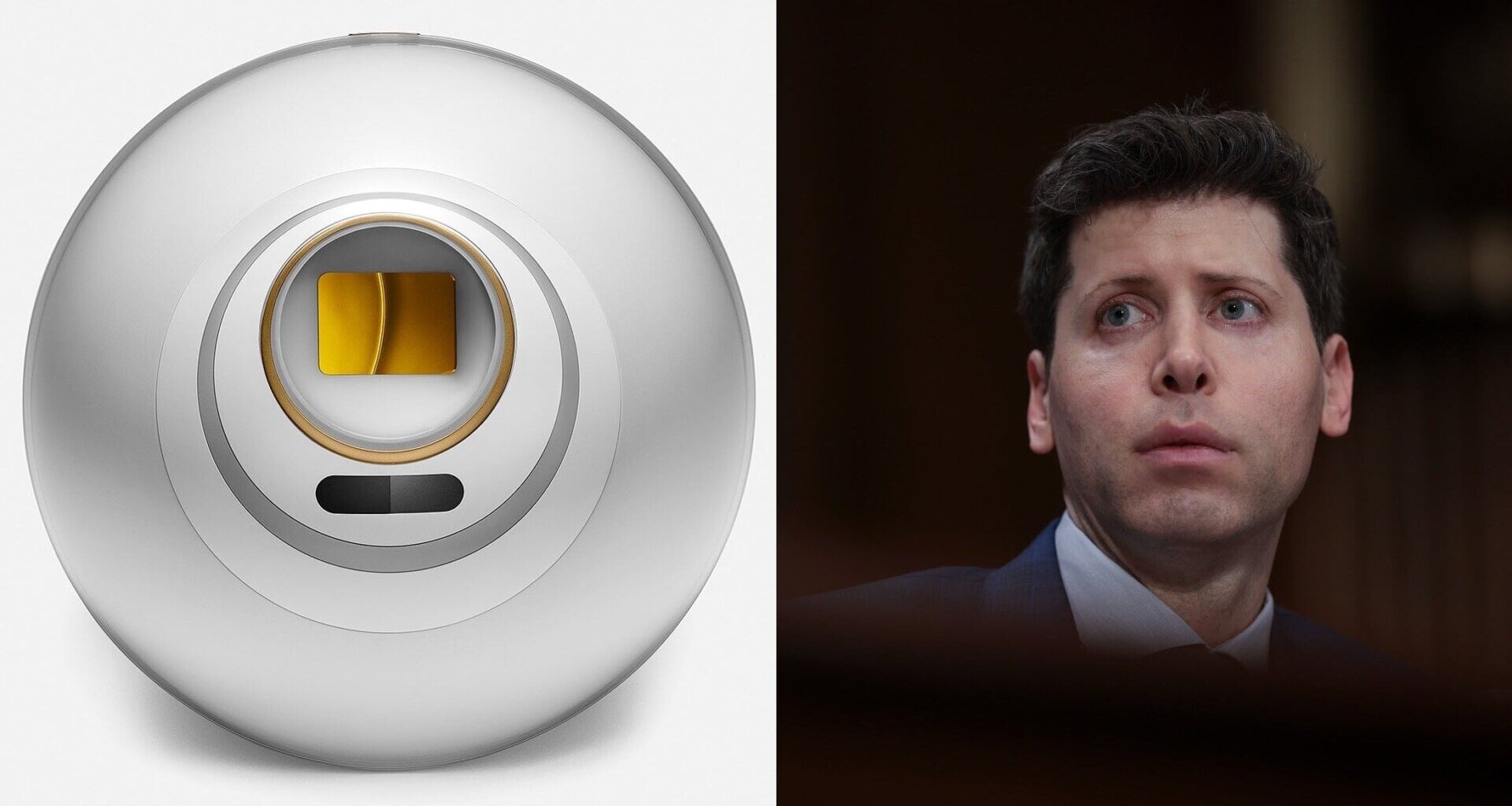
Sam Altman’s Orwellian ID verification startup, World, issued a major update today for its mobile app, introducing new chat and banking features.
World is Altman’s attempt to solve a problem he himself and his fellow “architects of AI” helped create. One of the project’s goals is to create an ecosystem for users to verify whether the people they are interacting with online are actually human and not AI. Their solution to this problem is for humans to get their eyes scanned by a soccer-ball-sized device called the Orb in exchange for a unique digital ID code stored on their phone. In theory, this could help filter out annoying AI bots from gaming, social media platforms, or even financial transactions like concert ticket sales.
Yet, this particular solution immediately raises a number of privacy and efficacy questions, like the unsettling idea of handing over your biometrics to a Silicon Valley billionaire. To be fair, World states that after the verification process, all personal data is “encrypted, sent to your phone, and permanently deleted from the Orb.”
But never mind all that for now. Those who are already verified and are on the World app got some new features today, as Altman and co try to position their struggling crypto venture as a super app.
The latest version of the World app comes with a new chat feature that the company claims provides Signal-like security. However, this app’s messaging displays blue bubbles for verified humans and gray bubbles for those who haven’t been verified. I can already imagine the social divide this could create—people can barely handle iMessage’s blue and green text bubbles.
The chat will also allow users to send and receive payments and integrate with third-party apps like prediction market platforms Kalshi and Polymarket directly inside conversations.
Additionally, the World app added a new digital wallet feature that provides users with virtual bank accounts. This would allow users to receive paychecks and other direct deposits right on the app, after which the funds can be converted into crypto.
The app truly seems to be combining all of Silicon Valley’s current obsessions into one place: crypto, prediction markets, and the ‘everything app’ dream. A press release for the update dubbed it a “super app for humans in the age of AI.”
Yet, it remains to be seen if the app will be more broadly accepted.
So far, roughly 17 million people have been verified by an Orb, which is a very far cry from the company’s ambitious 1 billion goal. Part of this adoption problem is simply that people have to physically travel to one of the 661 verification locations across the globe. For context, the U.S. has only 29 locations, most of which are clustered in Florida.
Several countries have already temporarily banned or launched investigations into the company’s biometric technology, citing privacy and data-security concerns. But the risk isn’t limited to overseas regulators. World could also face antitrust and anti-competitive scrutiny in the United States, especially if it genuinely starts positioning itself as the only way for people to make certain purchases. The company is already using its platform to sell a portion of tickets for upcoming shows of Latin music star Ricardo Arjona, exclusively to verified World users.
Everything apps like China’s WeChat, which is used for all forms of commerce in the country, have so far failed to take off in the U.S. Even Elon Musk is struggling to transform X (formerly Twitter) into an everything app. But it seems like Altman thinks he will have better luck.