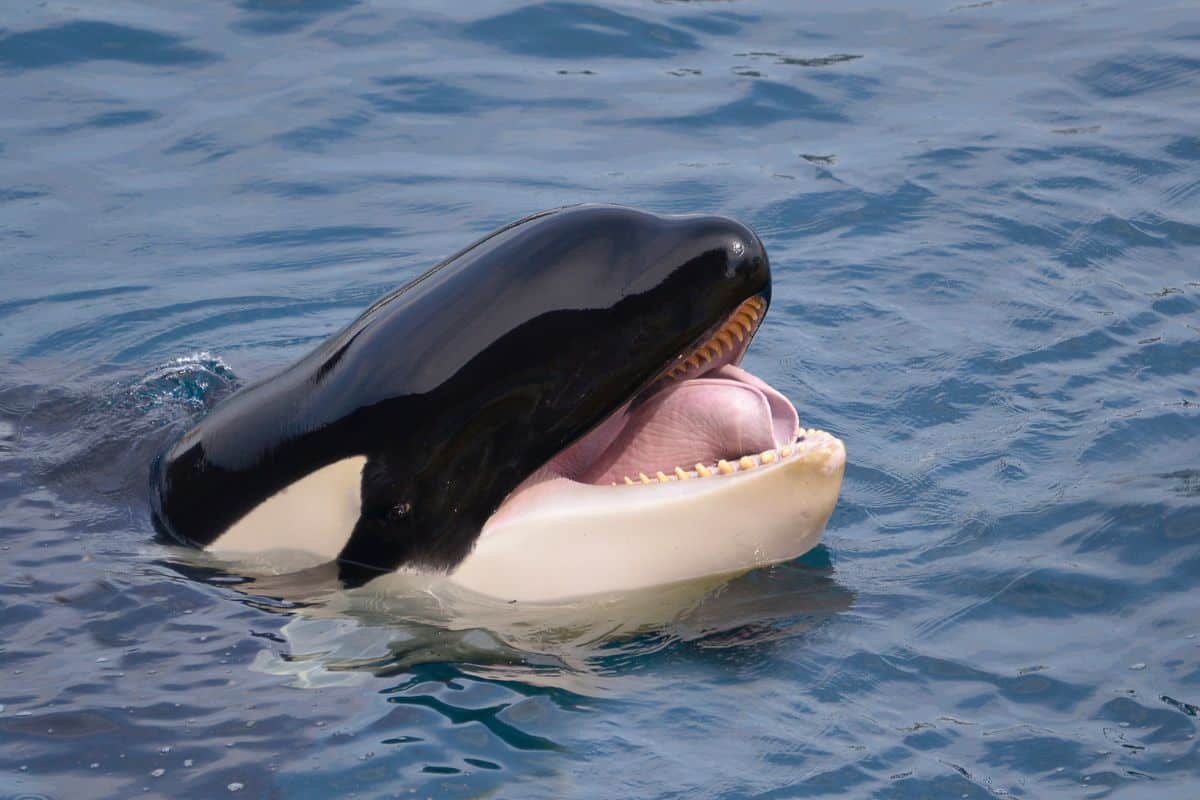
Once upon a time, dolphins and orcas roamed the earth. But those days are long gone. According to new research, these ocean giants have crossed an evolutionary threshold that locks them forever to the sea – and the price of that success might be higher than it seems.
Roughly 250 million years ago, the ancestors of today’s marine mammals made a bold move from land to water. Over countless generations, they adapted to a new world beneath the waves, becoming sleek, intelligent predators perfectly tuned to life in the ocean. Yet, as a new study shows, that transformation has gone too far to ever be undone.
Published in Proceedings of the Royal Society B, the research reveals that dolphins and orcas have evolved so completely for aquatic life that they could never return to land. The evolutionary “door” has closed behind them, leaving these creatures permanently anchored to the water.
A one-way path from land to sea
The study, led by Bruna Farina at the University of Fribourg in Switzerland, analysed the evolutionary journeys of more than 5,600 mammal species. Her team placed each animal along a scale ranging from fully land-dwelling to completely marine and found a clear boundary: once mammals transition entirely to the ocean, their adaptations become irreversible.
This finding aligns with Dollo’s Law, a long-standing idea in evolutionary biology suggesting that once complex traits disappear, they rarely evolve again. In the case of dolphins and orcas, that point of no return has already been crossed. Their bodies, diets, and internal systems are now so deeply shaped by their marine environment that stepping back onto land simply isn’t possible.
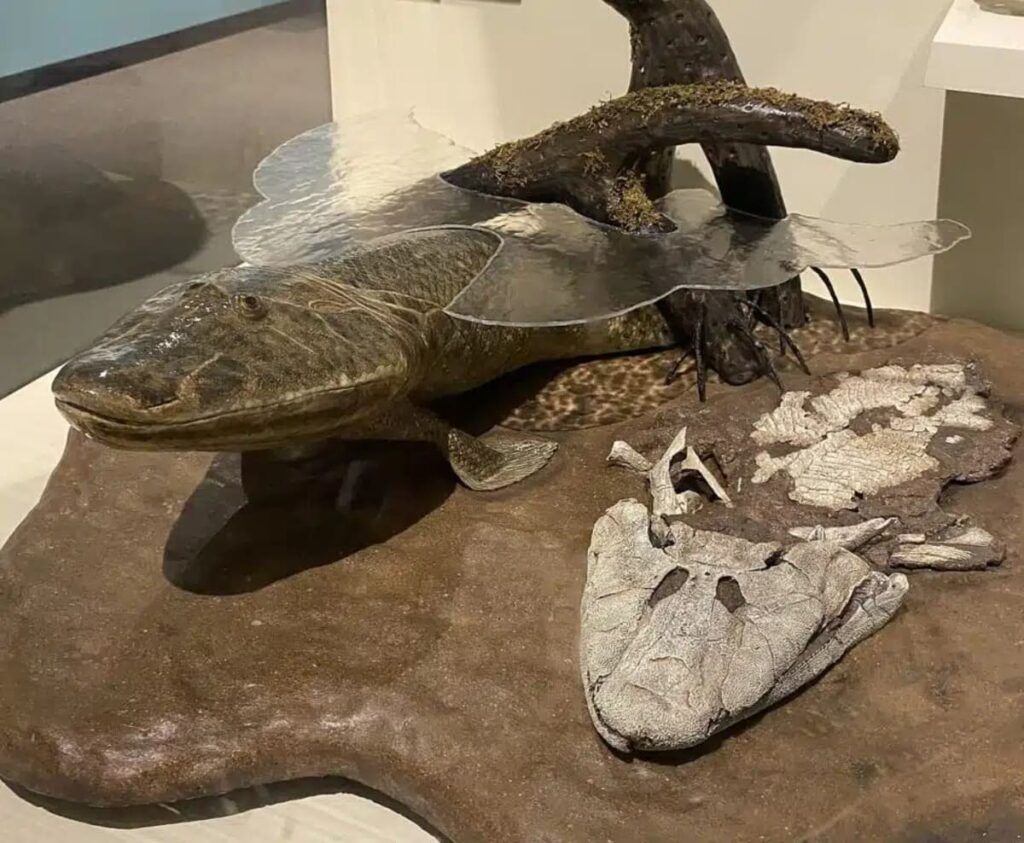
The Tiktaalik roseae model, an ancestor of tetrapods thought to have begun the transition from sea to land 375 million years ago. Credit: Wikipedia / Harvard Museum of Natural History
The changing body that seals their fate
Evolution has sculpted dolphins and orcas into perfect sea dwellers. Their streamlined bodies grew larger to conserve heat in cold waters. Their limbs turned into flippers, and their tails became muscular engines of propulsion. Even their reproductive systems evolved to support aquatic births.
Every major part of their anatomy – skeletal, muscular, respiratory, and reproductive – has been redesigned for the ocean. These weren’t minor tweaks; they were total biological overhauls. And as Farina’s team points out, those changes can’t just be reversed.
Specialisation comes at a cost
While their adaptations make them exceptional hunters, they also make them vulnerable. The same traits that help dolphins and orcas dominate their marine environment also limit their ability to cope with rapid changes. Climate change, pollution, and shifting ocean ecosystems could pose serious threats to these highly specialised animals.
Farina warns that dolphins and orcas are now “trapped in their watery paths.” Their mastery of the sea has come at the price of flexibility. If ocean conditions fall outside their biological limits, they have nowhere else to go. Their survival depends entirely on the health of the waters they inhabit.
A fragile future in an unstable habitat
With the ocean facing rising temperatures, growing acidification, and dwindling prey, the study highlights just how fragile these creatures’ futures have become. Unlike species that can migrate or evolve to new environments, fully aquatic mammals have reached an evolutionary dead end.
For dolphins and orcas, the ocean isn’t just their home – it’s their fate. Once the water welcomed them in, it never let them go.