
How long is too long to get the important business of government done and dusted?
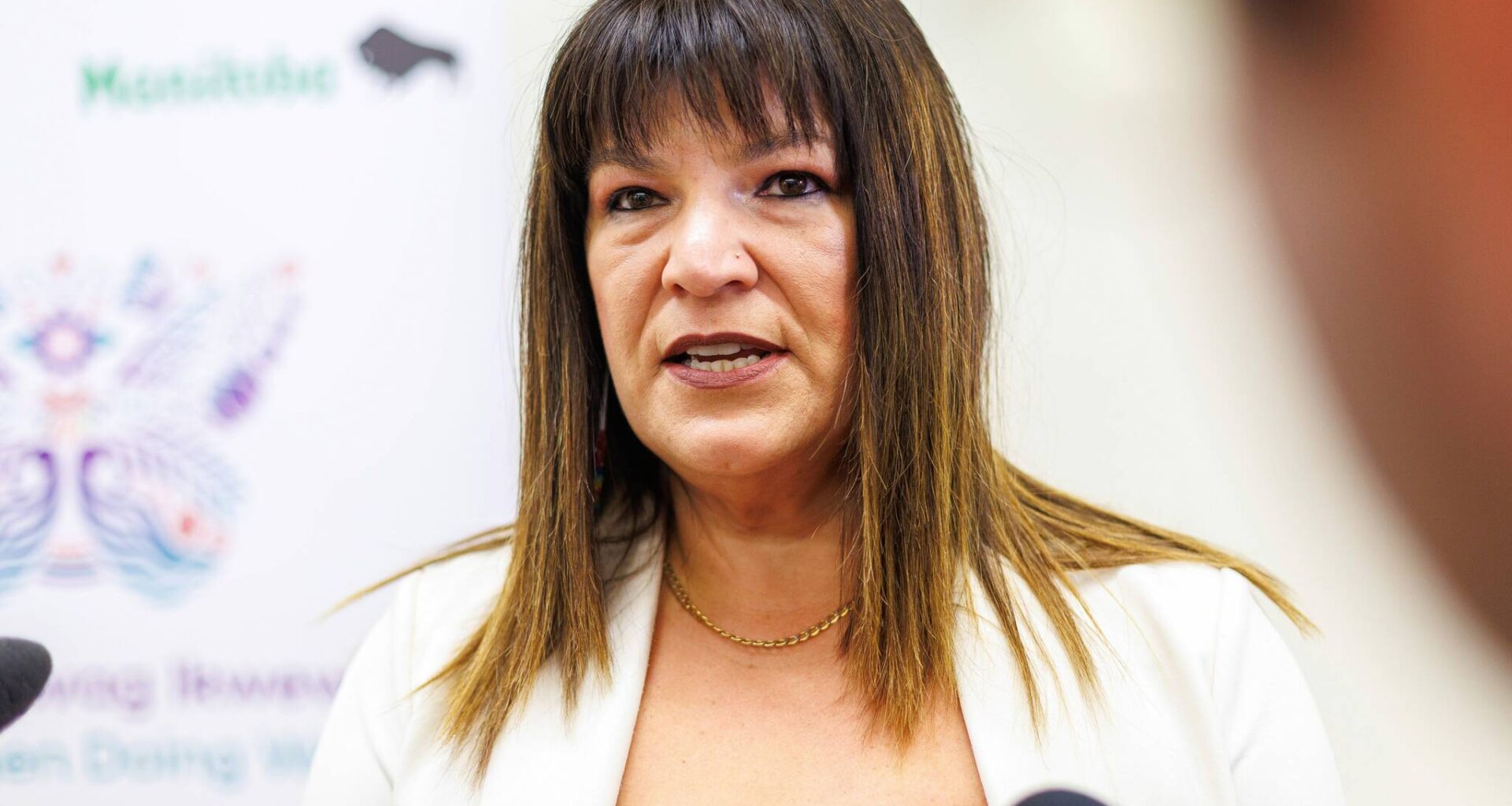
This is the question hounding Housing, Addictions and Homelessness Minister Bernadette Smith, who finds herself at the hub of many of her government’s biggest and most complex challenges.
Smith has certainly been busy, by any objective measurement. She has been at the forefront of efforts to house the homeless, set up a controversial detox facility for people suffering from meth psychosis and — still to come — a supervised consumption site, where people who use street drugs can test and more safely take substances.
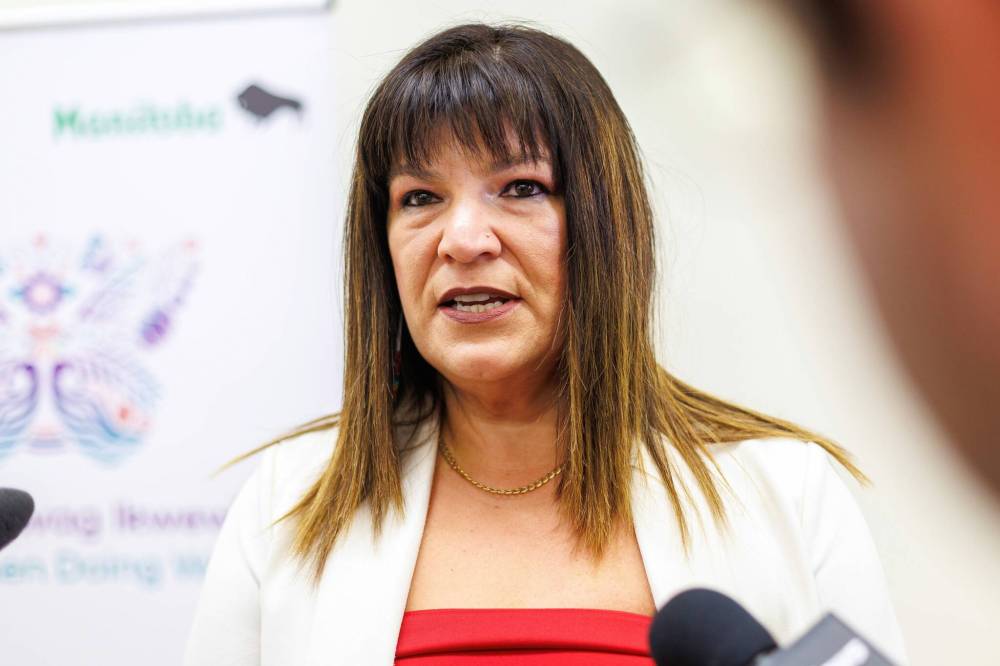
MIKE DEAL / FREE PRESS FILES
Housing, Addictions and Homelessness Minister Bernadette Smith agrees the Mental Health Act needs to be modernized.
But there are a number of big boxes that Smith has been unable to check and the longer they remain unresolved, the greater the concern the things she has already done will be undermined.
Top of that list is a pledge to review and modernize the Mental Health Act, which defines the methods of dealing with people suffering from mental-health crises.
The act, as it now stands, puts the entire burden of responding to and apprehending people in crisis on the police, an approach that most interested parties — including the police — think is inappropriate. So much so, that police are trapped in scenarios where lethal force is used and lives are lost.
Smith agrees that the act needs to be modernized so that police are relieved of the responsibility to be the first line of response for welfare checks and crises. In fact, she told the Free Press in October 2024 that the act needed to be overhauled, work that she expected to begin in short order.
“This (review) is long overdue,” she said in an exclusive, now 14-month-old interview. “We are going to modernize the act so that we have a version that is going to meet the needs of Manitobans.”
Two weeks after Smith’s pledge, Winnipeg Mayor Scott Gillingham expressed support for a review to pave the way for the creation of a fourth arm of emergency services dedicated to mental health and addictions.
Gillingham echoed community concerns about how the existing legislation is outdated, laying the full responsibility for crisis response on police. He said he wanted to work with the province to create a new health-care agency trained and equipped for the specific challenges of mental-health and addictions issues.
“I think it’s up to us not just to send the (first) available response — whether it’s police, fire or paramedic — but to ensure we are doing all we can to get that individual and the people in that situation the right response,” Gillingham said at the time.
Why is the MHA review so key? Police cannot be legally relieved of their current duties as first responders for mental-health crises, and new resources cannot be fully activated, until the legislation is fully and completely modernized.
There have been joint city-province efforts to work around the outdated law. The creation, in 2021, of the Alternative Response to Citizens in Crisis program was a step in the right direction. Hybrid teams of police and mental-health professionals have helped divert hundreds of calls away from a traditional police response.
However, well-being checks — many of which involve citizens in the throes of some sort of crisis — continue to be an enormous burden. In 2024, police responded to more than 21,000 of them. It was the fifth consecutive year that general calls for citizen assistance was the top reason police were dispatched.
Action on the MHA is desperately needed, but not forthcoming.
In November, Smith said that consultations on an overhaul of the act will begin sometime in the new year. That is far too vague a response to a promise made more than a year ago.
In fairness, it is one of the weakest and most opportunistic postures for critics (or opinion writers) to rage against government for not moving fast enough to solve big problems when most of those problems are so complex, they defy quick solutions.
Winnipeg Free Press | Newsletter

Let’s be clear: this isn’t an expectation that, two years into this government’s mandate, the act would be totally reformed and a new mental-health and addictions response agency would be up and running. The bigger concern here is that the government still hasn’t formally started the spade work to make these ideas a reality.
It would also be helpful if Smith or Kinew would express some sort of support for Gillingham’s request for provincial funds to set up a fourth arm of emergency services. The city is forging ahead with a consultant’s report on how such an agency could be structured and — one would expect — what kind of legal powers it might need to make the entity as effective as possible.
Everything we need — better responses for people in crisis, alleviating the pressure on police, reducing the logjam in hospital emergency rooms and providing safer, more appropriate help to the people who need it the most — all hinges on a reboot of the Mental Health Act.
Smith has done good work to date. But the clock is ticking.
dan.lett@winnipegfreepress.com

Dan Lett is a columnist for the Free Press, providing opinion and commentary on politics in Winnipeg and beyond. Born and raised in Toronto, Dan joined the Free Press in 1986. Read more about Dan.
Dan’s columns are built on facts and reactions, but offer his personal views through arguments and analysis. The Free Press’ editing team reviews Dan’s columns before they are posted online or published in print — part of the our tradition, since 1872, of producing reliable independent journalism. Read more about Free Press’s history and mandate, and learn how our newsroom operates.
Our newsroom depends on a growing audience of readers to power our journalism. If you are not a paid reader, please consider becoming a subscriber.
Our newsroom depends on its audience of readers to power our journalism. Thank you for your support.