
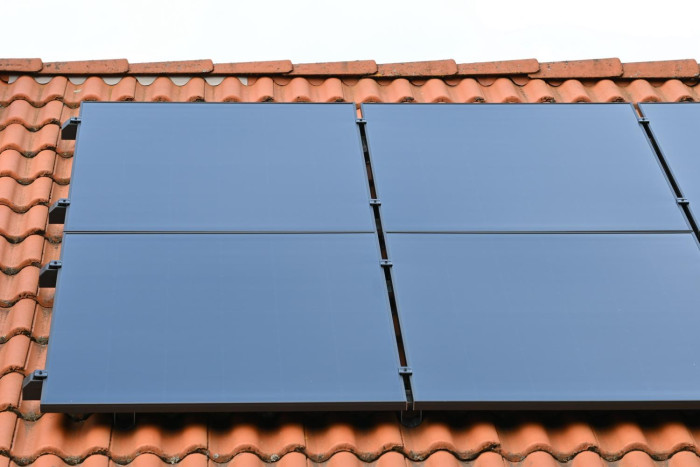
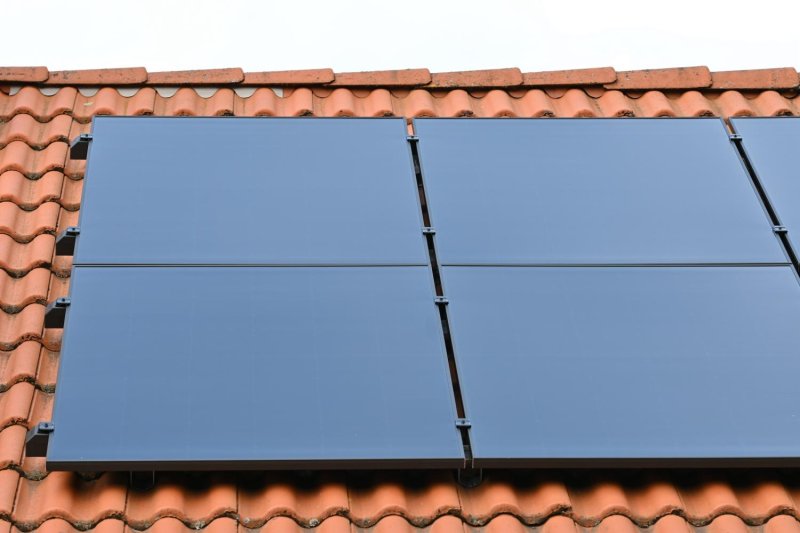
Rooftop solar panels designed by LONGi. The abrupt dissolution of the House is expected to affect key solar energy projects.
The sudden dissolution of parliament by Prime Minister Anutin Charnvirakul is causing shockwaves when it comes to Thailand’s economic recovery plans, with business leaders warning of stalled stimulus measures and renewable energy projects.
Kriengkrai Thiennukul, chairman of the Federation of Thai Industries (FTI), said the caretaker government’s limited authority could hinder urgent policies, from rehabilitating the nine flood-hit southern provinces to managing the Thai-Cambodian border conflict and ongoing tariff negotiations with Washington.
“The government will only maintain national stability and ensure essential policies carry on to support the public,” Mr Kriengkrai said.
Key initiatives now face uncertainty. The second phase of the “Khon La Khrueng Plus” co-payment scheme, scheduled for launch this month, and the 2026 state welfare card project are likely to be abandoned.
Whether a new administration will revive them remains unclear.
Despite the disruption, Mr Kriengkrai believes foreign investor confidence will hold steady.
“Abrupt political change is not surprising. The government had already signalled a dissolution expected on December 12 if the opposition pursued a censure debate,” he said.
The FTI hopes GDP growth in the final quarter of 2025 will not fall below the Joint Standing Committee on Commerce, Industry and Banking’s forecast of 0.3–1%, down from 1.2% in the third quarter.
The energy sector is bracing for delays. Treerat Sirichantaropas, chief executive of New Energy Plus Solutions, warned that five major solar projects worth 180.8 billion baht could be affected.
These include the development of community solar farms co-invested by local groups and companies, a solar-powered water pump initiative for agriculture, rooftop solar panel installations for households, floating solar farms, and a pilot programme allowing companies to directly sell solar power to businesses, particularly data centre operators.
According to the Energy Ministry, these projects are vital for stimulating the economy and creating jobs.
Other business leaders share similar concerns. Nuttanai Anuntarumporn, chief executive of Interlink Telecom, said the macro‑economic outlook remains somewhat subdued, not significantly different from previous months.
However, the government’s full-year 2026 fiscal budget is unlikely to face disruptions, as it has already been approved by parliament. During this period, civil servants will continue to run ongoing projects as usual as policy has not changed.
If the election can be held in February and a new parliament convened shortly after that, the fiscal 2026 budget can then be reviewed and approved under the new government.
Mr Nuttanai added that the information and communication technology sector will not feel much impact from the dissolution of parliament.