
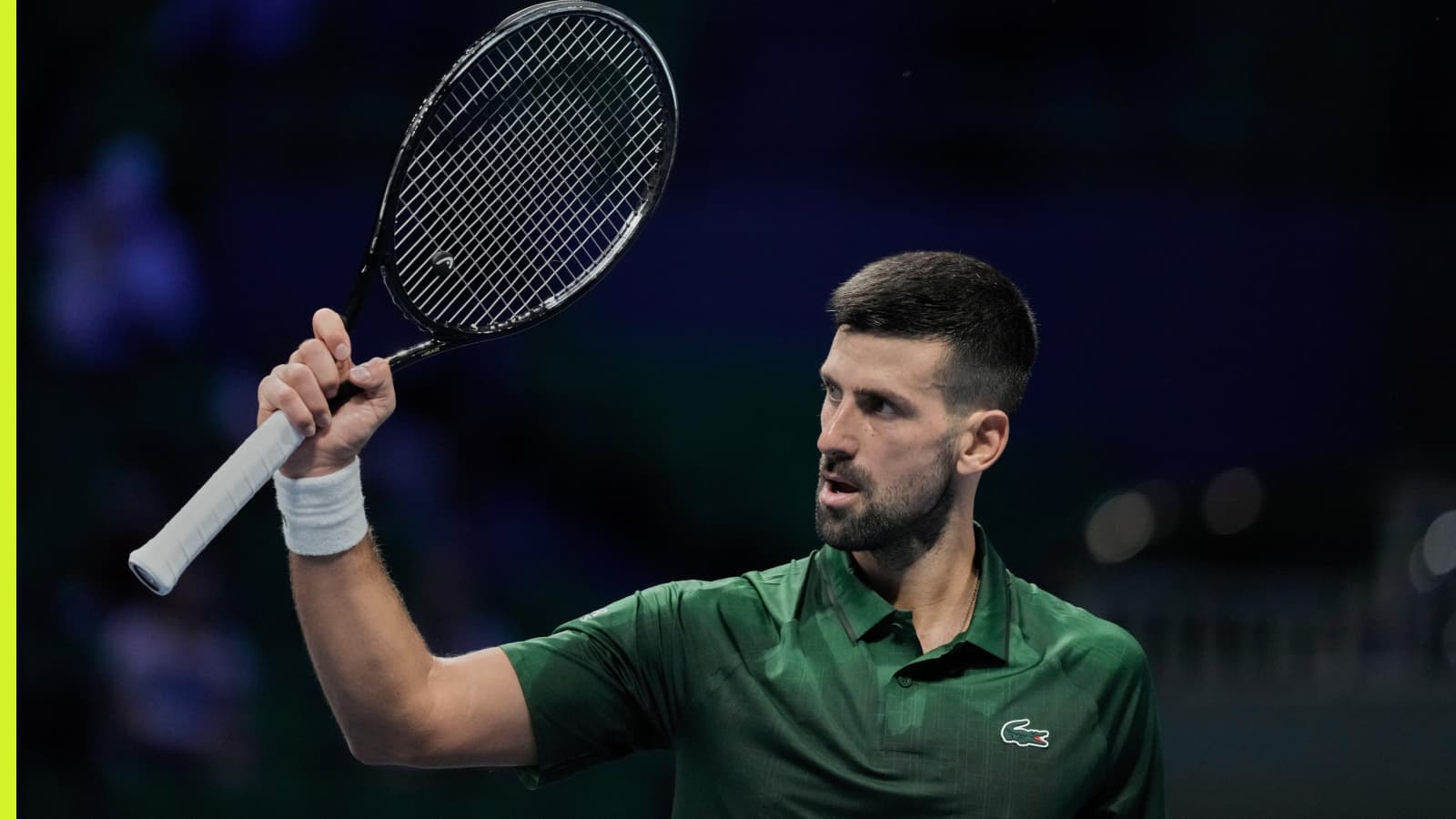
For most 37-year-old athletes, a winding down into – or a full acceptance of – retirement is firmly on the cards.
At the 2002 US Open, Pete Sampras claimed his final Grand Slam title and retired at age 31 – an age that, at that time, was widely considered beyond a tennis player’s peak.
By those standards, Djokovic lifting two titles in 2025 should already constitute a highly-successful season.
However, even by his own admission, the Serb has been searching for an extra level, an extra gear, by which he could claim his ultimate goal – a 25th Grand Slam.
Unfortunately for the 24-time Grand Slam champion, frequent breakdowns of his physical state have plagued him on occasions where he needed his body to be at its best.
Djokovic was candid in his assessment of his Grand Slam prospects after losing to Carlos Alcaraz in straight sets at this season’s US Open.
“It will be very difficult for me in the future to overcome the hurdle of (Jannik) Sinner, Alcaraz, in the best-of-five on the Grand Slams,” admitted the Serbian superstar.
“I think I have a better chance best-of-three, but best-of-five, it’s tough.
“I’m not giving up on Grand Slams in that regard, having said that. I’m going to continue fighting and trying to get to the finals and fight for another trophy at least.
“But, you know, it’s going to be a very difficult task.”
Below, we outline three distinct, but ultimately connected goals that will be crucial for Djokovic to create a successful 2026 season.
Health and schedule
Throughout his career, Djokovic’s physical durability has been one of his defining traits, having missed just one Grand Slam through injury (the US Open in 2017).
In 2025, however, that reliability finally showed signs of erosion, with recurring physical issues plaguing his ability to sustain his desired level.
Whilst Djokovic produced his best tennis at the Grand Slams, the injuries and lack of recovery time left him without the reserves required to overcome his far younger rivals in best-of-five clashes.
Across the season, he participated in 13 events, winning two titles, but, unusually, losing his opening match at four of those tournaments.
In 2026, the Serb will be looking to manage his schedule to reduce the physical breakdowns – a challenge that is often faced by the world’s best at the end of their careers.
Based on his comments, it appears as though the former world No 1 will shift his emphasis away from the Grand Slams towards the best-of-three events, where he feels his chances against both Alcaraz and Sinner are maximised.
Latest Tennis News
Carlos Alcaraz’s coach pinpoints the ‘turning point’ which saved his ‘extraordinary’ 2025 season
Emma Raducanu rankings prediction for 2026 and why she needs a fast start to the season
Ranking
Whilst Djokovic has reiterated that he is not playing for ranking points anymore, maintaining a consistent standing near the top of the rankings in 2026 will be critical.
Currently, the Serb is positioned to be the fourth seed at the Australian Open, which ensures that he will avoid having to face either Alcaraz or Sinner prior to the semi-finals.
On the other hand, Djokovic has hinted that he may have better chances against the world’s best nearer to the start of tournaments, so a high ranking is a double-edged sword.
Ultimately, the former world No 1’s ranking will be a by-product of both his health and his schedule.
Sinner-Alcaraz duopoly
In 2025, Djokovic’s best level often appeared at the Grand Slams – exactly where he would want it.
However, four semi-final appearances ended in four straight-set defeats, three of which came against Sinner and Alcaraz.
Against both, Djokovic appeared to be a step or two slower than his Grand Slam-winning 2023 self, and multiple steps behind the world’s two best.
The gap was not just one of quality, but of physical durability across the most demanding tournaments – something which, given their ages, should not be a surprise to any observer.
If he is to be satisfied with his 2026 season, a defining benchmark may be a victory or two against either Sinner or Alcaraz which would prove that, under perfect conditions, he is capable of defeating the very best.
Overall, he is 0-5 against Sinner in their five most recent meetings, meaning that a victory against the Italian would be the biggest possible statement.
By contrast, his quarter-final Australian Open victory over Alcaraz showed that the required level still exists deep within the ageing body.
Ultimately, a successful 2026 season for Djokovic will be defined by his body allowing him to compete often enough to matter, his ranking putting him in a position to contend, and his level still being capable – even if infrequently – of overcoming the Sinner-Alcaraz duopoly.