
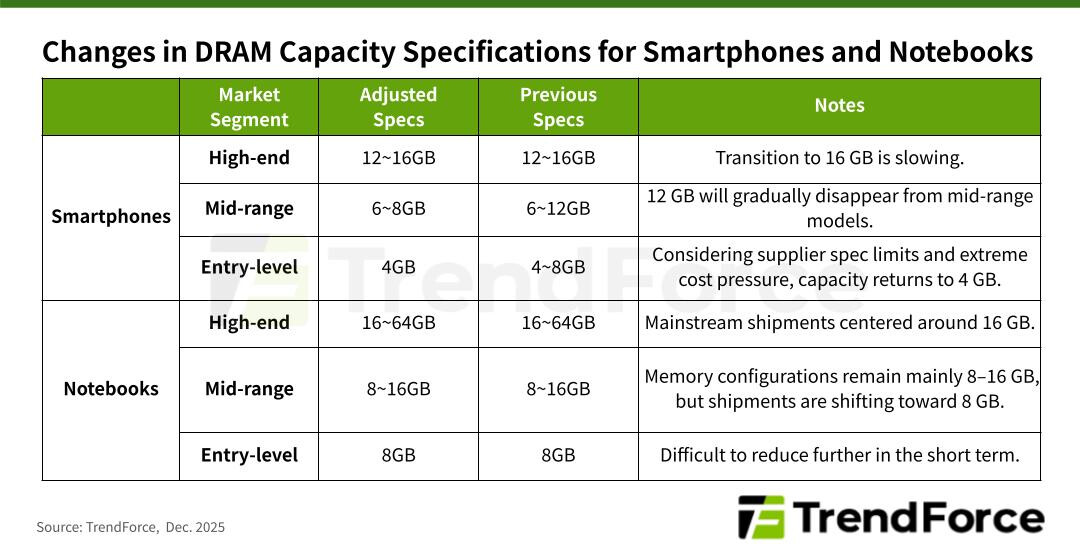
The ongoing DRAM shortage might force smartphone makers to bring back incredible features like microSD card expansion, but there could be major trade-offs, such as reducing the memory count in future devices. According to a new report, manufacturers could water down the specifications of future handsets by lowering the total RAM count, with entry-level models shipping with just 4GB of it. Additionally, the shortage will enforce a slowdown of flagship smartphones when it comes to adopting 16GB RAM chips.
Mid-range smartphones that would typically ship with 12GB RAM could now only feature 8GB memory for their base models due to an extreme shortage
Companies like Samsung are shifting away from HBM production and gravitating towards DDR5 manufacturing to maximize profits, giving you a rough indication of how terrible the situation is. For a while, 24GB of RAM was offered with smartphones for their top-end configurations, but that could be a distant memory, as TrendForce reports that the current DRAM shortage, which was previously estimated to persist until at least Q4 2027, will force entry-level smartphones to feature only 4GB of RAM.
For those who think that the majority of smartphone shipments do not comprise of affordable devices, we’d like to jog your memory a bit. According to Counterpoint Research, Samsung’s Galaxy A16 5G was the best-selling Android smartphone for Q3 2025, and it ships with 8GB of memory, indicating that buyers will have to bump up their budget if manufacturers officially commit to changing their specifications in the future. As for the ‘middle of the pack’ models, which would typically sport up to 12GB RAM, could be limited to between 6GB and 8GB of memory.
The only upside we see from this downgrade transition is that manufacturers should collectively pressure Google to optimize the Android platform to work better with less RAM, similar to what Apple has done with iOS. However, in the age of on-device AI processing, having more memory will always be beneficial, with an earlier report stating that 20GB will eventually become a mainstream specification to support this functionality. Fortunately, there are ways to circumvent this hurdle during the ongoing shortage.


For instance, Apple is working on how to store Large Language Models (LLMs) on flash storage instead of RAM, with Samsung rumored to be developing a special type of UFS storage that will be optimized for generative AI. From the looks of it, the DRAM shortage is not expected to end anytime soon, meaning that if smartphone manufacturers make hardware compromises on future releases, they must think of creative ways to improve the user experience, or risk sales.
News Source: TrendForce
Follow Wccftech on Google to get more of our news coverage in your feeds.