
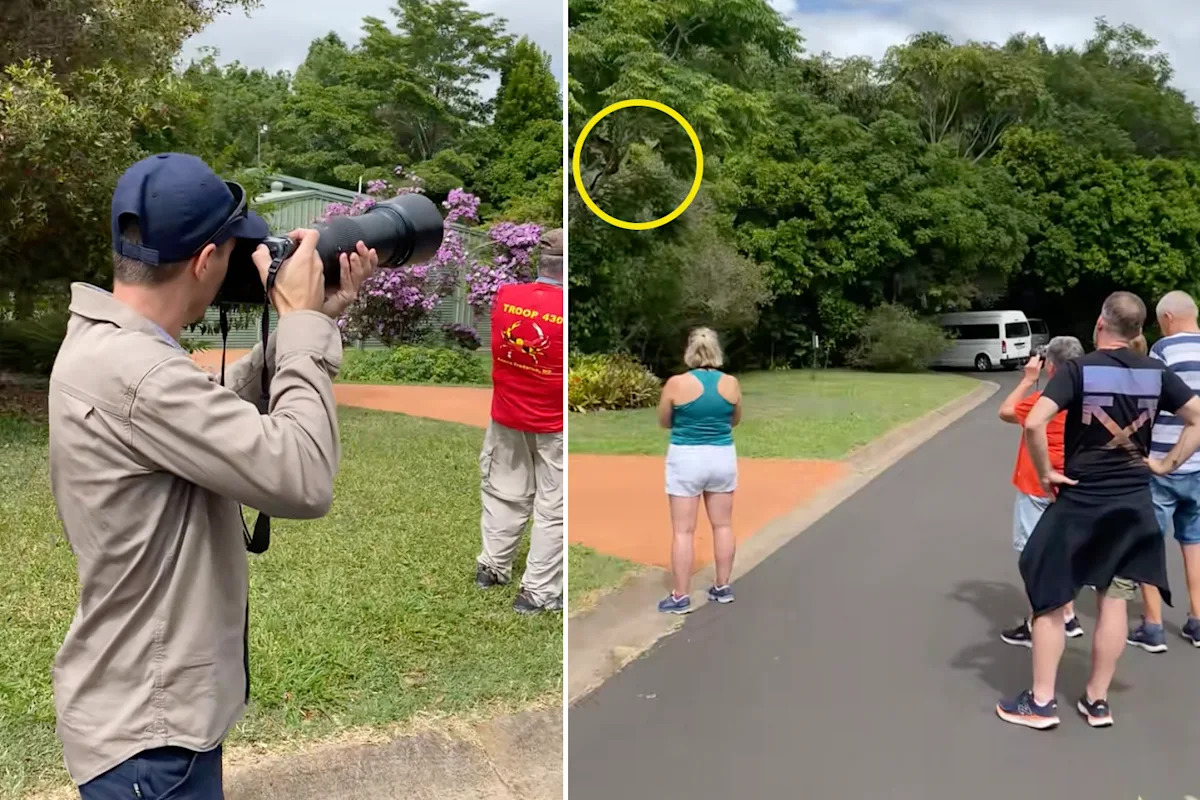
As the peak holiday season kicks off, tour guides and conservationists are urging Australians exploring the country to observe our spectacular native wildlife responsibly. Their advice follows a tour group’s encounter with an exceptionally elusive and “incredibly rare” species in the tropical north.
Nature photographer and Queensland local Matt Cornish is a seasoned wildlife guide.
He shared footage this week of an encounter where a group caught a glimpse of the Lumholtz’s tree kangaroo — a sight few tourists ever witness — in a residential street in Yungaburra in the Atherton Tablelands.
The species, one of two types of tree kangaroos which inhabit the continent, is under threat by habitat loss driven by land clearing, collisions with vehicles and attacks from dogs.
In an interview with Yahoo News, Matt said this makes seeing them in the wild all the more exciting.
“It’s only found in the Atherton Tablelands, and it’s a very elusive species,” he said.
“Unfortunately, due to historic land clearing, finding these animals can be very, very difficult.”
Matt filmed the video last year but has shared it again to shine a spotlight on the importance of conserving this remarkable species.
This is particularly important, he said, because very few Australians even realise they exist.
“I’ve worked in wildlife for most of my life, and I’ve realised that probably 90 per cent of Australians don’t know that we have two tree kangaroo species in the wild,” he said.
“And I would say even the 10 per cent that do, most of them don’t know that we have them in Australia.
“Most people assume that any tree kangaroo in the wild is found in Papua New Guinea.”
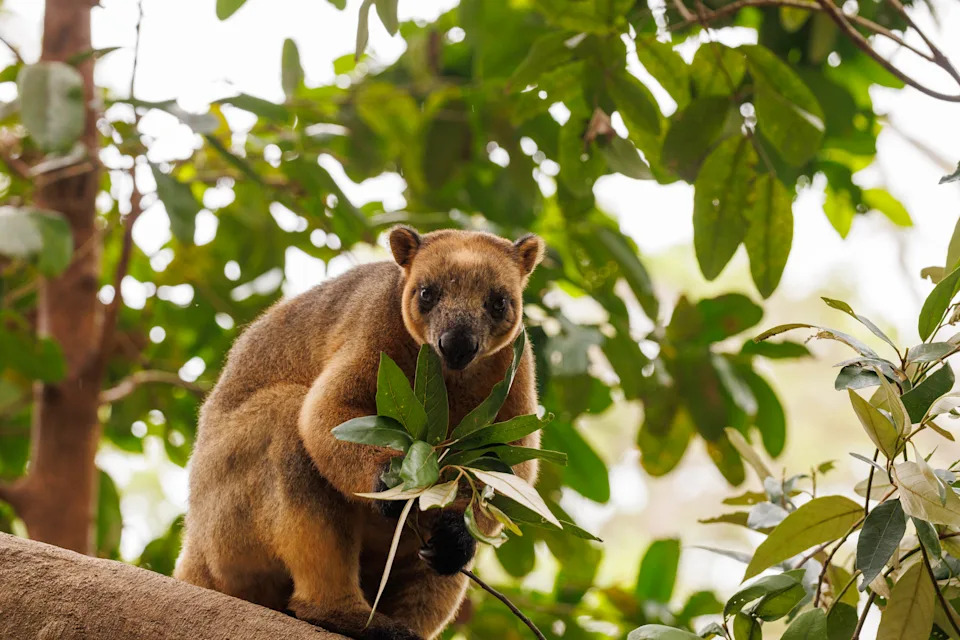
The Lumholtz’s tree-kangaroo is found exclusively in Far North Queensland. Source: Getty
What makes tree kangaroos so unique?
While Papua New Guinea is home to several species of tree kangaroo, Australia has its own unique residents. Two species, the Lumholtz’s tree kangaroo and the Bennett’s tree kangaroo, are found exclusively in the rainforests of Far North Queensland.
Though less well-known, these native species are just as remarkable and adapted to life in the treetops.
“I have a pretty strong emotional connection with them. I think they’re incredibly unique animals,” Matt said.
“Through evolutionary periods, this particular animal has decided to move up into the trees, whether it be for protection or food, and has managed to evolve and adapt themselves for life in the trees.”
Their strong forelimbs, long tails for balance, and specially adapted feet allow them to climb, leap between branches, and navigate the rainforest canopy.
He said the species is a “peculiar creature, unlike anything else”, and believes that with greater awareness and education, we can help bring it back from its “near-threatened” conservation status.
“I think the key to conservation is education,” he said.
“We need to make sure, first of all, people understand that these animals exist, and then from there we can educate them about the biology of these animals and the threats they face.
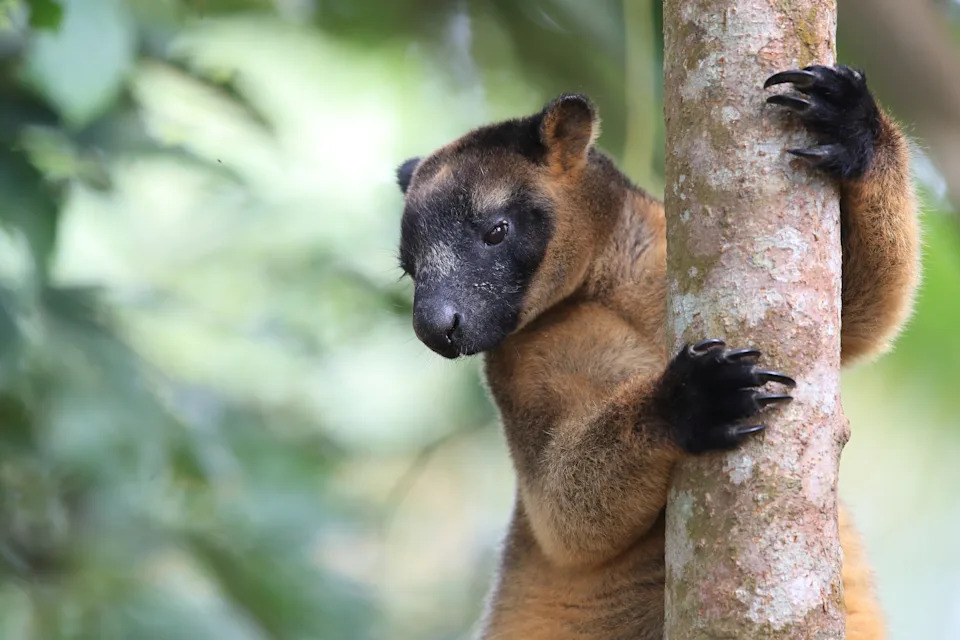
With Christmas and the holiday season approaching, travellers need to be aware of their surroundings. Source: Getty
“The state government’s probably got to put a little bit more work into it as well. Reducing some speed limits around critical wildlife corridors would be the first thing that I’d be doing.”
Matt said that with Christmas and the holiday season approaching, travellers need to be aware of their surroundings and slow down their cars.
“Just in the last couple of years, I’ve seen over 10 different Lumholtz’s tree kangaroos being killed just in my local area, and this is directly from people driving too fast through the areas,” he said.
The veteran explorer said should the public want to get involved, there are numerous organisations to choose from that can always use a helping hand.
“We have some amazing ambassadors in Far North Queensland working hard for this species and many others. They’re doing work to revegetate the landscape, put in wildlife corridors, and obviously educate people visiting our area to be mindful that these animals are about,” he said.
Love Australia’s weird and wonderful environment? 🐊🦘😳 Get our new newsletter showcasing the week’s best stories.
